

You have just had a new concrete floor poured in your garage or extension. It looks smooth, it looks clean, and after a few sunny days, it looks grey and dry.
The temptation to paint it immediately is huge. You want to get the floor protected before you start moving boxes in.
Do not do it.
Painting new concrete too soon is the single most common reason for coating failure on new builds. If you apply a standard concrete floor paint to a fresh slab, it will likely peel within months.
Why? Because while it may look dry, freshly poured concrete takes much longer to dry then you may first anticipate. Here is the science of why you have to wait and when your concrete is ready to be painted.
Curing vs. Drying: The Critical Difference
People use these words interchangeably, but in chemistry, they are opposites.
-
Curing (The Chemical Reaction): When concrete is poured, water reacts with the cement to form hard crystals. This process (hydration) takes time. If you seal the surface too early, you stop the concrete from reaching its full structural strength.
-
Drying (The Evaporation): Once the concrete has hardened, it still holds a massive amount of excess water. This water needs to migrate to the surface and evaporate into the air.
The 28-Day Rule
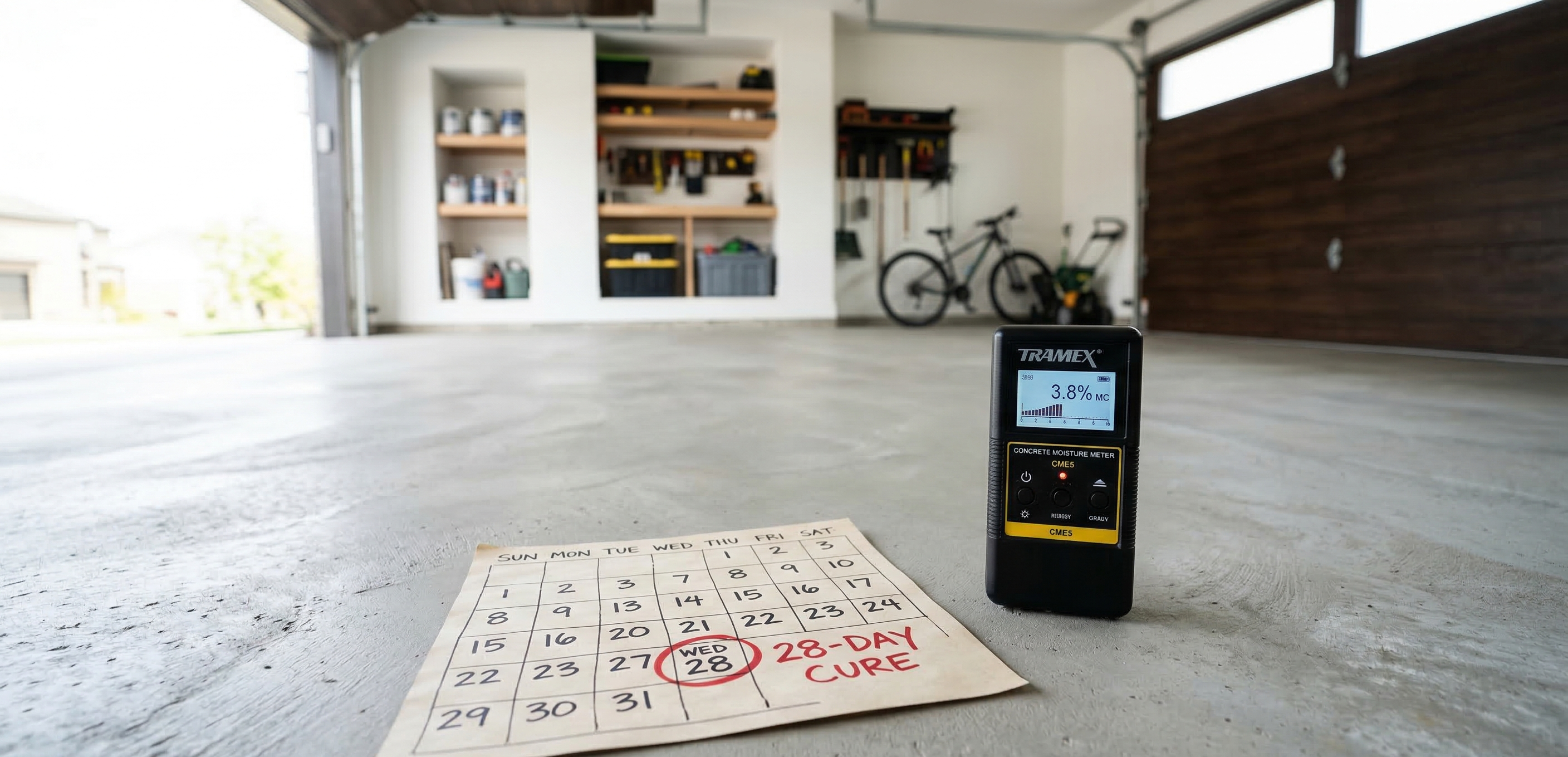
The industry standard is simple: You must wait a minimum of 28 days before painting new concrete.
Why 28 days? Because that is how long it takes for the concrete to reach its standard cured strength and for the bulk of the initial water to escape.
-
Warning: If your slab is extra thick, or if the weather is cold and damp, it might take even longer (up to a few months) to be dry enough for standard paint.
The Two Invisible Killers
1. Moisture Vapour (The Bubble Maker)
If you paint a floor that is only 14 days old, you are essentially trapping gallons of water inside the slab. As that water tries to evaporate, it pushes against the underside of your waterproof paint. This Hydrostatic Pressure forces the coating to blister and lift.
2. Alkalinity (The Chemical Burn)
New concrete is highly alkaline (pH 12–13). Most standard oil-based or alkyd paints cannot handle high pH levels. The alkali in the concrete reacts with the resin in the paint (a process called saponification), literally turning the hard paint into soft soap. The paint essentially dissolves itself at the interface where it touches the floor.
How to Test if You Are Ready
Don't guess. Test. After the 28-day period has passed, perform the "Plastic Sheet Test" (tape a square of plastic to the floor for 24 hours).
-
If the concrete under the plastic is dark/damp: Wait longer.
-
If it is dry: You are ready to prep.
Important: Even after 28 days, new concrete has Laitance (a weak, milky layer on top). You must mechanically sand or etch this off before painting.
See our guide on What is Laitance?
Conclusion
Patience is the cheapest primer you can buy.
If you can afford to wait the full 28 days and let the floor dry naturally, you will get a better result with standard materials. But if you rush it, be prepared to strip the whole floor and start again.
Is your new floor fully cured and ready for protection?
Start with our Polyurethane Primer & Sealer to lock it down.
Share:
Removing Stubborn Carpet Glue and Tile Adhesives
Recoating Epoxy: How to Prepare an Existing Floor for a Topcoat