System Overview
For concrete floors with holes, voids or broken patches, hole repair mortars rebuild the missing section and restore a level running surface. They are used on warehouse aisles, factory floors and loading bays, where a hole catches wheels and trips feet. Filling the hole to a defined edge removes the broken concrete that causes both problems.
EVEREST Everflor hole repair products in this range are pourable cement and polymer mortars. Each is mixed with water on site and poured into the prepared hole. The mortar flows into the damage and sets hard and level.
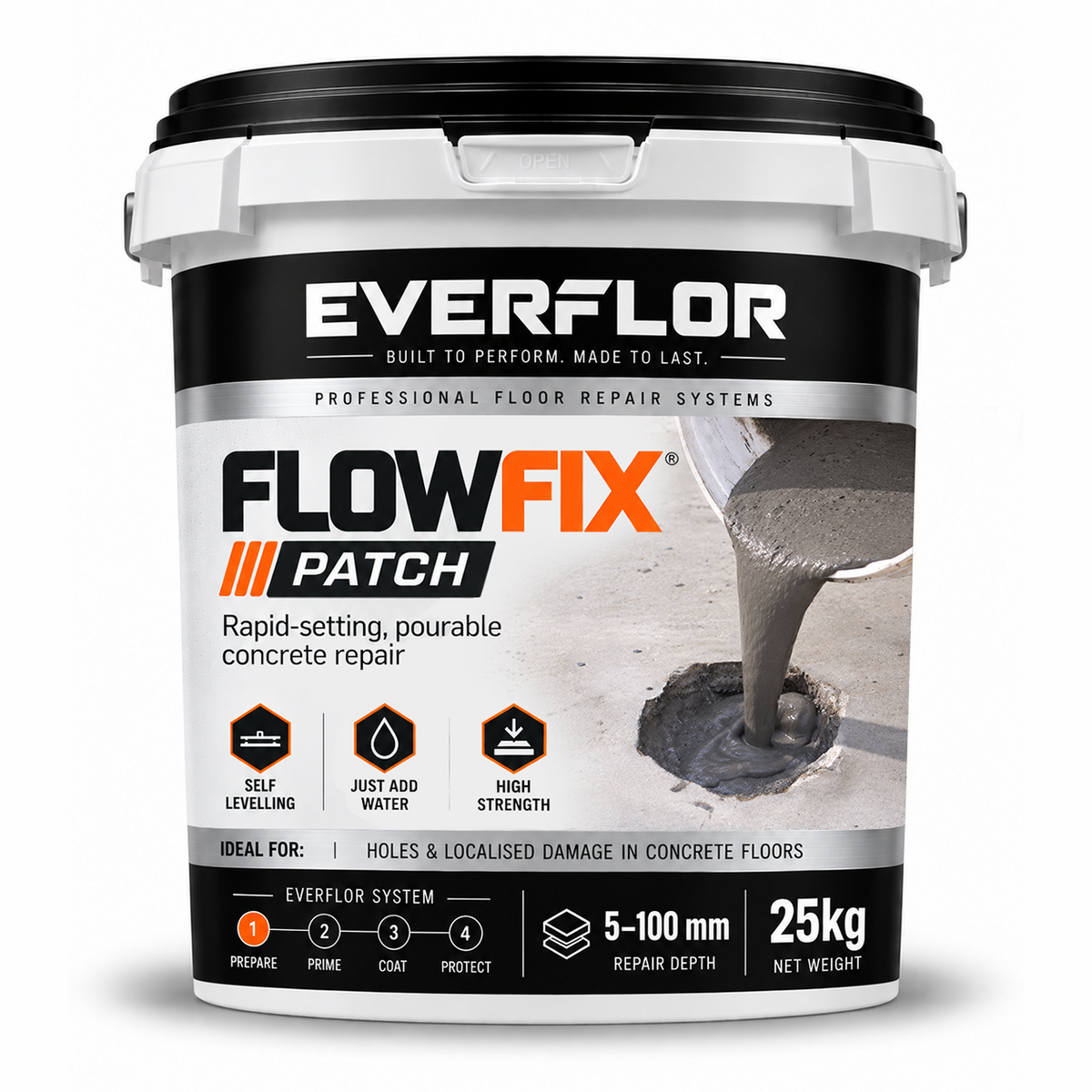
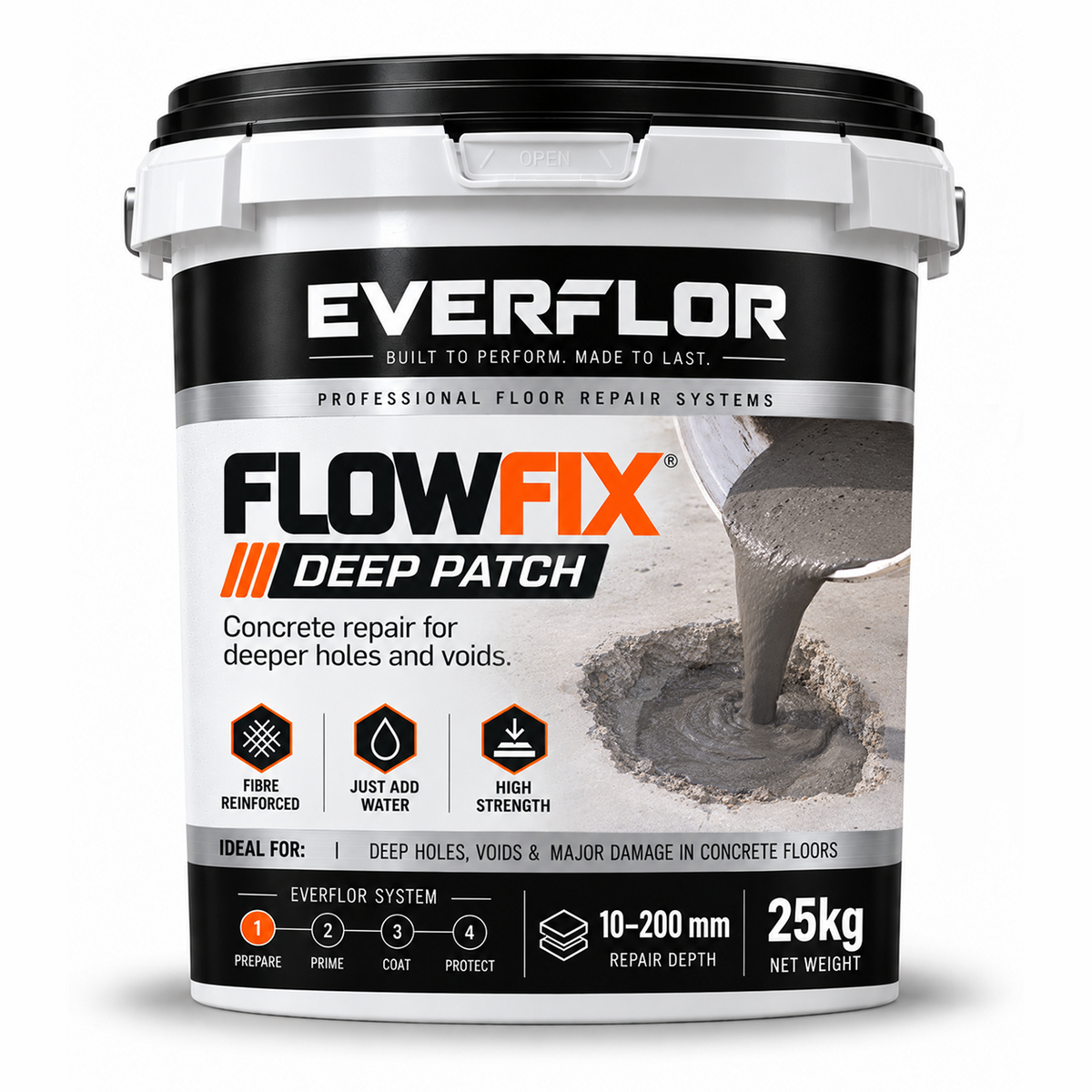
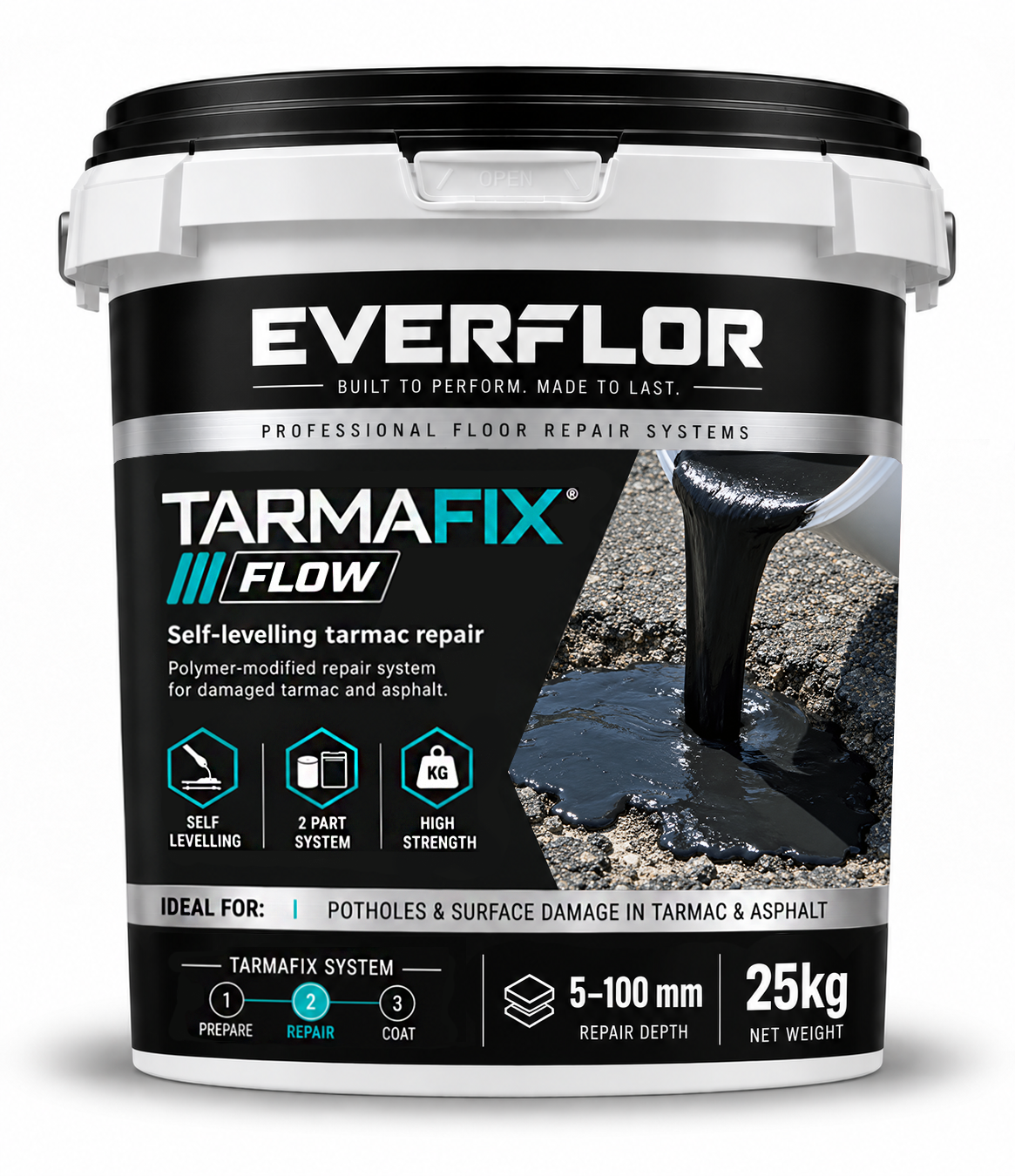
Three products cover different jobs. FlowFix Patch is a rapid-setting, polymer-modified cement mortar for holes and damaged areas in concrete floors. FlowFix Deep Patch is a cement and polymer mortar for deep holes and voids. TarmaFix Flow is a fibre-reinforced polymer cement mortar for potholes and worn areas in tarmac and asphalt. It is also used on concrete.
FlowFix Deep Patch fills the void as one solid section, with no need to build it up in layers. TarmaFix Flow flows level with little trowelling and no compaction.
Suitable Substrates & Surface Preparation
Concrete floor slabs are the main substrate for this range. FlowFix Patch and FlowFix Deep Patch are made for holes and voids in concrete floors. TarmaFix Flow is used on asphalt, tarmac and concrete.
Good practice starts at the edges of the hole. Remove loose, cracked and hollow-sounding concrete until a sound, defined edge remains. A mortar bonded to weak concrete comes away with that concrete.
Clear dust, debris, oil and standing water from the hole before pouring. Contamination left on the base or sides weakens the bond between the mortar and the slab.
FlowFix Deep Patch needs no primer. For the other products, follow the product data sheet on priming and on dampening the substrate. Measure the mixing water as directed, because excess water weakens any cement mortar.
Performance Characteristics & Limitations
These mortars develop strength quickly, so the repaired area returns to use with little downtime. FlowFix Deep Patch takes forklift traffic two hours after placing at 20°C. It cures fully in 24 hours and reaches 45N/mm² compressive strength after 28 days.
FlowFix Patch, in normal conditions, takes forklift traffic again the same day. TarmaFix Flow takes foot traffic after 30 minutes at 20°C and forklift traffic the same day. It cures to a hard, dark grey cementitious repair.
Every time quoted depends on temperature, repair depth and site conditions. Allow longer on cold sites.
These are repair mortars for defined holes, not floor coatings or levelling screeds. They are not intended for a floor that is worn or pitted over its whole area. They do not seal moving joints, and a rigid cement repair placed across a live crack is likely to crack again.
A repair remains visible against the surrounding floor. Where a floor coating is to follow, confirm compatibility and cure time before overcoating.
Internal vs External Considerations
Concrete floors in warehouses, factories and loading bays are the main use for FlowFix Patch. Indoors, the governing factor is usually how soon the aisle or bay must reopen.
TarmaFix Flow is stated for interior and exterior use. It is used in car parks, loading bays, yards and driveways. It is placed without heat or hot-lay plant, and the surface around the hole stays in place.
FlowFix Patch and FlowFix Deep Patch are described for concrete floors. Check the product data sheet before using either on exposed external concrete.
Cement mortars gain strength more slowly in the cold, so unheated buildings and winter yard work need longer before traffic returns. Protect fresh external repairs from rain and frost until they have set.
Selection Guidance & When to Specify Alternatives
Choose by the depth of the hole and the surface around it. FlowFix Patch suits holes and damaged areas in concrete floors. FlowFix Deep Patch is the choice for deep holes and voids.
Choose TarmaFix Flow for potholes and worn areas in tarmac or asphalt.
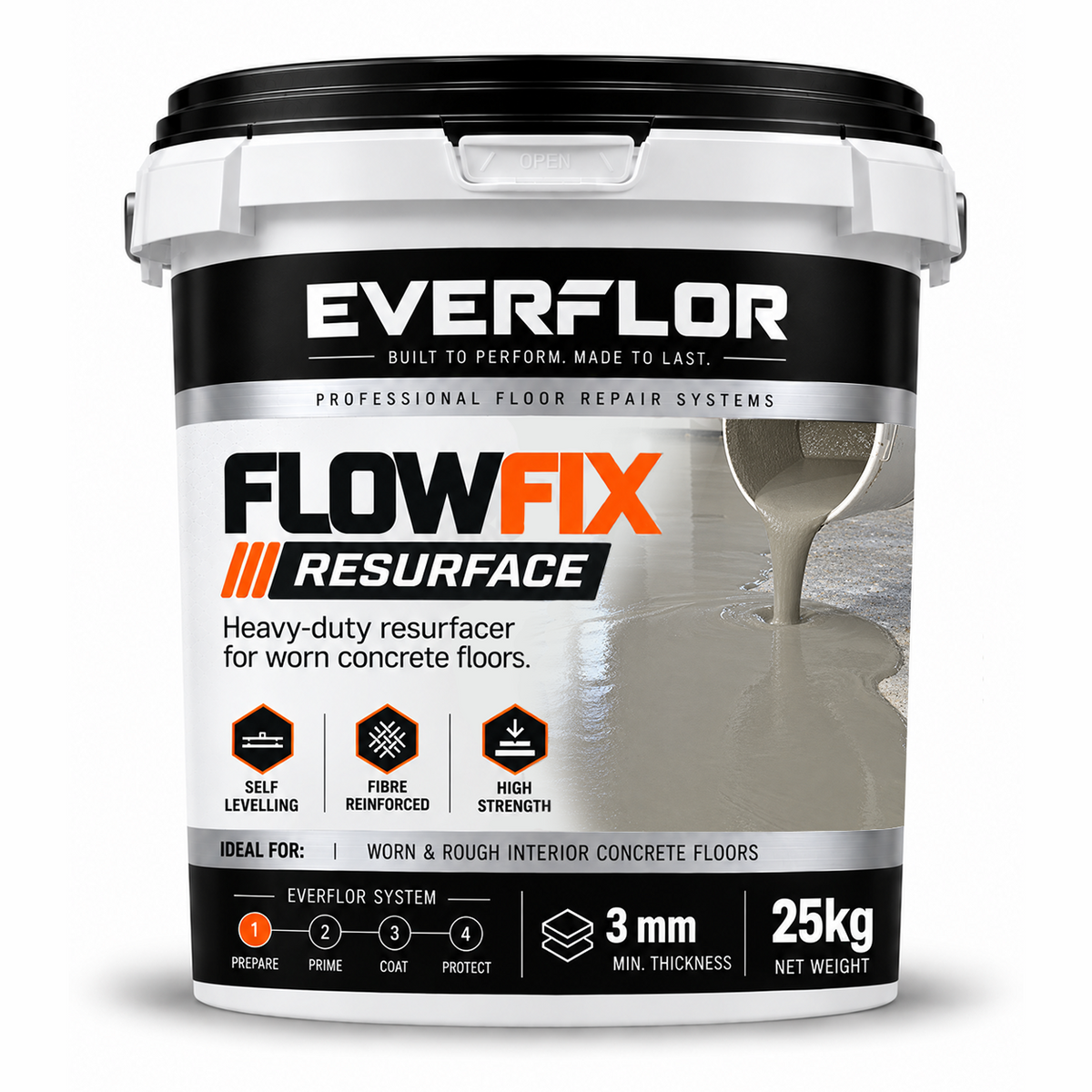
Specify an alternative where the damage is not a hole. A floor that is worn, rough or pitted throughout needs a re-surfacing system. Cracks and joints need crack and joint repair products matched to the movement expected.
Holes caused by slab movement, a failed sub-base or water beneath the floor will return if only the surface is filled. Investigate the cause before repairing. Where a slab is structurally damaged, take advice from an engineer.
For potholes in tarmac surfacing, see the Asphalt Pothole & Hole Repair range.