

Materials required
Everything you’ll need for this guide — grouped by job phase. Use it to order the correct system before you start.
Phase Surface Preparation
-
Acid Etching SolutionAlternative to grinding where mechanical preparation is not feasible.
-
Removes oil, grease, and surface contamination before mechanical preparation.£28.69
You have bought a High-Performance Epoxy Kit for your garage or an exterior concrete paint for your patio. You are ready to roll it out. Stop. Look at the concrete. Is it smooth? Is it shiny? If you paint directly onto smooth, power-floated concrete, the paint will peel off in sheets under your car tyres within a month.
Concrete is naturally non-absorbent. To get paint to stick, you need to roughen the surface to create a mechanical key. You need a texture like 120-grit sandpaper.
You have two options: Rent a heavy industrial diamond grinder, or use Acid Etching. Acid etching is cheaper and easier for DIYers, but it involves dangerous chemistry. Here is how to do it without burning your skin or ruining your slab.
1. The Diagnostic: The Water Bead Test
Before you buy acid, you must check if the concrete can be etched.
-
Pour Water: Pour a cup of water onto various spots of the concrete.
-
Observe:
-
Absorbs (Darkens): If the water sinks in and turns the concrete dark grey within a minute, the surface is open. You might not need aggressive etching, just a good clean.
-
Beads Up: If the water sits on top like a waxed car, the concrete is Sealed or extremely hard/smooth. Acid is required (or mechanical grinding).
2. Degrease First
This is where 90% of people fail. Acid attacks calcium (the cement). It does not attack oil or grease. If there is an oil stain on your garage floor and you pour acid on it, the oil acts as a shield. The acid will simply sit on top of the grease and do nothing.
-
Step 1: Use a heavy-duty Degreaser or alkaline cleaner.
-
Step 2: Scrub vigorously with a stiff broom.
-
Step 3: Rinse. The concrete must be chemically clean of oil before you etch.
3. Safety
You are likely using Hydrochloric Acid (often sold as Muriatic Acid or "Concrete Etch"). This is corrosive stuff.
-
PPE: Safety Goggles (not just glasses), heavy rubber gauntlets, and rubber boots. Do not wear trainers; acid soaks through canvas instantly.
-
Ventilation: If you are in a garage, open the door. The fumes are nasty.
-
The "AAA" Rule: Always Add Acid to water.
-
Never pour water into a bucket of acid. It can react violently and splash back. Fill the bucket with water first, then gently pour the acid in.
4. The Process
-
Dampen: Wet the floor with a hose. The concrete should be damp but not puddling. This helps the acid spread evenly.
-
The Mix: Follow the manufacturer's ratio (usually 1 part acid to 3 parts water).
-
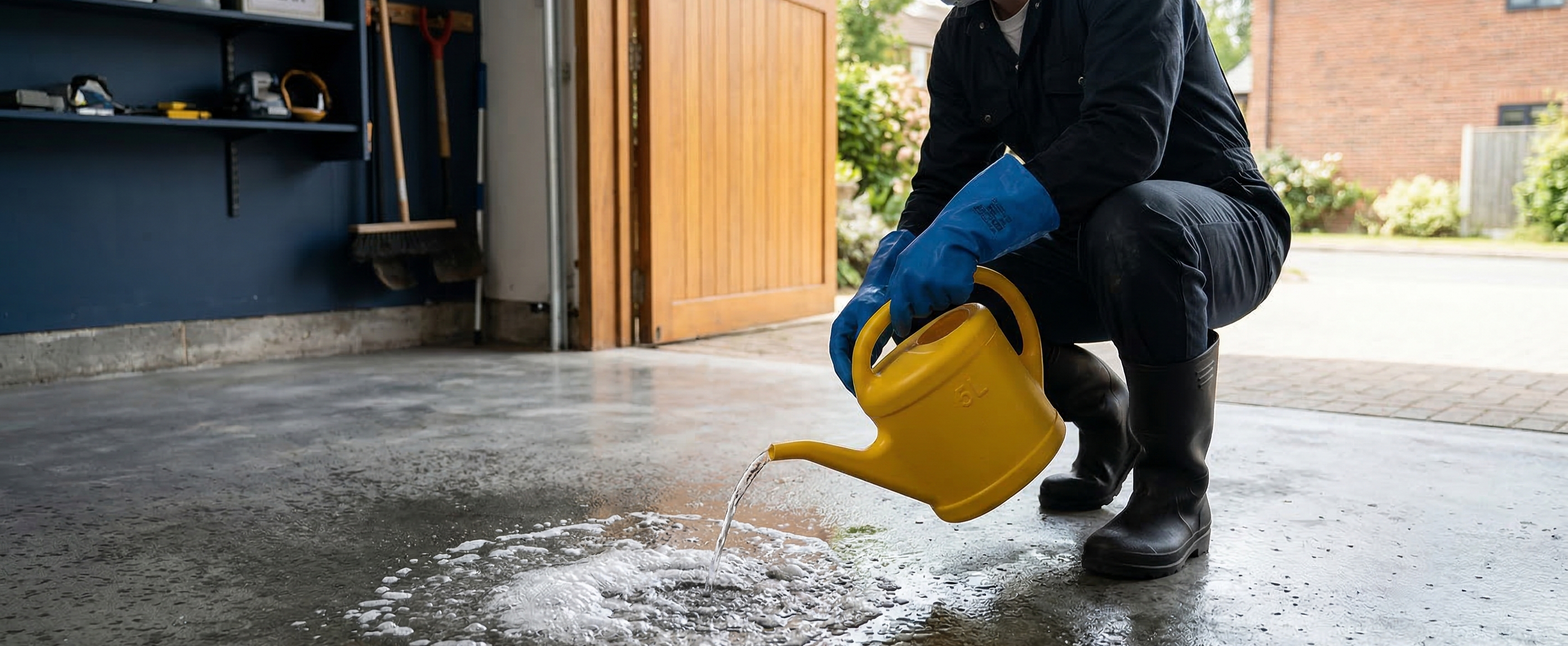
Apply: Use a plastic watering can to sprinkle the solution over the floor. Work in 1 metre sections.
-
The Reaction: You should see immediate Fizzing. This looks like white foam. It means the acid is eating the smooth "laitance" (cement paste) off the top.
-
No Fizz? If it doesn't fizz, there is likely a sealer or grease blocking it. Stop and re-clean/grind.
-
Scrub: While it fizzes, use a stiff broom to push the acid into the pores.
5. Neutralising
You cannot just hose the acid down the drain. It is active. You must Neutralise the pH.
-
The Mix: Dissolve a box of Baking Soda or Soda Ash in a bucket of water. Alternatively, use a specialised neutralising agent.
-
Apply: Pour this over the etched area.
-
Result: The fizzing will stop. The acid is now inert saltwater.
6. The Final Rinse and Dry
Rinse the floor thoroughly with a hose or pressure washer. You need to remove the "sludge" (the dissolved concrete dust).
-
The Touch Test: Once dry, run your fingers over the concrete.
-
The Goal: It should feel like medium-grit sandpaper.
-
The Residue: Rub your hand on it. If your hand comes up white and dusty, you haven't rinsed enough. Paint sticks to concrete, not dust. Rinse again.
7. When to Grind Instead
Acid etching has limits. You should NOT use acid if:
-
The floor is painted: Acid won't remove old paint. You must grind it off.
-
The floor has a sealer: If the acid didn't fizz, the sealer is too thick. You need a mechanical sander.
-
The concrete is fresh: Do not etch concrete less than 28 days old.
Conclusion
Acid etching is the most effective way for a homeowner to prep a garage floor for paint, provided the concrete is unsealed. It turns a smooth, slippery slab into a textured, absorbent surface that grips epoxy like a vice. Just remember: Degrease first, Goggles on, Rinse well.
-
Test with water
-
Scrub off the oil
-
Watch for the fizz
Share:
Recoating Epoxy: How to Prepare an Existing Floor for a Topcoat
How to Clean Oil-Contaminated Concrete for Floor Paint