

Made In Great Britain

Direct from our factory

Free Next Day Delivery

On orders over £750

Product Test Results

All product test results published

Expert Technical Advice

Call or chat with our team

4.9
SummitSeal - Concrete Sealer - Polyurethane - Everest Paints
Anbieter:SummitSeal
  • Klar
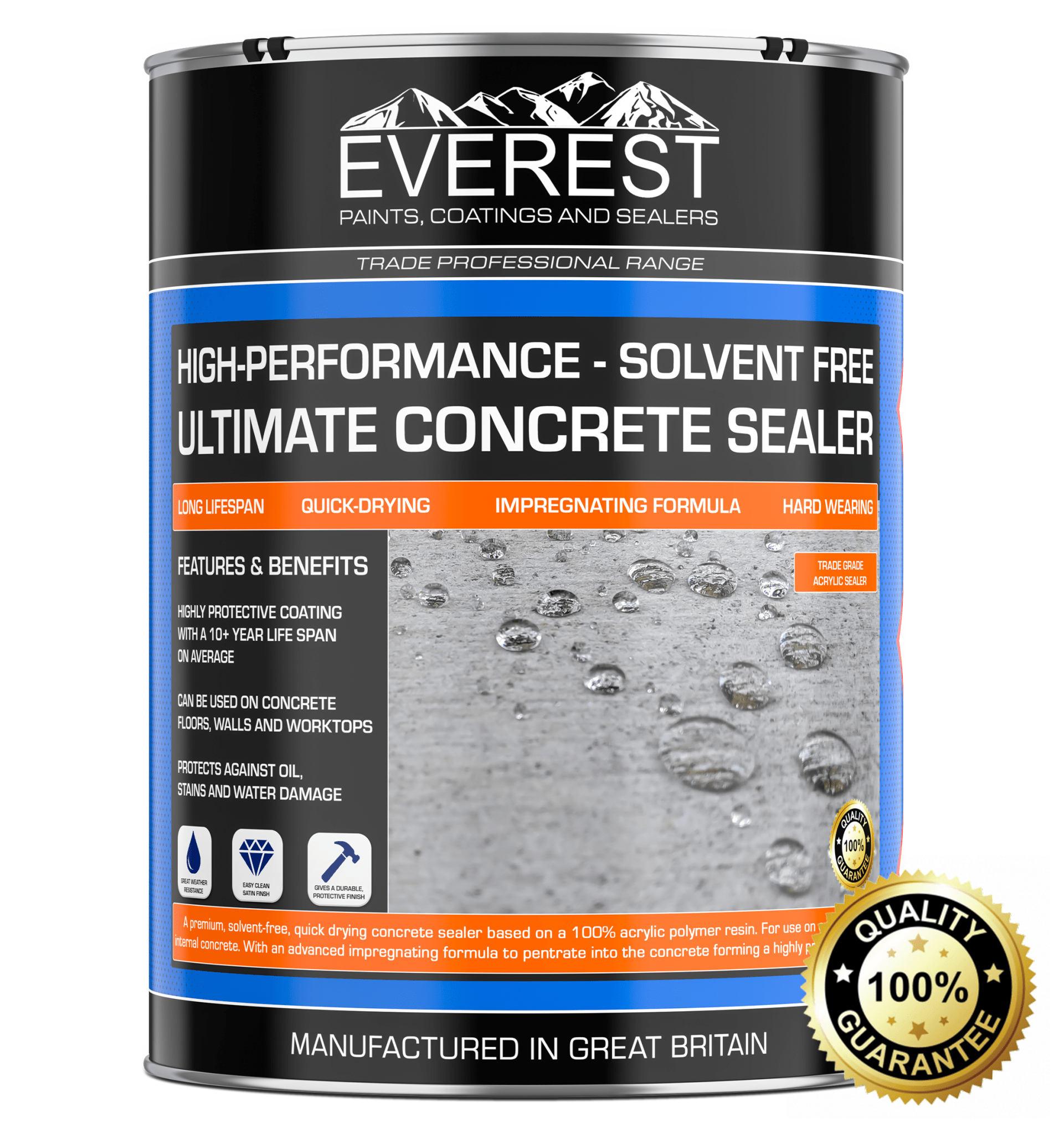
SummitSeal - Ultimate Concrete Sealer - Solvent Free - Colour Enhancer - Everest Paints
Anbieter:SummitSeal
  • Klar
Close-up of a concrete driveway with a blurred background

High Traffic Concrete?

Upgrade to a Polyurethane Sealer System
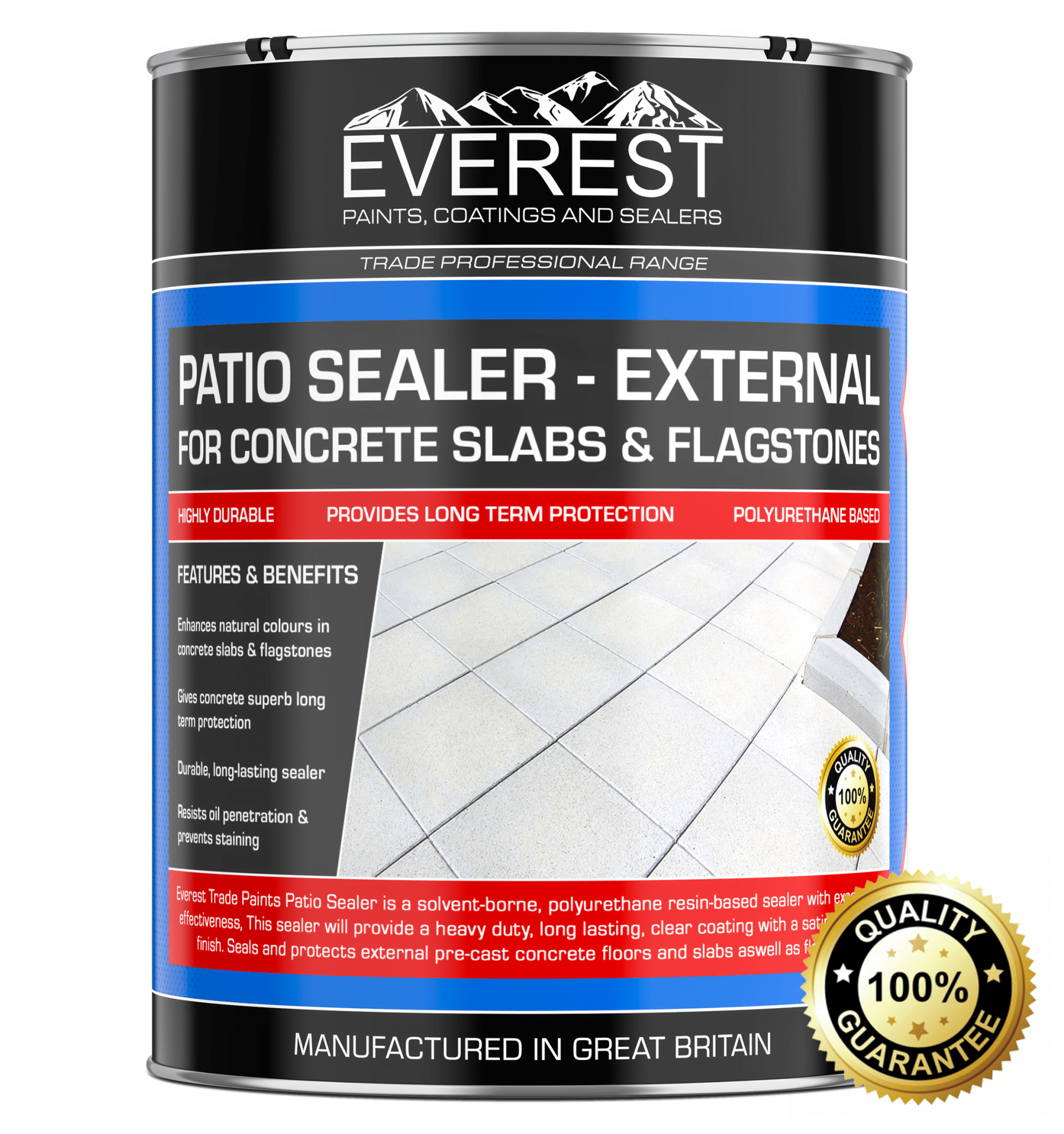
Acrylic sealers provide surface protection but can wear under frequent vehicle traffic. Upgrade to {product name here} for a tougher polyurethane film with improved abrasion resistance on driveways and working floors.

View Polyurethane Sealers
4.9
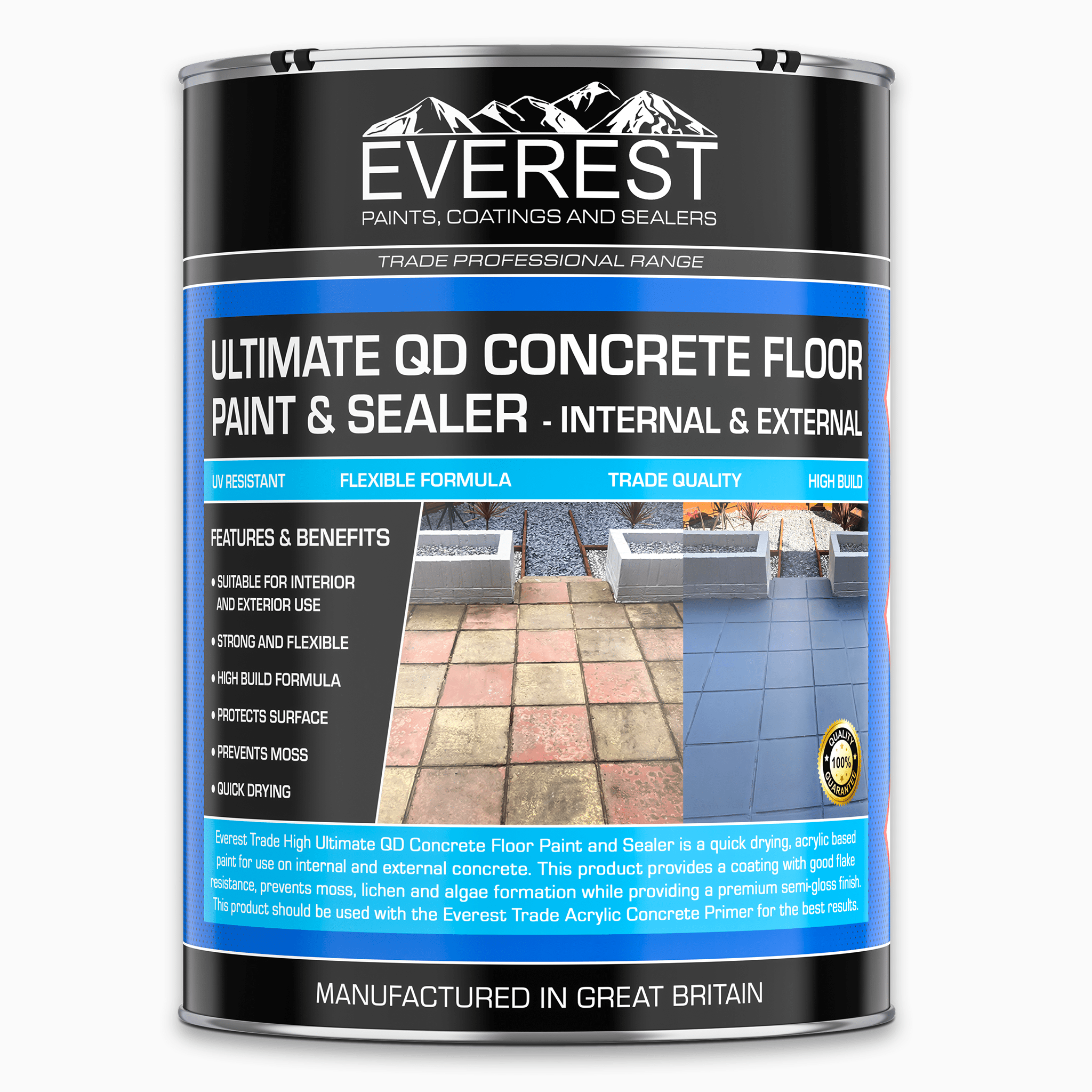
Everest - Ultimate QD Concrete Floor Paint and Sealer - Anti - Slip - Everest Paints
Anbieter:Everest Paints
  • Schwarz
  • Dunkelgrau
  • Grau
  • Hellgrau
  • Gelb
Quick Drying

Touch Dry in 2-4 Hours

Internal & External

Indoor & Outdoor Use

UV Stable

Fade Resistant Coating

Flexible Coating

Resists Cracking & Peeling

Algae Resistant

Prevents Moss & Lichen

Made in England

British manufacturing

Everest - Ultimate QD Concrete Floor Paint and Sealer - Anti - Slip - Everest Paints
Anbieter:Everest Paints
  • Schwarz
  • Dunkelgrau
  • Grau
  • Hellgrau
  • Gelb
Quick Drying

Touch Dry in 2-4 Hours

Internal & External

Indoor & Outdoor Use

UV Stable

Fade Resistant Coating

Flexible Coating

Resists Cracking & Peeling

Algae Resistant

Prevents Moss & Lichen

Made in England

British manufacturing

Concrete Sealers for Driveways and Floors

Duty classification:
Light to Heavy Duty
Suitable substrates:
Concrete slabs Concrete driveways

System Overview

For concrete slabs and concrete driveways, sealing systems are specified to control water ingress, reduce surface dusting and improve resistance to staining and wear. Concrete sealers for driveways and floors must balance penetration, surface durability and vapour permeability depending on whether the substrate is externally exposed or internally trafficked.

The EVEREST SummitSeal range in this collection includes solvent-based acrylic, silane modified water-based acrylic and single pack polyurethane technologies. These systems provide both penetrating and film-forming protection options, allowing specification to align with traffic intensity and aesthetic requirements.

Water-based acrylic sealers prioritise breathable protection and controlled film build. Solvent-based acrylics enhance colour and surface depth while improving surface binding. Single pack polyurethane sealers offer increased abrasion resistance and tougher surface films for higher traffic environments.

Suitable Substrates & Surface Preparation

Concrete must be structurally sound, fully cured and free from laitance, oil contamination, curing compounds and previous incompatible coatings. Mechanical cleaning or light grinding may be required to open the surface and ensure consistent penetration or film adhesion.

Concrete driveways should be inspected for cracking, surface scaling or weak areas before sealing. Structural defects should be repaired prior to application. Oil staining and tyre residue must be removed using appropriate degreasers, as contamination will inhibit adhesion and reduce stain resistance performance.

Moisture condition is critical. Sealing should not proceed on saturated substrates or where moisture vapour transmission is excessive. Breathable water-based acrylic systems are generally more tolerant of residual moisture than denser film-forming polyurethane coatings.

Internal concrete slabs, such as garage floors or workshop areas, should be dry and free from dusting. Where dustproofing is required, penetrating or low build acrylic systems can bind the surface and reduce particulate release.

Performance Characteristics & Limitations

Silane modified water-based acrylic sealers provide water repellency and breathable surface protection. They reduce liquid ingress and staining while allowing moisture vapour to escape, helping to minimise blistering risk on ground-bearing slabs. Abrasion resistance is suitable for light to moderate vehicular traffic when correctly applied.

Solvent-based acrylic systems offer stronger colour enhancement and improved surface binding. They can deepen the appearance of concrete and provide effective resistance to general staining. Vapour permeability is typically lower than water-based alternatives, requiring careful assessment of substrate moisture.

Single pack polyurethane sealers produce a tougher, more abrasion-resistant film suited to higher traffic driveways, garage floors and commercial hardstanding. These systems provide improved wear characteristics but require controlled application thickness to avoid surface defects or reduced slip resistance.

Across all technologies, these sealers are not designed for severe industrial chemical exposure or constant heavy mechanical loading. Performance is dependent on correct preparation and adherence to recommended coverage rates.

Solvent-based systems require appropriate ventilation during application, particularly in enclosed areas.

Internal vs External Considerations

Externally, concrete driveways and patios are exposed to rainfall, freeze–thaw cycling and UV radiation. UV stable acrylic and polyurethane systems maintain clarity and resist yellowing under sunlight. Water repellency reduces surface saturation, helping to limit staining and weather-related degradation.

Internally, such as in garages and workshops, abrasion resistance and dustproofing may be the primary considerations. Water-based systems are often preferred where odour control and vapour permeability are important.

Slip resistance must be considered in both environments, particularly where film-forming systems are applied to smooth concrete. Anti-slip additives may be incorporated where required.

Selection Guidance & When to Specify Alternatives

Concrete sealers in this collection are suitable for domestic driveways, patios, garage floors and light commercial concrete surfaces requiring protection from water ingress and wear.

For light duty or breathable protection on ground-bearing slabs, silane modified water-based acrylic systems provide balanced performance. Where enhanced colour depth and surface binding are desired, solvent-based acrylics may be appropriate.

In higher traffic environments or where extended abrasion resistance is required, upgrading to single pack polyurethane systems is recommended.

If exposure involves aggressive chemicals, heavy industrial trafficking or structural substrate movement, specification should move beyond standard sealer systems to more robust resin flooring or specialist industrial coatings.

System choice should reflect traffic intensity, moisture profile, environmental exposure and desired aesthetic outcome.

Compare Block Paving Sealers

Concrete Sealers FAQs

View All FAQ's

Technical Guidance & Application Advice

Concrete sealing performance depends on substrate condition, moisture content and correct resin selection for the intended traffic level. Penetrating and film-forming systems behave differently in terms of breathability, appearance and abrasion resistance. Proper cleaning, drying and, where necessary, mechanical preparation are essential to ensure consistent adhesion and long-term protection on driveways and floors.

What preparation is required before applying concrete sealers for driveways and floors?

Concrete must be clean, dry and free from oil, grease, curing compounds and laitance. Mechanical abrasion may be required on smooth or power-floated surfaces to promote adhesion for film-forming systems. Oil-contaminated areas should be thoroughly degreased prior to sealing. Moisture content should be assessed, particularly before applying polyurethane or solvent-based coatings. Sealing damp or contaminated concrete can result in whitening, loss of adhesion or uneven film formation.

Should I choose a penetrating or film-forming sealer for a concrete driveway?

Penetrating silane-modified acrylic systems provide water repellency while maintaining vapour permeability and a more natural appearance. Film-forming acrylic or polyurethane sealers create a surface layer that can enhance colour and improve stain and abrasion resistance. For vehicular driveways with regular traffic, a higher build or polyurethane system is often more suitable. Selection should be based on traffic intensity, desired finish and maintenance expectations.

Can concrete sealers be applied to newly laid slabs?

New concrete should be allowed to cure fully before sealing, typically a minimum of 28 days depending on thickness and site conditions. Residual moisture must be reduced to acceptable levels prior to application of film-forming systems. Early sealing can trap moisture, leading to whitening or adhesion issues. Any curing membranes applied during installation must be removed before coating to ensure effective penetration or bonding.

Are solvent-based acrylic sealers suitable for internal garage floors?

Solvent-based systems can be used internally where adequate ventilation is available during application and curing. In enclosed spaces, water-based alternatives are often preferred due to lower odour and easier handling. The substrate must be fully dry before application to avoid surface defects. For garages subject to regular vehicle use, consideration should be given to abrasion resistance and potential tyre marking when selecting the system.

How resistant are these sealers to oil staining and tyre traffic?

Film-forming acrylic and polyurethane sealers improve resistance to oil penetration and surface staining compared to unsealed concrete. Polyurethane systems typically offer greater abrasion resistance under repeated tyre movement. However, no sealer renders concrete fully impervious; prompt cleaning of spills remains necessary. Performance depends on correct film thickness and full cure before trafficking. Excessive turning stress may accelerate wear in thin film systems.

Will sealing prevent concrete dusting in workshops or warehouses?

Yes, both penetrating and film-forming systems can reduce surface dusting by binding or sealing the upper layer of concrete. Film-forming coatings provide a more defined surface barrier, while penetrating systems stabilise the substrate internally. The extent of dust reduction depends on the condition of the concrete. Severely weak or friable surfaces may require mechanical preparation or repair prior to sealing to achieve a durable result.

Didn’t find your answer?

Don't hestitate to contact us

Expert Advice & Guides

A few of our most recent guides applicable to this product range.

View Technical Hub

Dieser Abschnitt enthält derzeit keine Inhalte. Füge über die Seitenleiste Inhalte zu diesem Abschnitt hinzu.