

Our most asked questions.
Need more detail? Visit the Help and Technical Hub for guides and advice.
General FAQs
At Everest Paints, we manufacture high-performance coatings for floors, walls, roofs, driveways and industrial surfaces — all made in the UK. This section covers the common questions customers ask when choosing the right product, setting up trade accounts, or understanding how we operate. Whether you’re a contractor, facilities manager or homeowner, you’ll find clear answers to help you get started.
1. Who are Everest Paints, EverFlor and SummitSeal?
Everest Paints is our main decorative and trade coatings brand, while EverFlor focuses on high-performance floor systems and SummitSeal specialises in sealers for stone, patios, driveways and exterior substrates. All three are manufactured in the UK under Jarvis Industries Limited, ensuring consistent quality, fast lead times and full control over formulation.
2. Are your products manufactured in the UK?
Yes. Every coating we produce — from floor epoxies to driveway sealers — is manufactured in our Tuxford, Nottinghamshire facility. Local production means tighter quality control, fresher stock, and rapid batch turnaround for trade customers.
3. Do you offer trade accounts?
Yes, trade accounts are available for contractors, installers, resellers, and commercial customers. Trade accounts offer improved pricing, dedicated support and credit terms (subject to approval). You can apply through our Trade Portal or contact our sales team for help
4. How do I contact technical support?
Our technical support team is available Monday–Friday via phone, email, or live chat. We can advise on surface preparation, product selection, application conditions, troubleshooting, and system recommendations specific to your project.
5. Do you offer colour matching?
For many systems, yes. We offer tinting into a wide range of RAL and BS colours for selected floor paints, masonry paints and cladding coatings. Availability varies depending on product chemistry — please check the product page or contact our team for confirmation.
6. Which product should I choose for my project?
Our Product Finder tool and Help & Advice library guide you through selecting the right coating for floors, walls, roofs, cladding, patios and driveways. If you prefer 1-to-1 assistance, our technical team can recommend the correct system based on substrate, condition, environment and expected load.
7. Are your products suitable for DIY users?
Many of our coatings are DIY-friendly, particularly masonry paints, driveway sealers and 1K systems. Higher-performance products such as 2K epoxies and industrial coatings require more precise preparation and mixing, but can still be applied by competent homeowners following our guides.
8. Do your products come with a guarantee?
Yes. All products are backed by our quality guarantee and manufactured to industry standards. If you have a problem with adhesion, performance, or batch consistency, our team will work with you to diagnose the issue and offer the appropriate solution or replacement.
9. Can your products be used commercially or industrially?
Absolutely — many of our coatings are designed specifically for heavy-duty environments such as warehouses, workshops, car parks, factories and commercial buildings. Look for the “Industrial Grade” badge on qualifying products or ask our technical team for system advice.
10. Do your coatings meet UK regulations?
Yes. Our products comply with UK VOC regulations, UKCA requirements (where applicable), and industry standards for performance and safety. SDS and TDS documents are available for download on every product page.
Ordering & Delivery
Find everything you need to know about placing an order, delivery times, tracking, pallet shipments and courier options. We’ve streamlined our fulfilment process to ensure fast dispatch and reliable delivery across the UK, even for heavy or hazardous coatings. If you’re unsure about lead times or need urgent turnaround, this section explains it all.
1. When will my order be dispatched?
Orders placed before 10am are usually dispatched the same working day. Orders placed after 10am will dispatch on the next working day. All products are shipped directly from our facility in Tuxford, Nottinghamshire for fast turnaround and fresh stock.
2. Do you offer next-day delivery?
Yes. We offer Next Working Day delivery for £14.95 per item. When ordering before 10am, next-day shipments typically arrive the following working day. Orders placed after the cutoff will dispatch the next day and be delivered the day after.
3. What are your standard delivery times?
Standard delivery takes 2–3 working days and is charged at £9.95 per item. This is available for most paint, sealer and coating products that are not classed as hazardous.
4. Do you ship hazardous goods?
Yes — we use approved DG/ADR transport for hazardous materials such as solvent-based or 2-part coatings. This ensures safe handling and compliance with UK transport regulations. Delivery times may vary slightly depending on carrier requirements.
5. How much is pallet delivery?
Large or heavy orders may be sent via pallet delivery, typically £80+ VAT, depending on location. Remote areas, Scotland and offshore regions may incur additional charges. Our team will always confirm pallet rates before dispatch.
6. Can I collect my order from your facility?
Yes — collection from our Tuxford, Nottinghamshire site is available. Simply select ‘Collection’ at checkout and we’ll notify you when your order is ready to pick up.
7. Can you accommodate specific delivery requirements?
Yes — if you need timed delivery, tail-lift, forklift-only access, site contact coordination or other specific instructions, our logistics team can help. Contact us before ordering and we’ll arrange the best solution.
8. How do I track my order?
You’ll receive a tracking link by email as soon as your parcel or pallet leaves our warehouse. If you have a trade account, tracking updates will also appear in your portal.
9. What if my order arrives damaged or leaking?
If your order arrives damaged, dented or leaking, contact us immediately with photos of the issue. We’ll arrange a replacement or refund and handle the claim with the courier.
10. Do you deliver to Northern Ireland, Highlands and offshore locations?
Yes — delivery is available to most regions, but surcharges or extended transit times may apply. Pallet deliveries to these areas may require a custom quote. Contact our team for clarification before ordering if needed.
Returns & Guarantees FAQs
Our coatings are manufactured to strict quality standards, and we stand behind every product that leaves our factory. Here you’ll find guidance on returns, refunds, mixed-to-order restrictions, and how our satisfaction guarantee applies to trade and retail customers. Clear policies help you buy with confidence.
1. What is your returns policy?
We accept returns on unopened, unused products within 30 days of delivery. If the return is due to a customer change of mind, incorrect ordering, or simply disliking the colour, the customer is responsible for the return postage and a £10 restocking fee per returned order. Once received and inspected, we’ll issue a refund minus these costs.
2. Can I return a product if I ordered the wrong colour or don’t like it?
You can return untinted, unopened products, but you will need to cover return shipping and a £10 restocking fee per order.
Tinted, colour-matched and mixed-to-order items cannot be refunded as they are made specifically for your order.
3. Can I return a product that has been tinted or mixed to order?
No — products that are tinted, colour-matched or mixed to order are non-returnable. These items are manufactured specifically for you and cannot be resold, so please double-check colours before ordering.
4. What if my product arrives damaged or leaking?
If your order arrives damaged, dented or leaking, contact us immediately with photos. We will replace the item or issue a full refund, and you will not be charged for return shipping or restocking.
5. Do I have to pay return postage if I ordered the wrong product?
Yes. If the return is due to customer error (wrong item ordered, unwanted product, colour preference), the customer covers return postage and a £10 restocking fee per order.
If the error is ours, return costs are fully covered.
6. Do you offer a product performance guarantee?
Yes. All Everest Paints, EverFlor and SummitSeal products are manufactured in our Tuxford, Nottinghamshire facility to strict quality standards. If you experience a genuine performance issue, our technical team will investigate the cause and arrange a solution or replacement as appropriate.
7. Can I exchange a product for a different one?
Yes — exchanges are possible for unopened, untinted items. Return postage and the £10 restocking fee apply unless we made an error. Once we receive the original item, we’ll send the replacement.
8. How long does it take to receive a refund?
Refunds are typically processed within 3–5 working days once the returned item reaches our warehouse. Your bank or payment provider may take additional time to finalise the transaction.
9. What is not covered under your guarantee?
Our guarantee does not cover issues caused by:
- incorrect surface preparation
- applying the wrong product for the substrate
- contamination, moisture or oil
- application outside recommended temperature/weather ranges
- incorrect mixing ratios for 2K systems
If unsure, our technical team can advise before you buy.
10. Can I return a used or opened tin?
No. Opened or partially used products cannot be returned for safety, contamination and quality reasons.
Product & Application
Choosing and applying coatings can be technical — so this section explains curing times, coverage rates, temperature limits and compatibility between systems. Whether you’re using a 1K acrylic or a 2K epoxy, these answers help ensure the coating performs exactly as expected. Ideal for new applicators and seasoned professionals alike.
1. What’s the difference between 1K and 2K coatings?
1K (single-pack) coatings are ready to use straight from the tin and are ideal for light to medium-duty projects.
2K (two-pack) coatings require mixing Part A and Part B before use and offer far higher durability, chemical resistance and longevity.
Most industrial floors, workshops and commercial environments benefit from a 2K system.
2. How do I prepare a surface before applying your coatings?
Preparation depends on the substrate, but the goal is always the same: clean, dry, sound and lightly porous.
Typical steps include degreasing, mechanical abrasion, repairing defects, and ensuring the surface is dust-free.
Full preparation guides are available for floors, walls, roofs, cladding, patios and driveways.
3. Can I apply coatings in cold weather?
Most coatings have a minimum application temperature of 5–10°C.
Cold conditions slow curing and can affect adhesion, gloss and hardness.
For winter use, we offer cold-cure epoxies which perform reliably at lower temperatures. Always check the product’s TDS before application.
4. How long should I wait between coats?
Typical recoat times range from 4–24 hours depending on the product, temperature and humidity.
2K epoxies and polyurethanes often have a defined recoat window — applying too early or too late may affect adhesion.
Always follow the timings stated on the product page or TDS.
5. Can I apply your coatings to previously painted surfaces?
Yes — but only if the existing coating is sound, well-bonded, and compatible.
Glossy or unknown coatings should be abraded for a mechanical key, and flaking or soft coatings should be fully removed.
If unsure, contact our technical team or carry out a small adhesion test.
6. What is pot life and why is it important?
Pot life is the amount of workable time you have after mixing a 2K coating.
Once pot life is exceeded, the mixture thickens, heats or gels internally and should not be applied.
Warmer temperatures reduce pot life significantly — always mix small batches in hot weather.
7. How do I calculate how much product I need?
Coverage is shown on each product page and varies with substrate porosity and coating thickness.
As a rule of thumb:
- Smooth surfaces require less product
- Porous or textured surfaces require more
When in doubt, use the coverage calculator or ask our team for a project-specific estimate.
8. Can I mix part of a 2-component kit?
Yes, but only if you mix by weight or by resin-to-hardener ratio as stated in the TDS.
Never “guess” partial mixes — incorrect ratios lead to soft curing, poor adhesion or complete coating failure.
9. How long before the coating can be walked or driven on?
Foot traffic is typically possible after 12–24 hours.
Vehicle traffic varies by system:
- 1K paints: 2–7 days
- 2K epoxies: 3–7 days
- 2K polyurethanes: 24–72 hours
Temperature affects curing — colder conditions lengthen these times.
10. Can moisture or damp floors affect coating performance?
Yes. Moisture is one of the most common causes of coating failure.
Floors must be dry, and moisture-sensitive products should not be applied to substrates with rising damp or trapped moisture.
We offer damp-tolerant primers and epoxies for specific situations — ask our technical team if unsure.
11. Do I need a primer?
Not always.
Primers are recommended when:
- The substrate is porous or weak
- You need to improve adhesion
- You’re using a high-build or specialist topcoat
- Moisture tolerance is required
Product pages clearly state whether a primer is required.
12. Can I apply your coatings with a sprayer?
Many coatings can be sprayed with the correct equipment (airless, HVLP or conventional).
However, 2K epoxies and thick materials often require specific tip sizes and safety precautions (PPE, ventilation, respirators).
If spraying, always check the TDS or ask us for guidance.
Floor Paint FAQs
Our EverFlor floor systems are designed for garages, workshops, factories and high-traffic commercial spaces. In this section you’ll find answers about surface preparation, re-coating over existing paint, curing times, slip resistance and selecting the right product for your environment. It’s your go-to guide for achieving a long-lasting, durable floor finish.
1. Which floor paint should I choose for my project?
It depends on the surface and how it will be used:
- Garages / home workshops:
EverFlor EnduraCoat Epoxy, EverFlor 1K Floor Paint - Industrial floors, warehouses, forklifts:
EverFlor EnduraCoat Epoxy, EverFlor ChemResist Epoxy, EverFlor PU Satin / Gloss - Cold or damp areas:
EverFlor Cold Cure Epoxy - Outdoor or general use on concrete:
EverFlor 1K Acrylic Floor Paint - Anti-slip areas:
EverFlor Anti-Slip Additive (fine, medium or coarse) added to the chosen coating - Line marking:
EverFlor Line Marking Paint or EverFlor Rapid Line Marking (fast cure)
If unsure, our technical team can recommend a system based on traffic, temperature and substrate condition.
2. What’s the difference between 1K and 2K floor paints?
- 1K (single-pack):
Easy to apply, good for light-medium duty floors, garages and general areas. - 2K (two-pack epoxies):
Far stronger, chemical-resistant and longer lasting.
Ideal for warehouses, workshops, machinery areas, loading bays and commercial settings.
Epoxies are always the best choice where durability matters.
3. Can I use your floor paints on bare concrete?
Absolutely — most EverFlor products are designed specifically for concrete.
However, the surface must be:
- clean
- dry
- sound
- correctly prepared
Most concrete benefits from a primer such as:
- EverFlor Prime OT (oil-tolerant)
- EverFlor Prime DT (damp-tolerant)
- EverFlor Prime DP (deep penetrating)
Priming improves adhesion and reduces product consumption.
4. How long before vehicles can drive on the coating?
Approximate cure times:
- 1K Acrylic Floor Paint:
Light vehicles after 3–5 days - 2K HB Epoxy:
Vehicles after 48–72 hours - Cold Cure Epoxy:
Vehicles after 24–36 hours (temperature dependent)
Full chemical cure may take up to 7 days for all systems.
5. Can I apply floor paint to floors with oil contamination?
Yes — but only with the correct system.
Use EverFlor Prime OT (Oil Tolerant) primer first.
It’s designed to adhere to previously oil-contaminated concrete after degreasing.
Epoxy should not be applied directly to oily substrates without this step.
6. Can floor paint be applied to a damp floor?
Standard epoxies cannot.
For damp or newly-laid concrete, use:
- EverFlor Prime DT
- EverFlor Cold Cure Epoxy
These are moisture-tolerant systems that cure safely in less-than-ideal conditions.
7. Do I need to etch or mechanically grind my concrete first?
New, smooth or power-floated concrete usually requires mechanical grinding or acid etching to create a key.
Older concrete normally benefits from:
- degreasing
- repairing cracks or holes
- vacuuming dust
- priming
Strong adhesion always comes from correct preparation.
8. Can I repaint over an existing coating?
Yes, if:
- the existing coating is sound
- well-bonded
- abraded to remove gloss
- compatible
Unknown coatings should be lightly ground or adhesion-tested.
If the old coating is soft, peeling or bitumen-based, it must be fully removed.
9. How many coats do I need?
For most EverFlor systems:
- 1K Acrylic Floor Paint: 2 coats
- 2K Epoxy HB: 1 primer + 1 heavy topcoat
- Cold Cure Epoxy: 1 primer + 1 topcoat
- PU Sealers: 1–2 coats depending on gloss level
Highly porous floors may require additional primer.
10. Can I apply epoxy or PU coatings outdoors?
Yes — but only specific systems.
Suitable outdoors:
- EverFlor 1K Acrylic Floor Paint
- EverFlor Line Marking
- EverFlor PU Sealer (UV stable)
Not suitable outdoors:
- Standard HB Epoxy (will chalk under UV exposure)
11. What coverage should I expect?
Typical coverage rates:
- 1K Floor Paint: 8–10 m² per litre
- HB Epoxy: 4–6 m² per kg
- Primers: 6–10 m² per litre
- PU Sealer: 8–12 m² per litre
Rough or porous concrete reduces coverage significantly.
12. Can I add anti-slip to your floor paints?
Yes — EverFlor Anti-Slip Additives can be:
- mixed into the coating
- or broadcast and over-coated for a more aggressive finish
Available grades: fine, medium, coarse.
Best used with epoxies for maximum durability.
13. Can I mix part of a 2K epoxy kit?
Yes, but you must:
- weigh accurately
- follow the correct mix ratio on the label or TDS
- mix thoroughly, scraping sides and bottom
- never guess
Incorrect ratios cause soft patches or failed curing.
14. How long is pot life?
Most EverFlor epoxies have:
- 20–40 minutes pot life at 20°C
- Shorter in warm weather
- Longer in cooler conditions
Only mix what you can apply in time.
15. Can your floor paints be sprayed?
Some can, but epoxies are generally designed for roller and brush application.
If spraying, you’ll need:
- correct PPE (respirator essential)
- the right tip size
- knowledge of atomising 2K systems
Roller remains the simplest, safest and most reliable method.
Patio & Driveway FAQs
From block paving to tarmac and Indian sandstone, exterior surfaces need the right sealer or coating to protect them year-round. This FAQ category covers everything from stain removal to application tips, weather restrictions and how often you should reseal. Perfect for homeowners and contractors who want a reliable, professional-grade finish.
1. Which sealer or coating should I use for my patio or driveway?
It depends on the surface type and the finish you want. Here’s how to choose the right product from the SummitSeal and EverFlor ranges:
Block Paving
Best options:
- Solvent-Based Block Paving Sealer (Matt or Satin)
Hard-wearing, excellent joint stabilisation, strongest colour enhancement. - Water-Based Block Paving Sealer
Available in Dry Finish, Colour Enhancer, or Wet Look.
Great for low-odour application and areas where solvent use is restricted.
Tarmac & Asphalt
- SummitSeal Tarmac Restorer
Restores faded driveways, binds and rejuvenates the surface. - EverFlor AsphaltCoat
Industrial-grade coating for heavy-use areas or commercial sites.
Stone Patios (Indian Sandstone, Limestone, Porcelain, Slate, etc.)
Use SummitSeal Stone Sealer, available in three finishes:
- Dry Finish (Natural Look) — preserves natural colour
- Colour Enhancer — enriches tones without gloss
- Wet Look — deeper, richer finish
Perfect for patios, pool surrounds, and decorative stone.
Imprinted or Patterned Concrete
Use the dedicated SummitSeal Imprinted Concrete Sealer, available in:
- Solvent-Based: Matt or Satin
- Water-Based: Dry, Colour Enhancer, or Wet Look
Ideal for driveways, decorative concrete, and stamped patios.
High-Traffic or Heavy-Duty Areas
Choose a PU Sealer (Polyurethane)
- Always Wet Look
- Maximum durability, chemical resistance and abrasion resistance
- Ideal for commercial areas, vehicles, or frequent cleaning
Cracks, Repairs & Surface Prepping
Before sealing, you may need:
- Crack repair compounds
- Jointing sand replacement
- Cleaning / degreasing products
Correct preparation ensures the sealer bonds properly and performs long-term.
2. Can I seal a patio or driveway that's damp?
Generally, no — sealing should only be done on dry surfaces.
Moisture trapped under a sealer can cause whitening, peeling or reduced durability.
Exceptions:
- Some water-based sealers tolerate slightly damp surfaces.
Always check the TDS for minimum moisture requirements.
3. How long should I wait after power washing before sealing?
A minimum of 24–48 hours, depending on temperature and porosity.
Porous block paving and sandstone may require up to 72 hours.
Warm, breezy weather speeds up drying. Cold, shaded areas take longer.
4. Can SummitSeal products stop weeds?
Yes — solvent-based block paving sealers help:
- bind jointing sand
- reduce weed regrowth
- minimise algae buildup
However, no sealer permanently stops weeds. Proper jointing and maintenance are still required.
5. Does sealing change the colour of the surface?
It depends on the product:
- Solvent-based sealers: Slight colour enhancement (“wet look”), especially on block paving and imprinted concrete.
- Water-based sealers: More natural, matte finish.
- Stone sealers: Can deepen tones on sandstone or slate depending on porosity.
Always patch test if colour change is a concern.
6. How long does a patio or driveway sealer last?
Typical durability:
- Block paving sealer: 2–4 years
- Tarmac restorer: 2–3 years
- Stone sealers: 3–5 years (varies by porosity)
- Imprinted concrete: 2–3 years (more in sheltered areas)
High-traffic or exposed areas may need topping up sooner.
7. Do I need to re-sand block paving before sealing?
Yes — if the joints have washed out.
Use sharp sand and brush it into the joints so they’re fully filled before sealing.
This helps stabilise the paving and improves the finished appearance.
8. Can I apply SummitSeal products in cold weather?
Best applied between 10°C and 25°C.
Below 8–10°C:
- curing slows dramatically
- solvent-based sealers may bloom
- risk of whitening increases
Avoid sealing during frost, rain or when rain is forecast within 4–6 hours.
9. Can I apply sealer to a previously sealed driveway?
Yes — but only if the previous coating is:
- sound
- not flaking
- compatible with the new product
If a previous sealer is peeling or unknown, a small patch test is essential.
10. How long before I can walk or drive on a sealed surface?
Typical times:
- Foot traffic: 3–6 hours
- Vehicular traffic: 24–48 hours
- Full cure: 3–5 days
Cooler temperatures extend drying time.
11. Will sealing stop stains from oil, dirt, BBQ spillages, etc.?
Sealing significantly reduces staining by creating a protective barrier.
Stone sealers, in particular, provide strong resistance to:
- grease
- oil
- wine
- BBQ residue
- algae
But no sealer makes surfaces completely stain-proof.
12. Can I use a roller, brush, or sprayer?
All three can be used:
- Roller: Most common; gives an even finish.
- Brush: Good for edges and small areas.
- Sprayer: Fastest method but requires solvent-resistant equipment for solvent-based sealers.
Never use garden sprayers with solvents — they melt.
13. Can I fix white patches after sealing?
Whitening is normally caused by moisture.
Fix options:
- apply a light coat of solvent-based sealer to re-dissolve the top layer
- allow the surface to fully dry and re-coat
- remove affected areas with solvent wash
Our team can advise the best method based on the sealer used.
14. How much sealer do I need?
Typical coverage:
- Block paving: 3–5 m² per litre
- Tarmac: 4–6 m² per litre
- Stone: 6–10 m² per litre
- Imprinted concrete: 4–6 m² per litre
Highly porous surfaces may need additional coats.
15. Can patio and driveway coatings be made anti-slip?
Yes — you can add anti-slip aggregates to the final coat, just make sure the compatible with clear coatings, like our Clear Anti-Slip Additive.
This is useful for:
- sloped driveways
- swimming pool surrounds
- sandstone patios
- high-traffic outdoor areas
Medium-to-coarse grades provide the best grip outdoors.
Walls, Cladding & Roof FAQs
Exterior walls, metal cladding and roofing materials all require different coating systems depending on age, condition and exposure. This section explains stabilisers, primers, weatherproofing, adhesion questions and product selection for each substrate. If you’re renovating, maintaining or upgrading a building exterior, start here.
1. Which coating should I use for my walls, cladding, or roof?
Choosing the right coating depends on the substrate:
Masonry Walls (Homes & Commercial Buildings)
- Everest Trade Masonry Paint — high-cover, weather-resistant
- Best for: render, brickwork, blockwork, exterior walls
Barns, Sheds & Agricultural Buildings
- Everest Barn Paint — water-based acrylic, flexible, great adhesion
- Designed for: timber, metal, concrete, fibre cement
Metal or Plastisol-Coated Cladding
- Everest Cladding Paint (Solvent-Based) — stronger bonding, harder finish
- Everest Cladding Paint (Water-Based) — lower odour, easier application
- Suitable for: steel cladding, plastisol, aluminium, industrial units
UPVC & Trim Surfaces
- Everest Multi-Surface Primer + a cladding or trim topcoat
- For windows, doors, fascia, soffits
Roofs (Asphalt, Felt, Slate, Metal)
- Everest Roof Coat / Acrylic Roof Paint — breathable, weatherproof
- Ideal for slate, concrete tiles, aged felt or flat roofs
If unsure, our technical team can match a full system to your building type and condition.
2. Can I paint over previously painted walls or cladding?
Yes — if the existing coating is sound and well bonded.
Before recoating:
- Wash down the surface
- Abrade glossy surfaces
- Remove flaking or chalky paint
- Apply a stabiliser if the wall is powdery
- Use appropriate primers for metal or plastisol cladding
If the old coating is unknown or failing, a test patch is recommended.
3. What preparation is needed before painting exterior walls?
Good prep ensures long-term durability. Typical steps include:
- Pressure wash to remove dirt and algae
- Treat mould or moss
- Scrape flaking paint
- Repair cracks
- Use Everest Masonry Stabiliser on chalky or weak areas
- Ensure the surface is dry before painting
Porous render may need two full coats for uniform colour and protection.
4. Can I paint exterior walls or cladding in cold weather?
Most water-based paints require:
- Minimum 8–10°C surface temperature
- Dry weather for 4–6 hours after application
Solvent-based cladding paints are more temperature-tolerant but still shouldn’t be applied in frost or high humidity.
Avoid painting:
- early morning dew
- late evening cooling
- when rain is forecast
Cold-cure options are available for certain systems if required.
5. What’s the difference between water-based and solvent-based cladding paint?
Water-Based Cladding Paint
- Low odour
- Fast drying
- Eco-friendly
- Ideal for occupied buildings
- Great for maintenance repaints
Solvent-Based Cladding Paint
- Stronger adhesion to older or chalky plastisol
- Smoother flow and higher durability
- Better corrosion resistance on metal
If the substrate is aged plastisol, oxidised, or exposed to harsh weather, solvent-based is often the best choice.
6. Do I need a primer for cladding or roofing systems?
Not always — but in certain cases primers are essential:
- Bare metal: requires an anti-corrosive primer
- Plastisol or PVC surfaces: adhesion primer recommended
- Chalky masonry: stabiliser required
- UPVC: MUST be primed for proper bonding
- Bitumen roofs: compatible primer improves sealing
Your product pages will state whether a primer is required for that specific surface.
7. Can I use masonry paint on render, pebble dash, or roughcast?
Yes — Everest masonry coatings are suitable for:
- smooth render
- roughcast
- pebble dash
- blockwork
- old painted surfaces (sound condition)
Rough surfaces may require extra paint to achieve even coverage.
8. Can I use wall paint on a roof?
No — roofs need coatings designed for:
- standing water
- thermal movement
- higher UV exposure
- weathering extremes
Use Everest Roof Paint, not masonry paint, for tiles, slate, felt or metal roofing.
9. How long does exterior paint last?
Typical durability:
- Masonry Paint: 8–12 years
- Barn Paint: 5–10 years (depends on substrate)
- Cladding Paint: 8–12 years
- Roof Coatings: 5–8 years
Exposure, colour choice, and weather conditions affect lifespan.
10. Can I spray your wall and cladding paints?
Yes — many Everest coatings can be applied by airless sprayer.
Spraying is ideal for:
- large industrial cladding units
- barns and agricultural buildings
- roof tiles
- large rendered walls
Use correct tip sizes and always follow safety precautions.
11. How long before rain can fall on freshly painted surfaces?
Typical safe times:
- Water-Based Masonry & Barn Paint: 2–4 hours
- Solvent-Based Cladding Paint: 1–2 hours
- Roof Coatings: minimum 4 hours, longer in cold conditions
Wind, shade and humidity all affect drying.
12. Will painting help with damp issues?
Paint alone cannot fix rising damp, trapped moisture or leaks.
However:
- Everest Masonry Paint improves weather resistance
- Stabiliser helps bind powdery surfaces
- Breathable coatings allow moisture to escape
Structural damp issues must be resolved before coating.
13. Do you offer colour matching?
For cladding, barn paints and many commercial coatings — yes, depending on base system.
We match against:
- RAL
- BS
- Popular architectural colours
Custom colours may have minimum order quantities depending on the product.
Safety & Line Marking FAQs
Durable line marking and safety coatings are critical in warehouses, factories, car parks and loading bays. This section answers common questions around choosing the right line marking paint, slip-resistant systems, colour standards, durability, and how to prepare and apply markings for long-term performance. If you’re improving site safety, traffic flow or compliance, this is the place to start.
1. Which product should I choose for safety zones, walkways or line marking?
Your choice depends on the environment:
For Industrial Line Marking
- EpoxyMark (2K Water-Based Epoxy) → Highest durability indoors, forklift routes & long-term safety zones
- StepMark (Solvent-Based Epoxy) → Tougher chemical/abrasion resistance, faster dry
- RoadMark (Chlorinated Rubber) → Rapid-dry, best for outdoor markings & car parks
- TrafficMark (1K Water-Based) → Light/medium-duty indoor markings
- Tennis Court Line Paint → For sports areas on porous macadam
- Tarmac Line Paint → For domestic driveways after Driveway Restorer
For Safety Flooring (Anti-Slip Zones)
- TractionCoat (Broadcast System) → Maximum grip, ramps, wet zones
- SafetyTread (Pre-Mixed Anti-Slip) → Medium–high grip, easy application
- TouchGrip (Aluminium Oxide) → Extremely tough, forklift areas
- Anti-Slip Variants of Standard Paints → Light–medium grip for general areas
For Hygiene-Sensitive Areas
- Hygienic Water-Based Epoxy → Seamless, easy-clean, suitable for kitchens & food prep
One category, one purpose: safer floors, clearer markings, reduced risk.
2. What’s the difference between TractionCoat, SafetyTread and TouchGrip?
All are anti-slip systems, but with different performance levels:
- TractionCoat: Broadcast aggregate → maximum slip resistance (industrial ramps, wet areas)
- SafetyTread: Pre-mixed additive → consistent medium/high grip, simple roller application
- TouchGrip: Aluminium oxide → toughest surface, withstands forklifts & machinery
Anti-slip versions of standard floor paints → lighter grip for everyday safety areas.
3. Are your line marking paints suitable for forklift traffic?
Yes — but choose based on durability:
- Best: EpoxyMark, StepMark
- Outdoor: RoadMark
- Light-duty: TrafficMark
- Driveways & domestic: Tarmac Line Paint
Forklift wheels plus turning stress = use epoxy where possible.
4. Can these products be used together to build full safety systems?
Absolutely.
Your range is designed to mix and match:
Example systems:
- EpoxyMark lines + TractionCoat anti-slip ramps
- StepMark hatchings + TouchGrip for high-wear edges
- Hygienic epoxy + fine anti-slip in food prep routes
- RoadMark bay markings + Tarmac anti-slip lines in driveways
Everything works as a modular safety suite.
5. Do I need a primer before applying safety coatings or line marking?
Often yes, depending on floor condition:
- Prime OT → oily floors
- Prime DT → damp-tolerant
- Prime DP → porous, dusty or weak substrates
Proper priming greatly increases adhesion and lifespan.
6. How long do these coatings take to dry?
Approximate cure times at 20°C:
Line Marking:
- RoadMark → 10–20 mins
- StepMark → 20–40 mins
- TrafficMark → 20–40 mins
- EpoxyMark → Walkable 6–12 hrs
Anti-Slip Products:
- SafetyTread → 4–8 hrs
- TouchGrip → 8–12 hrs
- TractionCoat → 12–24 hrs depending on aggregate
Hygienic Epoxy:
- Touch dry 1–3 hrs
- Light use 12–18 hrs
Cold conditions extend all cure times.
7. Can I use these coatings outdoors?
Yes — especially:
- RoadMark (best for external)
- Tarmac Line Paint
- TractionCoat & TouchGrip (excellent outdoors)
- StepMark (suitable outdoors)
TrafficMark & EpoxyMark → outdoors only in warm, dry conditions.
8. How long do safety coatings and line markings last?
Typical durability:
- EpoxyMark: 2–5+ years
- StepMark: 2–4 years
- RoadMark: 1–3 years outdoors
- TrafficMark: 6–18 months
- TractionCoat: 3–7 years
- TouchGrip: 3–6 years
- SafetyTread: 2–4 years
- Hygienic Epoxy: 3–5 years depending on cleaning chemicals
Heavy forklift turning is the main wear factor.
9. Can I make line markings anti-slip?
Yes — in two ways:
- Mix fine anti-slip additive into the paint
- Broadcast a fine grit over the wet line marking
This is ideal for:
- ramps
- loading bays
- wet areas
- outdoor lines
- pedestrian crossings
10. How do I choose the right anti-slip level?
Simple guide:
- Maximum grip: TractionCoat (broadcast)
- Industrial heavy wear: TouchGrip
- General commercial: SafetyTread
- Domestic/light: Anti-slip paint variants
- Food-safe: Hygienic epoxy + fine grit
11. Are your products suitable for HACCP, food prep or clinical areas?
Yes — use:
- Hygienic Water-Based Epoxy
- Add fine anti-slip additive if required
- Ensure surface remains cleanable and sanitisation-friendly
12. Can I spray any of these coatings?
- RoadMark, StepMark, TrafficMark → spray-friendly
- EpoxyMark → roller recommended (can be sprayed by trained applicators)
- Anti-slip systems → typically roller-only
- Hygienic epoxy → brush/roller
Spraying over aggregates is not recommended.
13. Can I use these products to mark pedestrian routes, fire exits and hazard zones?
Yes — all safety products integrate visually and functionally:
- Line marking → navigation
- Anti-slip → reduced slip risk
- Hygienic systems → cleanable safety zones
Colours can be matched to RAL/BS or your site’s safety standard.
14. Will these coatings resist chemicals, oils and cleaning agents?
Yes — especially:
- EpoxyMark
- StepMark
- TouchGrip
- Hygienic WB Epoxy
RoadMark and TrafficMark have moderate chemical resistance.
15. Which product is best for stairs, ramps and slippery slopes?
- TractionCoat (Coarse) → highest grip
- TouchGrip → best for heavy wear on metal/industrial steps
- SafetyTread → easier application for general steps
- EpoxyMark with anti-slip → forklift ramps
Technical FAQs
For customers who want deeper insight into coating behaviour, this is your technical reference point. Learn about pot life, moisture sensitivity, substrate conditions, chemical resistance, and the science behind epoxy and polyurethane systems. These answers help ensure long-term performance and correct application in demanding environments.
1. What is pot life, and why does it matter?
Pot life is the amount of workable time a 2K product has once Part A and Part B are mixed.
After pot life expires:
- viscosity rises
- chemical reaction accelerates
- the product may gel or harden in the bucket
- adhesion and curing performance drop significantly
Temperature dramatically affects pot life:
Higher temperature → shorter pot life, faster cure.
Lower temperature → longer pot life, slower cure.
Never apply a product after its pot life has ended, even if it “looks OK”.
2. Why do 2K coatings have a mixing ratio, and how precise must it be?
The ratio ensures the correct stoichiometry (the chemical balance between resin and hardener).
Incorrect ratios cause:
- soft or undercured patches
- brittleness
- poor adhesion
- reduced chemical/abrasion resistance
- discolouration
Accuracy matters.
For partial mixes, always weigh out the correct ratio — never eyeball it.
3. What is the difference between ‘touch dry’, ‘walkable’ and ‘full cure’?
These are different phases:
- Touch Dry: Surface feels dry but film is still very weak.
- Walkable / Light Use: Safe for foot traffic, but coating is still developing hardness.
- Full Cure: Maximum chemical, mechanical and abrasion resistance achieved.
Every coating reaches these stages at different times depending on:
- formulation (1K vs 2K)
- temperature
- humidity
- film thickness
Full cure may take 3–7 days, even if walkable in hours.
4. Why does temperature affect curing so much?
Coatings are chemical reactions.
Lower temperatures slow the reaction → slower cure, lower gloss, risk of amine blush (epoxies).
Higher temperatures accelerate the reaction → shorter pot life, higher gloss, faster drying.
The ideal application range is typically 10–25°C unless using cold-cure products.
5. What is amine blush on epoxy coatings?
A waxy or greasy film that forms when epoxies cure in cool, humid or damp conditions.
It can interfere with adhesion of subsequent coats.
If blush occurs:
- wash with warm water and detergent
- lightly abrade
- allow to fully dry
- recoat
Cold, humid environments are the main cause.
6. What does a ‘recoat window’ mean?
A recoat window defines when a second coat can safely be applied:
- Too early: solvent entrapment or lifting
- Too late: intercoat adhesion failure (peeling, delamination)
2K epoxies and PU systems often have both minimum and maximum recoat windows.
If the window is missed, sanding is normally required.
7. Why does concrete need to be dry before coating?
Moisture is a common cause of coating failure.
Wet concrete can cause:
- blistering
- whitening
- delamination
- loss of adhesion
- poor curing of 2K systems
If moisture is unavoidable, use a damp-tolerant primer like Prime DT.
8. Can I coat newly laid concrete?
Fresh concrete contains residual moisture and must cure for 28 days before most coatings.
Exceptions:
- moisture-tolerant primers
- damp-tolerant epoxies
But even then, moisture testing is recommended.
9. Why do power-floated floors need mechanical prep?
Power-floating creates a smooth, dense laitance layer that coatings cannot bond to.
Mechanical grinding or shot-blasting opens the surface.
If not removed → peeling and flaking will occur.
10. Why do coatings fail? (Most common causes)
Top causes of failure across the industry:
- Poor preparation (dust, laitance, contamination)
- Moisture in the substrate
- Incorrect mixing or ratio errors in 2K products
- Applying in the wrong temperature range
- Using the wrong primer or no primer
- Applying too thick or thin
- Traffic before full cure
- Unknown existing coatings underneath
90% of coating failures come from preparation issues, not the product.
11. What is viscosity, and why does it change?
Viscosity is the thickness of a coating.
It changes with:
- temperature
- shear (mixing)
- solvent content
- pigmentation
- filler loading
Warm product = lower viscosity.
Cold product = thick, harder to apply.
For consistent results, store coatings indoors overnight before use.
12. How long should I wait before applying a second coat?
General guidance:
- 1K Acrylic: 4–12 hours
- Epoxy (2K): 12–24 hours (within recoat window)
- PU: 6–16 hours
- Solvent-based line marking: often recoatable in minutes
Always check the TDS — conditions matter.
13. Can I mix one brand’s Part A with another brand’s Part B?
Never.
Each Part A and Part B are chemically designed for each other.
Mismatching systems causes:
- incorrect curing
- extreme brittleness
- soft patches
- poor chemical resistance
- unpredictable reaction heat
The ratio, resin type, hardener type and reactive diluents all vary by manufacturer.
14. How do I know if a floor needs a primer?
Signs a primer is needed:
- porous, dusty or chalky surface
- power-floated concrete
- oil contamination
- moisture present
- very old or weak concrete
- high-build coatings planned
Primers improve adhesion, reduce product consumption and even the finish.
15. Why do coatings sometimes appear patchy or matte in areas?
Common causes:
- highly porous areas soaking up film
- uneven prep
- uneven film thickness
- application in low temperatures
- moisture exposure during cure
- contamination or oil patches
- roller shedding or poor mixing
Many of these are resolved by priming properly.
16. Can I accelerate drying with heaters?
Yes — gently.
Avoid:
- direct heat on the coating
- gas heaters (introduce moisture)
- overheating
Use dry, indirect warm air; never blast heat directly at the floor.
17. What’s the difference between water-based and solvent-based coatings, technically?
Water-Based:
- lower odour
- often more flexible
- slower curing in cold
- easier cleanup
- excellent for occupied buildings
- typically less chemical resistant (unless epoxy)
Solvent-Based:
- higher adhesion to aged surfaces
- faster drying in cold
- stronger flow-out
- better chemical & abrasion resistance
Modern water-based epoxies (like EpoxyMark and Hygienic Epoxy) rival many solvent-based systems.
18. How do I know if a coating has fully cured?
Signs of full cure:
- uniform gloss
- hardness when pressed with a fingernail
- no imprinting under light pressure
- chemical odour significantly reduced
- slight warming has stopped
Full cure takes longer than people expect — 3–7 days usually.
19. Why does colour sometimes vary between batches?
Pigment lots, resin changes and manufacturing conditions can cause slight variation.
To avoid shade differences:
- purchase enough product from one batch
- maintain consistent film thickness
- avoid applying one coat from an old batch and the next from a new batch
We manufacture in-house, which gives you superior batch consistency versus toll-made products.
20. Do your 2K coatings exotherm (heat up)?
Yes — especially in warm weather or when left in the mixing pot.
To reduce heat:
- mix smaller quantities
- pour out onto the floor immediately
- never leave a mixed epoxy in the bucket
Exotherm accelerates gelling and reduces pot life.
Our Best Selling Products
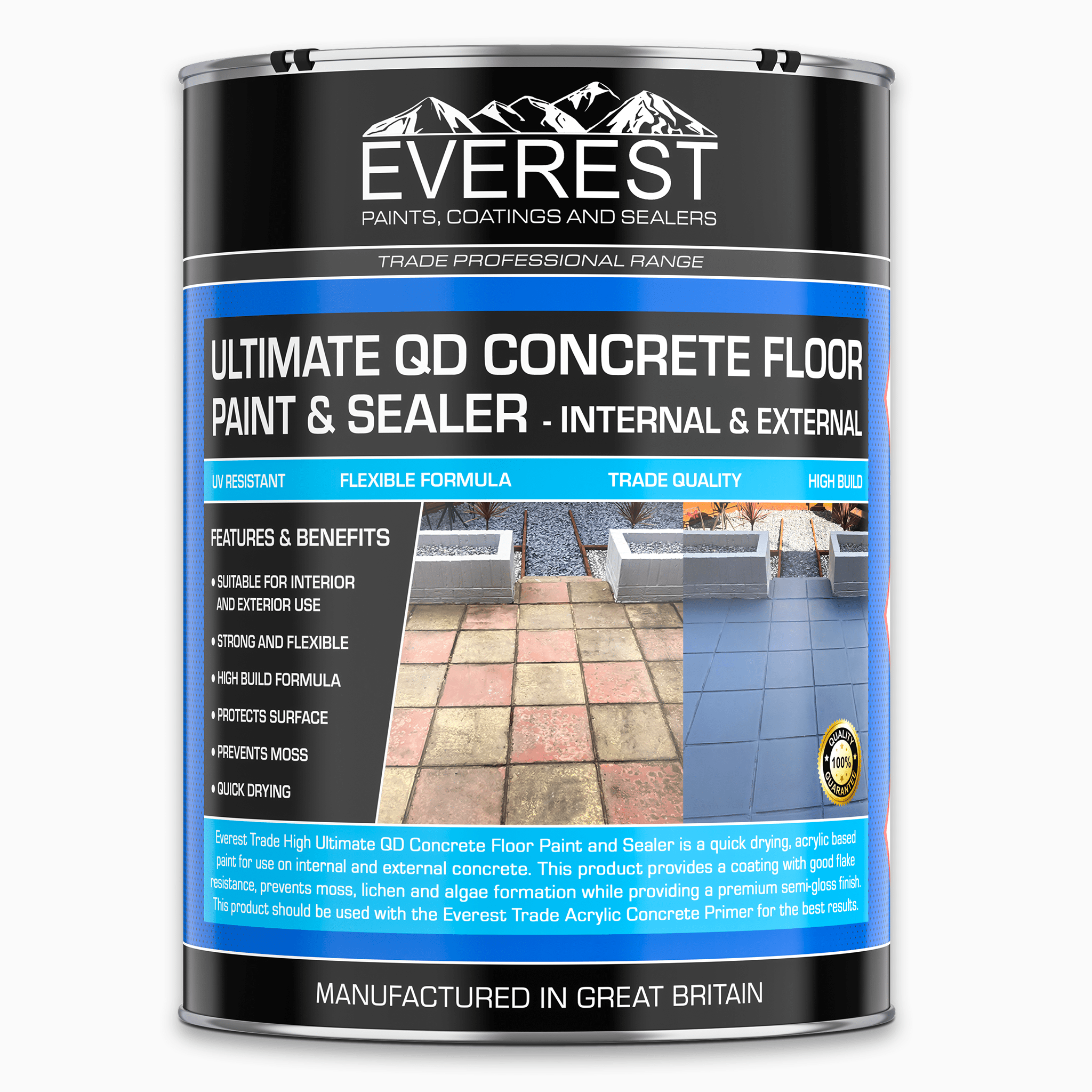
Everest – Ultimate QD Betonboden-/Terrassenfarbe und Versiegelung – innen und außen – rutschfest

Touch Dry in 2-4 Hours

Indoor & Outdoor Use

Fade Resistant Coating

Resists Cracking & Peeling

Prevents Moss & Lichen

British manufacturing
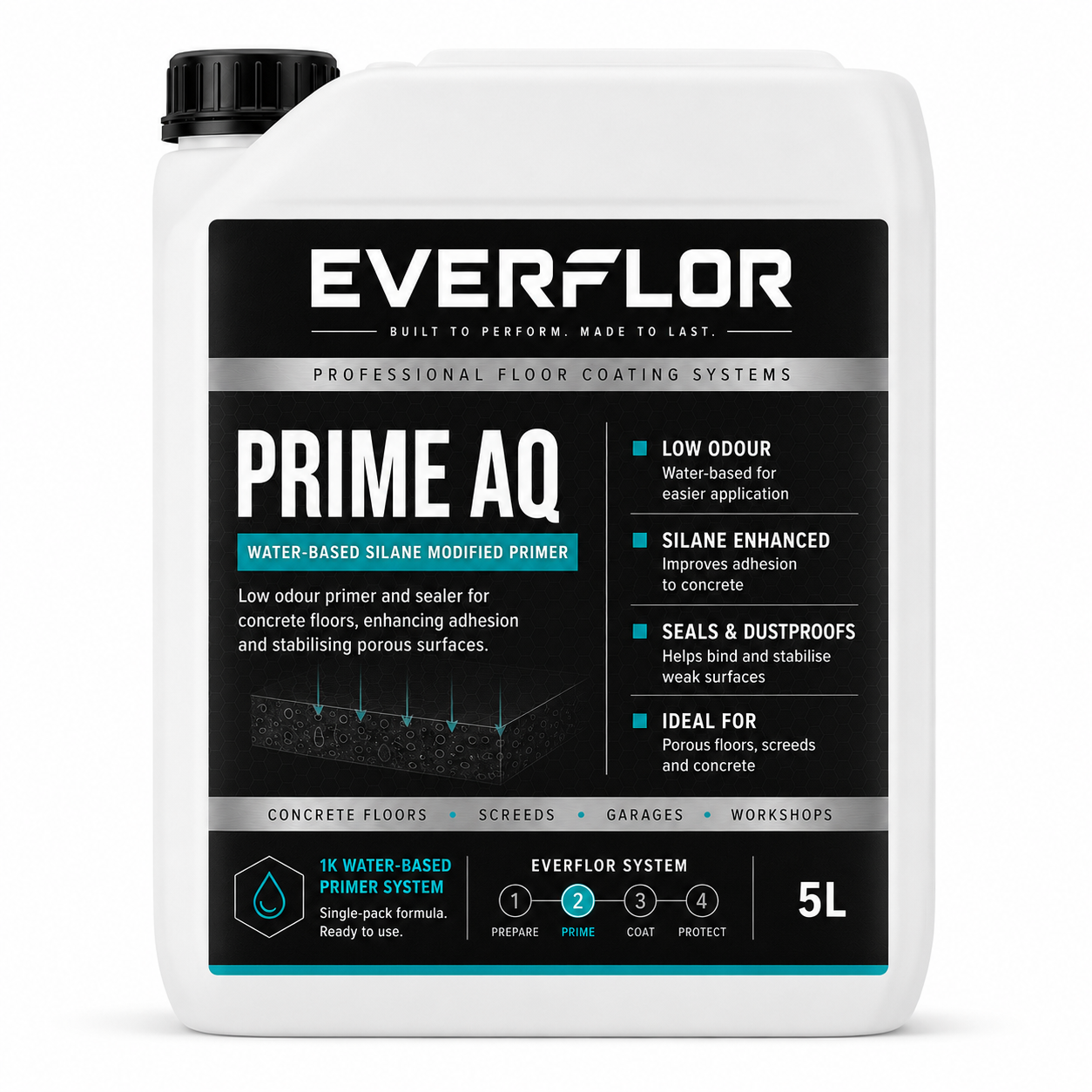
Everest Trade – Beton-Staubschutzmittel/Bodengrundierung und Versiegelung – lösungsmittelfrei
Indoor & Outdoor Use

Walk on in 4 Hours

Simple 1-Pack System

Easy Application

Seals Porous Floors Before Coating

Topcoat Within 48 Hours
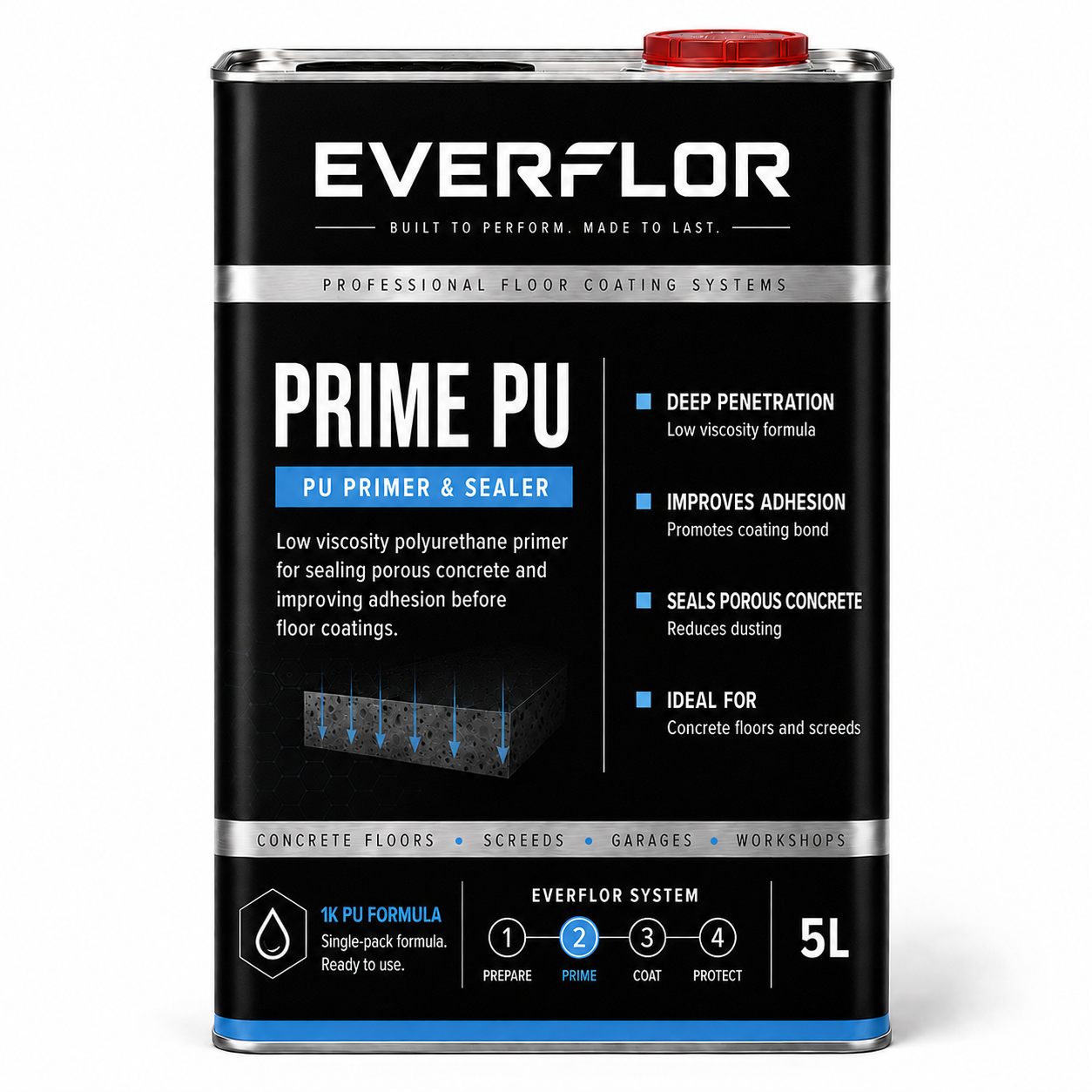

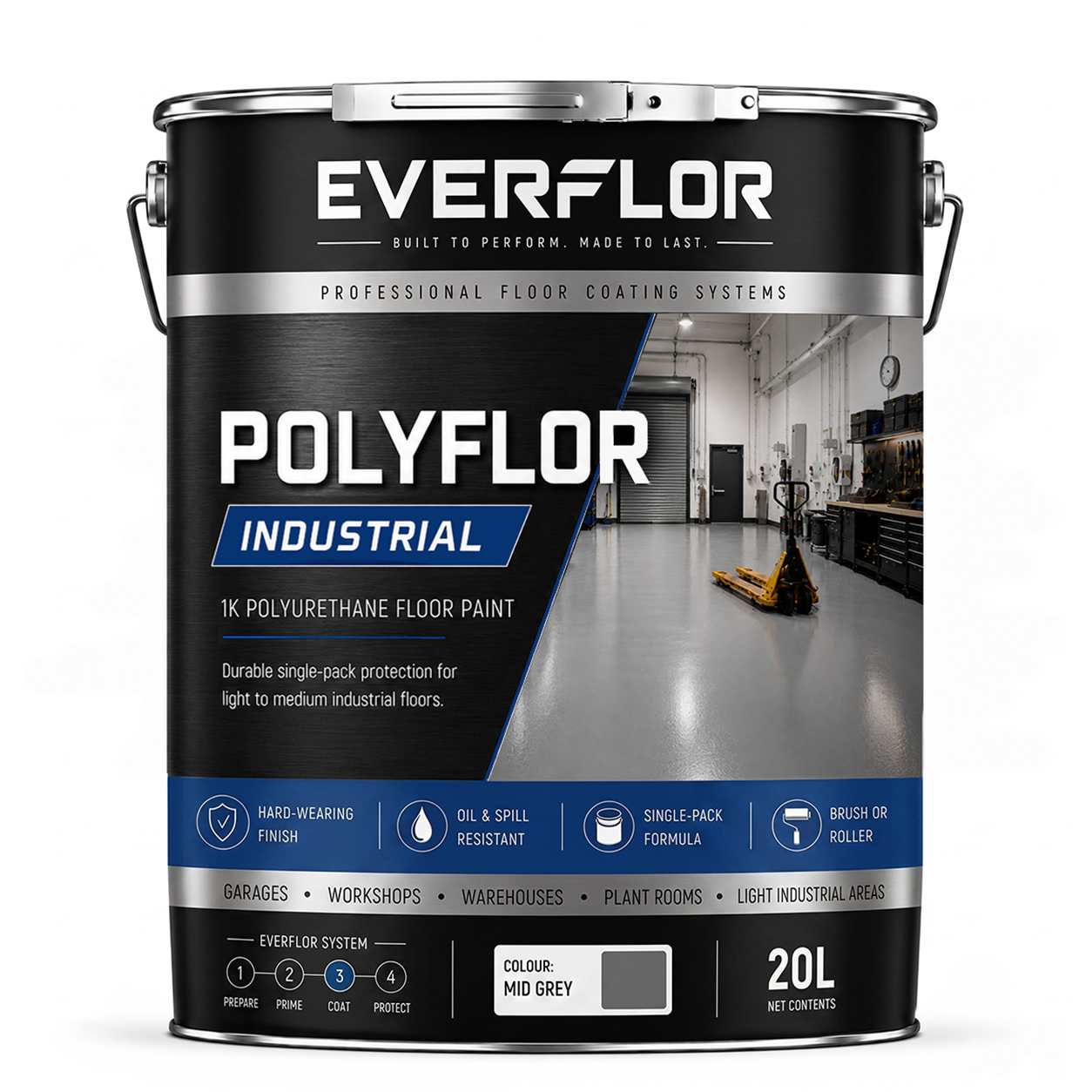

The Help & Technical Hub
Our coatings are backed by more than just performance — they’re supported by clear documentation, practical guides, and real technical support.
The Help & Technical Hub brings together preparation guides, application advice, FAQs, SDS & TDS downloads, and system recommendations to help you choose, apply, and maintain the right coating with confidence.