Made In Great Britain

Direct from our factory

Free Next Day Delivery

On orders over £750

Product Test Results

All test results published

Expert Technical Advice

Call or chat with our team

Ausverkauft
EverFlor - UniSeal - Concrete Sealer - Wetlook - Everest Paints
Anbieter:EverFlor
Sparen Sie 2%Ausverkauft
EverFlor - UniSeal - Concrete Sealer - Wetlook - Everest Paints
Anbieter:EverFlor

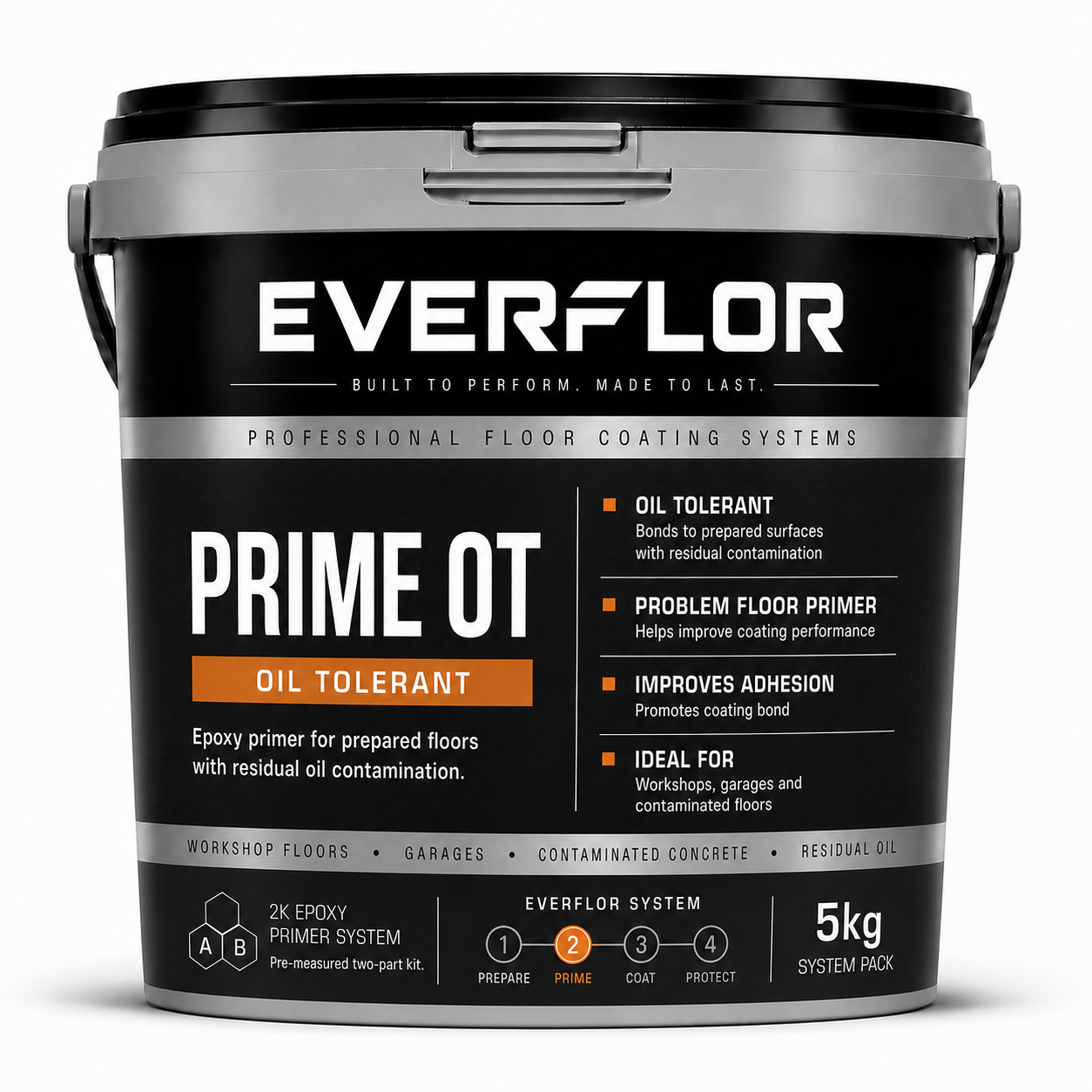
EverFlor - Prime OT

Verkaufspreis£93.14Normaler Preis £94.95
Ausverkauft
EverFlor - UniSeal - Concrete Sealer - Wetlook - Everest Paints
Anbieter:EverFlor
Polished concrete floor in a warehouse setting

Heavy Traffic or High Slip Risk?

Specify an Integrated Anti-Slip Coating System

Aggregate additives rely on correct loading and binder compatibility for performance. For high-traffic or industrial areas, specify TractionCoat as a fully integrated anti-slip system to achieve controlled texture and consistent slip resistance.

View Anti-Slip Floor Systems
4.9
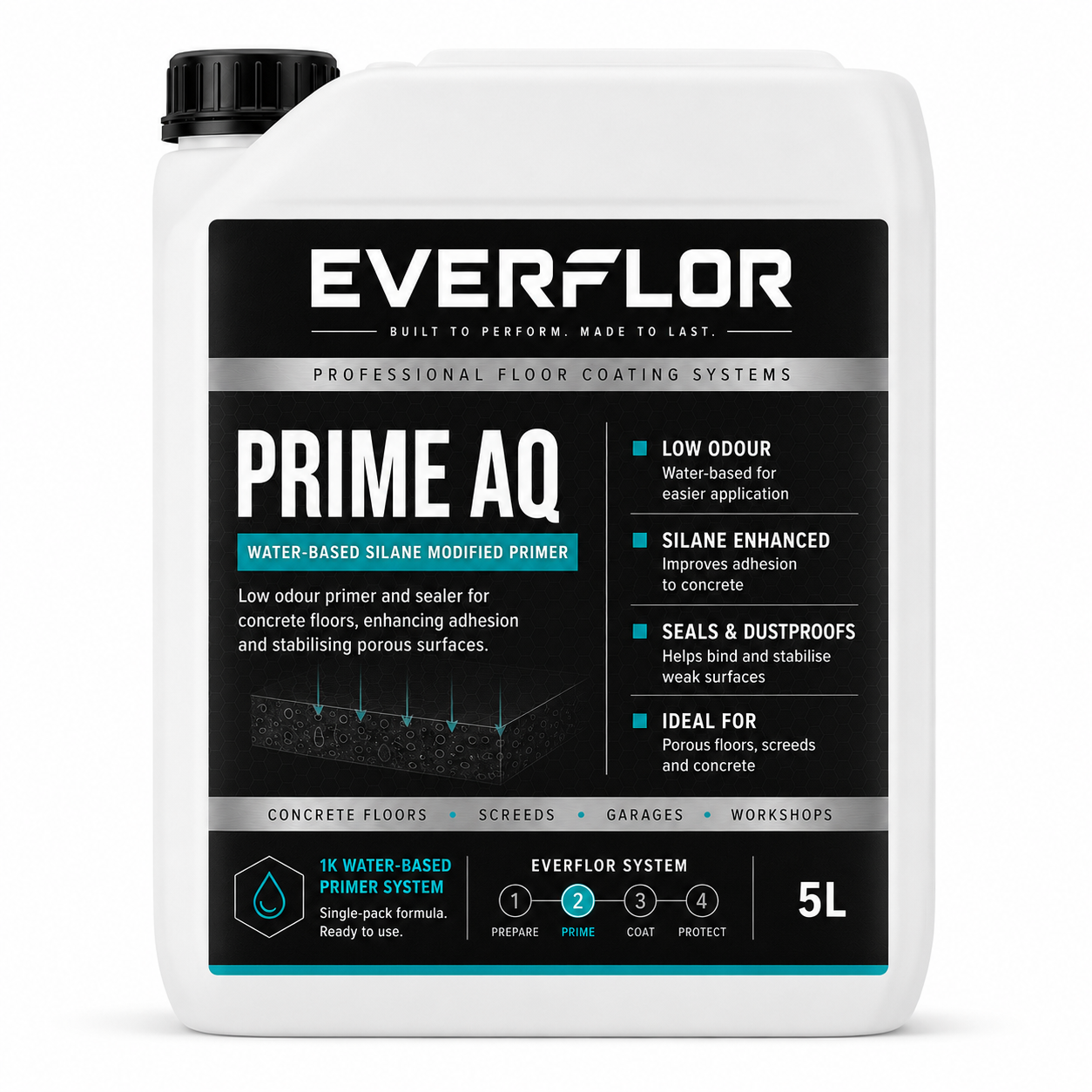
EverFlor - Prime AQ - Everest Paints
Anbieter:EverFlor
  • Klar
Ausverkauft
EverFlor - UniSeal - Concrete Sealer - Wetlook - Everest Paints
Anbieter:EverFlor
4.9
SummitSeal - Concrete Sealer - Polyurethane - Everest Paints
Anbieter:SummitSeal
  • Klar
Ausverkauft
EverFlor - UniSeal - Concrete Sealer - Wetlook - Everest Paints
Ausverkauft
EverFlor - UniSeal - Concrete Sealer - Wetlook - Everest Paints
Ausverkauft
EverFlor - UniSeal - Concrete Sealer - Wetlook - Everest Paints
Ausverkauft
EverFlor - UniSeal - Concrete Sealer - Wetlook - Everest Paints
Ausverkauft
EverFlor - UniSeal - Concrete Sealer - Wetlook - Everest Paints
Ausverkauft
EverFlor - UniSeal - Concrete Sealer - Wetlook - Everest Paints

Floor Primers and Sealers for Concrete and Multi-Surface Floors

Duty classification:
Light to Heavy Duty
Suitable substrates:
Concrete Asphalt Wood Previously painted floors

System Overview

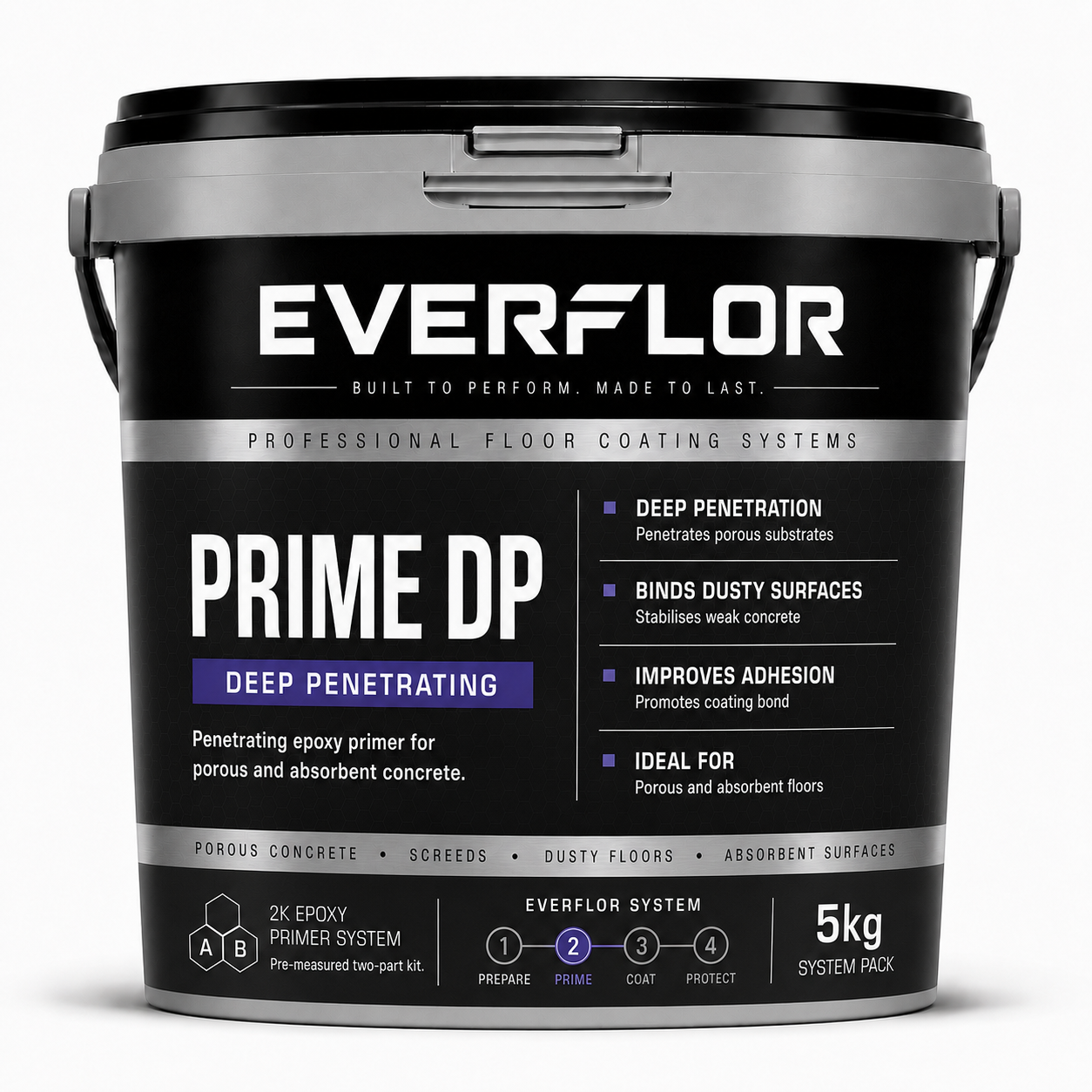
For concrete, asphalt, wood, and previously painted floors, primers and sealers form the critical first stage of a reliable floor coating system. These preparatory coatings regulate substrate porosity, stabilise friable surfaces, and promote adhesion between the prepared floor and the subsequent floor paint or resin coating.

Within professional floor coating specifications, primers perform several technical roles simultaneously. They penetrate and consolidate porous substrates, reduce excessive absorption that can weaken film formation, and provide a chemically compatible bonding layer for higher-build coatings. Sealer systems may also suppress dusting on bare mineral floors, improving both surface durability and coating performance.

EVEREST Everflor floor primers and sealers are designed to support a range of resin-based floor systems including acrylic, epoxy, and polyurethane coatings. Each technology offers different advantages depending on substrate condition, environmental exposure, and the performance requirements of the final floor finish. The primary objective remains consistent: stabilising the floor surface and ensuring the applied coating system bonds correctly to the prepared substrate.

Because primer performance is closely linked to surface condition, correct preparation and substrate assessment remain essential to system reliability.

Suitable Substrates & Surface Preparation

Concrete floors are the most common substrate for floor primers and sealers. Newly cured or existing concrete often exhibits variable porosity, surface laitance, or dusting. Primers penetrate the open pore structure of prepared concrete, reducing suction and improving adhesion for subsequent floor coatings.

Surface preparation typically involves mechanical abrasion, diamond grinding, or acid etching to remove laitance and contamination. Oil, grease, curing compounds, and previous coatings must be removed to ensure the primer can bond directly with the concrete substrate.

Asphalt and tarmac floors present a different set of considerations. These surfaces can contain oils or bituminous binders that affect coating compatibility. Acrylic or specialist primers are often used to stabilise the surface and create a bond layer before applying compatible floor paints.

Wood floors in workshops or service areas may also require priming to regulate absorbency and improve coating adhesion. Timber movement, surface contamination, and moisture content should be assessed prior to coating application.

Previously painted floors can benefit from primer coats where the existing surface is sound but slightly porous or marginal for adhesion. Light abrasion followed by primer application can improve bond strength for subsequent coating layers.

Across all substrates, primer selection must align with the intended topcoat system to maintain chemical compatibility.

Performance Characteristics & Limitations

Floor primers and sealers provide several important technical benefits within a coating system. They improve adhesion between the substrate and the applied coating, stabilise weak surfaces, and help achieve more uniform film formation in subsequent coats.

Dust suppression is another key function, particularly on older concrete floors where surface degradation can create ongoing contamination issues. Penetrating primers consolidate the upper substrate layer and reduce loose particles that could otherwise weaken coating adhesion.

Primers also regulate porosity, preventing excessive absorption of the first coating layer. Without this control, floor paints may lose film thickness into the substrate, reducing durability and overall system performance.

However, primers and sealers are not designed to function as standalone decorative coatings in areas exposed to frequent traffic, chemical exposure, or mechanical wear. Their film build is typically low, and they lack the abrasion resistance associated with epoxy or polyurethane floor coatings.

Performance is also dependent on correct mixing for two-component systems, suitable environmental conditions, and adherence to recommended overcoating intervals.

Internal vs External Considerations

Internal environments such as garages, plant rooms, service corridors, and workshops often prioritise dust suppression and adhesion promotion. In these areas, primers ensure that higher-build floor coatings achieve reliable bonding to prepared concrete or previously painted substrates.

External environments introduce additional variables including moisture exposure, temperature fluctuations, and UV exposure. Acrylic primers are sometimes used externally where breathability and flexibility are required, particularly on concrete walkways or hardstandings exposed to weather.

Moisture within the substrate is an important factor for both internal and external floors. Excess moisture can interfere with coating adhesion or curing behaviour, particularly for epoxy-based primer systems. Substrate testing and moisture assessment may therefore be required before application.

Where floors are exposed to vehicle traffic, pallet movement, or mechanical wear, the primer should be considered only the first stage of a multi-layer floor coating system.

Selection Guidance & When to Specify Alternatives

Floor primers and sealers should be specified whenever substrate porosity, dusting, or marginal adhesion conditions could compromise the performance of the final floor coating.

They are particularly useful on prepared concrete floors where a consistent substrate profile is required before applying resin-based floor paints. Primers also improve reliability when coating older surfaces where the substrate structure may have weakened over time.

However, where floors are expected to experience heavy traffic, chemical exposure, or industrial abrasion, the primer must be followed by a higher-build protective coating. Epoxy floor paints typically provide the next stage of performance for warehouses, workshops, and commercial premises requiring improved durability.

Polyurethane coatings may be selected where flexibility, UV stability, or enhanced abrasion resistance is required over epoxy base systems.

In most professional specifications, primers should therefore be considered part of a complete floor coating system rather than a standalone solution, ensuring the prepared substrate and final coating perform as a unified system.

Compare Epoxy Floor Systems

Floor Primers and Sealers FAQs

View All FAQ's

Technical Guidance & Application Advice

Floor primers and sealers play a critical role in preparing porous or variable substrates before the application of floor coating systems. Correct preparation, moisture control, and resin compatibility are essential to ensure reliable adhesion and long-term coating performance. The choice between acrylic, epoxy, or polyurethane primers should reflect the substrate condition, environmental exposure, and the duty level expected from the finished floor system.
When should a primer or sealer be used on concrete floors before applying a floor coating system?

Primers or sealers should normally be used on bare or porous concrete prior to applying epoxy, acrylic, or polyurethane floor coatings. Their function is to regulate surface porosity, reduce air release from the substrate, and improve adhesion between the concrete and the subsequent coating layers. On newly prepared or mechanically ground concrete, a primer also helps consolidate weak surface particles and reduce dusting. Failure to prime porous substrates can lead to uneven absorption, pinholing, or reduced bond strength in the coating system.
How should concrete floors be prepared before applying a floor primer or sealer?

Concrete substrates must be structurally sound, clean, and free from contaminants such as oil, grease, curing compounds, laitance, or previous unstable coatings. Mechanical preparation methods such as diamond grinding, shot blasting, or suitable abrasion are typically recommended to open the surface profile and promote primer penetration. Acid etching may be suitable in some light-duty situations but should be followed by thorough neutralisation and rinsing. Adequate drying and moisture assessment are important before primer application, particularly when using epoxy-based systems.

Can floor primers and sealers be used as a standalone finish on concrete floors?

Most floor primers and sealers are designed as preparatory layers rather than final wearing surfaces. While they may temporarily suppress dust and reduce porosity, they generally do not provide the abrasion resistance or chemical durability required for areas with regular traffic. In garages, workshops, warehouses, or industrial environments, a compatible topcoat such as an epoxy or polyurethane floor coating is normally required to provide long-term protection. Standalone use is generally limited to low-traffic or temporary sealing applications.

How do epoxy, acrylic, and polyurethane primers differ in floor coating systems?

Epoxy primers are commonly used where strong adhesion, substrate consolidation, and chemical resistance are required, particularly on concrete floors in industrial or commercial settings. Acrylic primers are often used for dust suppression and porosity control in lighter-duty environments or where rapid drying is beneficial. Polyurethane primers may be selected where improved flexibility, abrasion resistance, or compatibility with polyurethane topcoats is required. Selection should always consider the final coating system and the environmental conditions the floor will experience.

Is moisture testing necessary before applying epoxy floor primers?

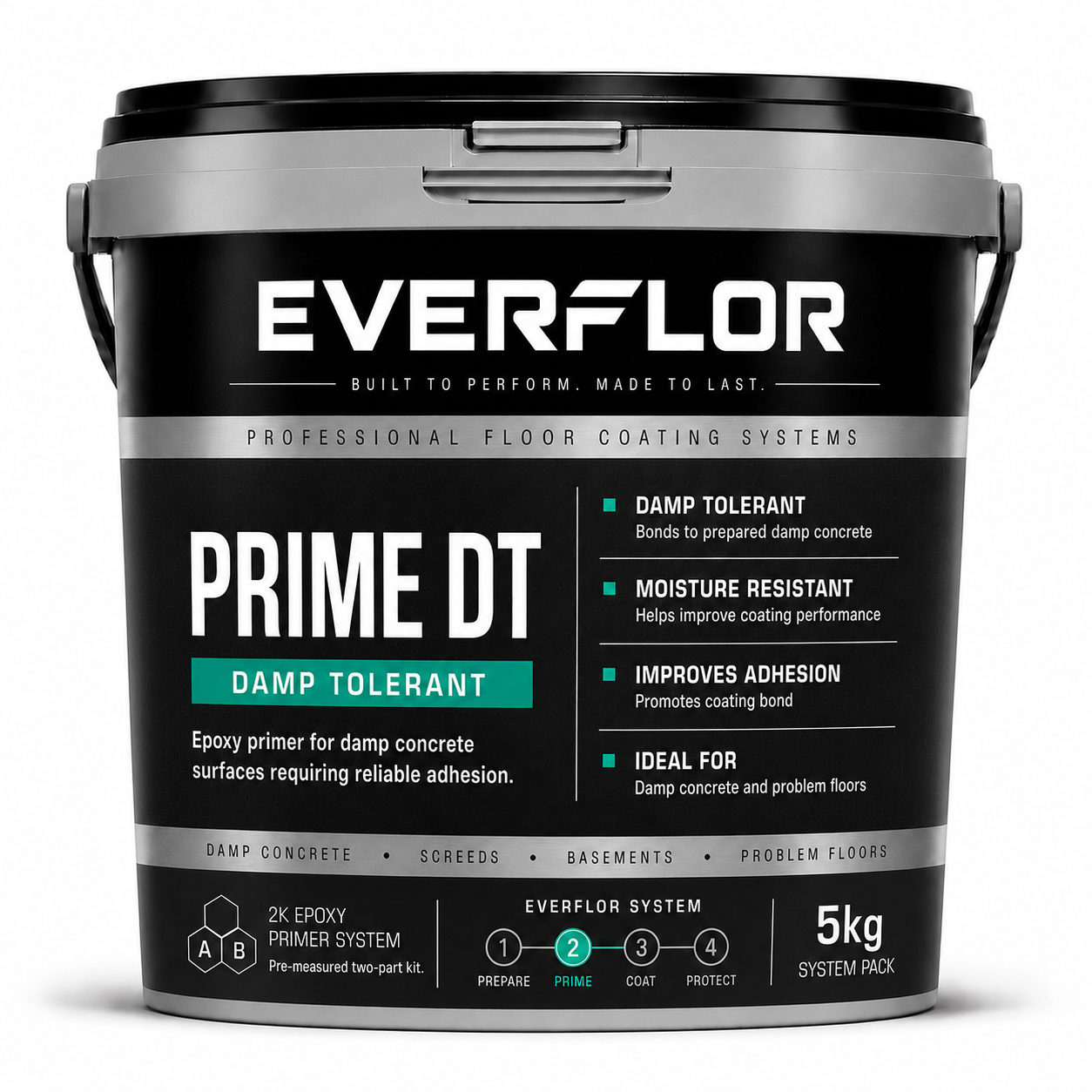
Moisture testing is recommended when applying epoxy primers to concrete floors, particularly on ground-bearing slabs or recently cast concrete. Excess moisture vapour within the substrate can interfere with adhesion and lead to coating defects such as blistering or debonding. Where moisture levels are elevated, a compatible damp proof membrane (DPM) primer or moisture-tolerant system may be required before further coatings are applied. Assessment methods may include hygrometer testing or other recognised moisture evaluation procedures.

Can floor primers and sealers be applied over previously painted floors?

Application over previously coated floors may be possible, but only where the existing coating is firmly bonded and compatible with the new system. The surface should be thoroughly cleaned and mechanically abraded to create a suitable key for the primer. Any loose, flaking, or poorly adhered coatings must be removed before priming. Compatibility between the existing coating type and the selected primer is important, particularly when applying epoxy or polyurethane systems over older acrylic or single-pack finishes.
Didn’t find your answer?

Don't hestitate to contact us

Expert Advice & Guides

A few of our most recent guides applicable to this product range.

View Technical Hub

Dieser Abschnitt enthält derzeit keine Inhalte. Füge über die Seitenleiste Inhalte zu diesem Abschnitt hinzu.