System Overview
For imprinted concrete driveways, patios, and decorative hardstandings, protective sealers are applied to enhance surface appearance while protecting the textured concrete from weathering and wear. Imprinted concrete surfaces rely on surface sealers to maintain colour depth, resist moisture penetration, and preserve the visual pattern created during installation.
Decorative stamped concrete typically incorporates colour hardeners and patterned surface textures that remain partially exposed to environmental conditions. Without a protective sealer, these surfaces can gradually lose colour vibrancy, accumulate staining, and experience increased surface degradation from water penetration and UV exposure.
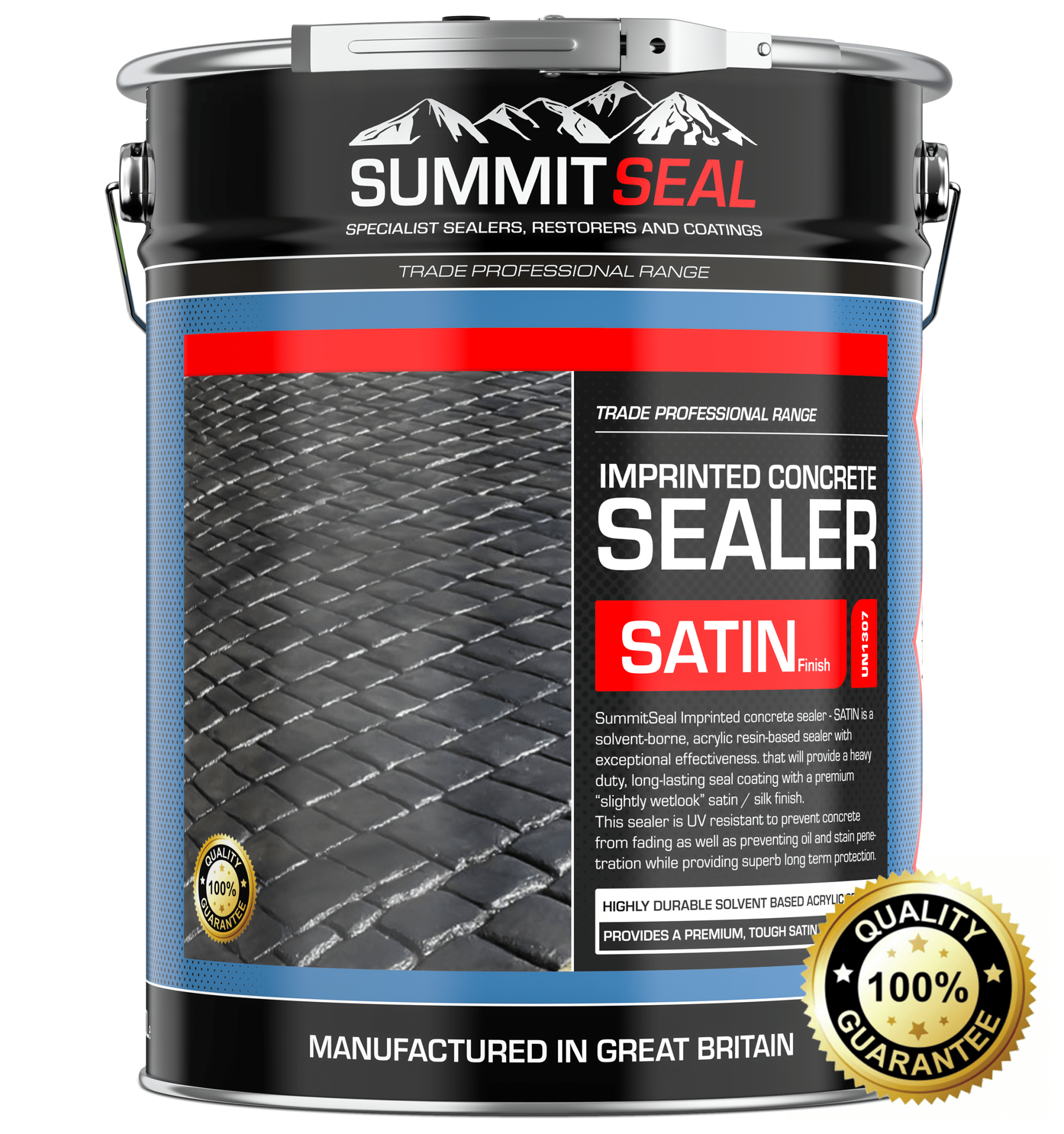
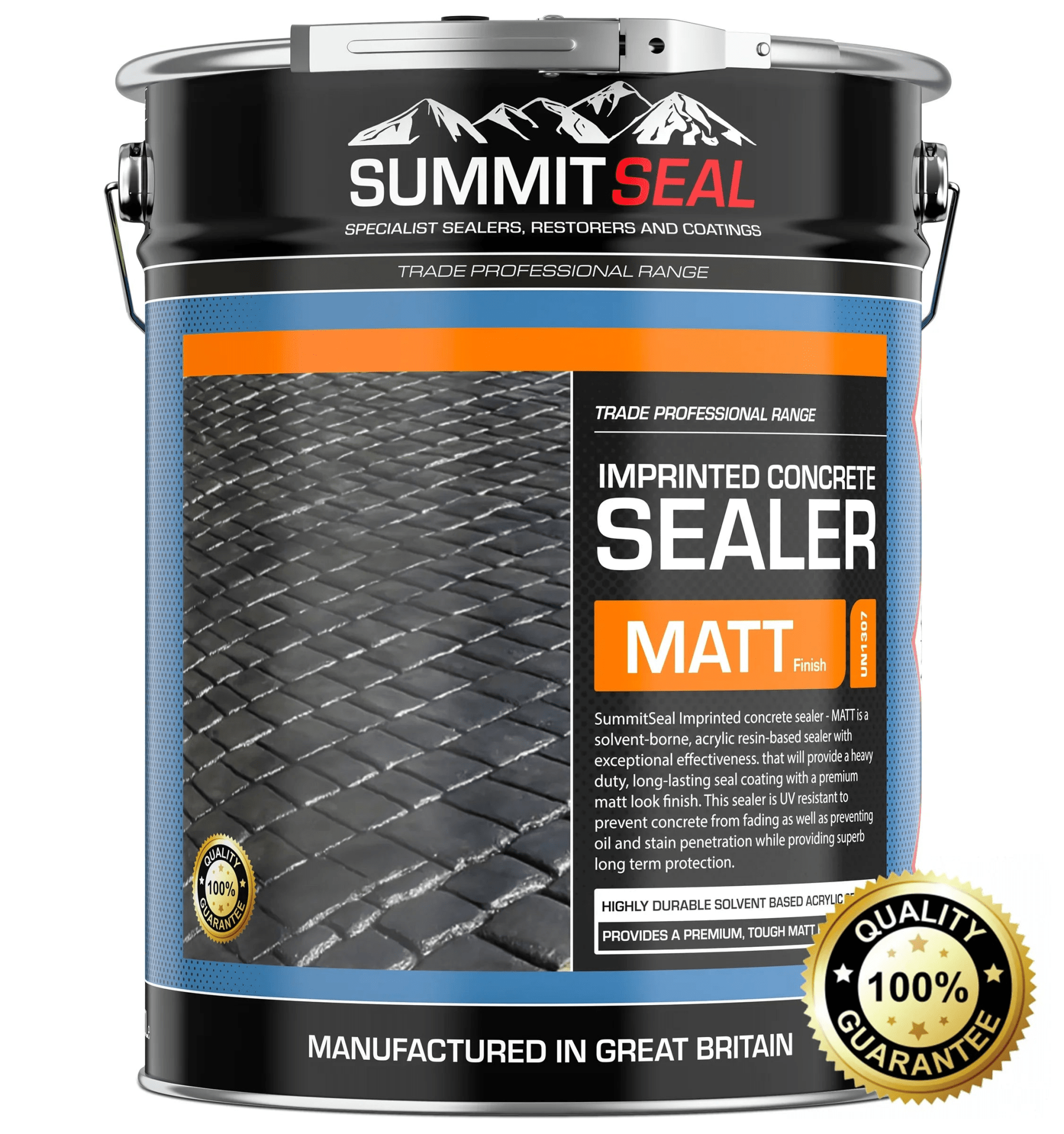
EVEREST SummitSeal solvent-based acrylic sealers are formulated specifically for exterior imprinted concrete surfaces. These coatings penetrate and seal the decorative surface while forming a protective film that enhances colour and provides resistance to weather exposure. The sealer also improves the durability of the concrete surface against routine foot traffic and vehicle movement typical of residential driveways and patios.
Regular sealing forms an essential part of maintaining imprinted concrete installations, helping to preserve both the appearance and service life of the decorative surface.
Suitable Substrates & Surface Preparation
Imprinted concrete is a specialised decorative concrete surface created using colour hardeners and textured stamping techniques during installation. Because the decorative finish is formed directly within the concrete surface layer, maintaining its integrity requires appropriate cleaning and sealing.
Before applying a sealer, the imprinted concrete surface must be clean, dry, and free from contaminants such as dirt, algae, oil stains, or previous deteriorated sealers. Surface contamination can interfere with sealer penetration and film formation.
Cleaning often involves pressure washing combined with suitable surface cleaners or degreasers where necessary. Care should be taken to remove embedded debris from textured areas of the pattern.
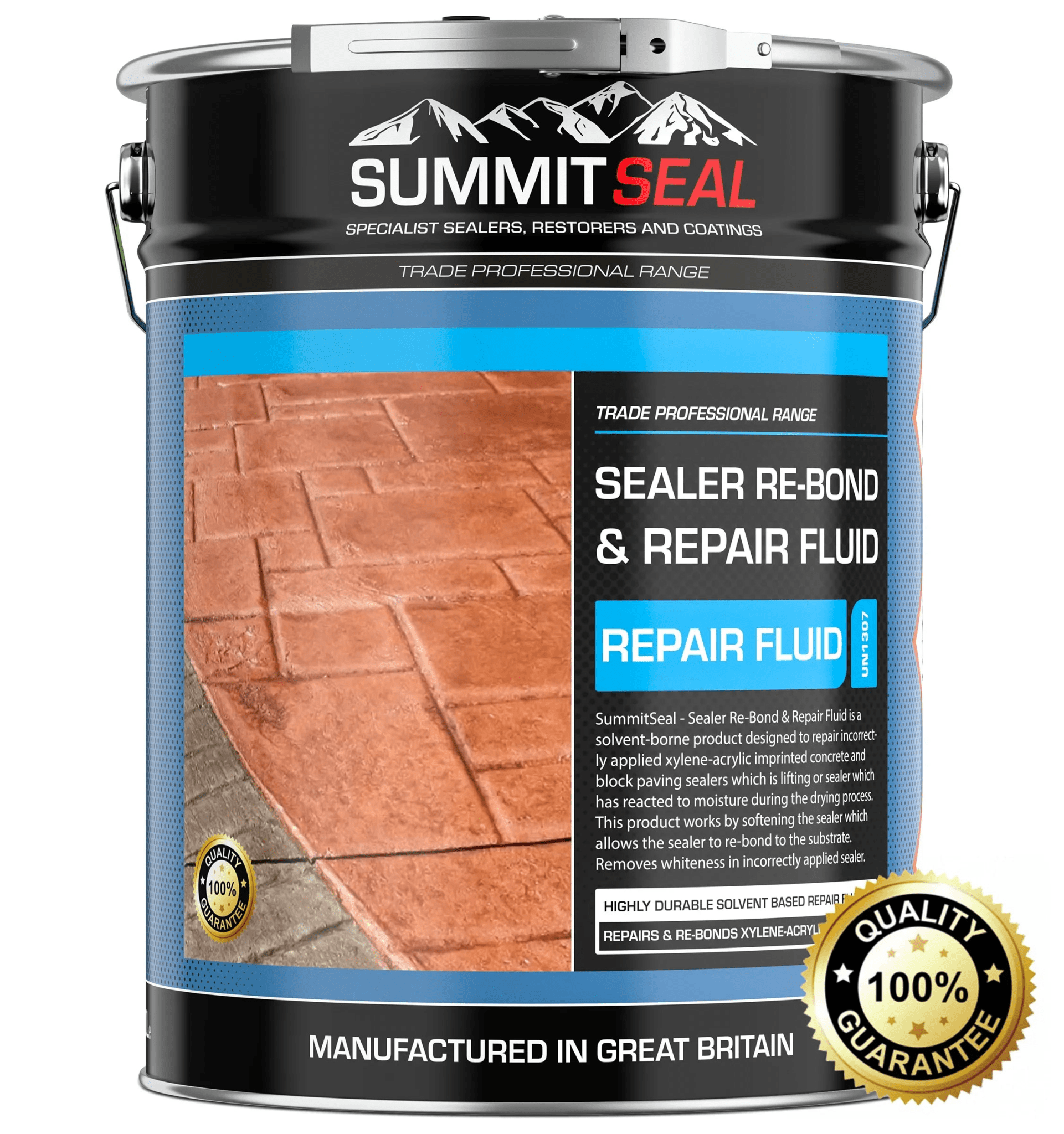
Where existing sealer layers are present but have become uneven or degraded, partial removal or surface preparation may be required before applying a new coat. Applying fresh sealer directly over failing coatings can lead to inconsistent appearance or reduced adhesion.
Because imprinted concrete surfaces are exposed to weather, sealing should only be carried out once the surface has fully dried after cleaning.
Performance Characteristics & Limitations
Solvent-based acrylic sealers provide several performance benefits for imprinted concrete surfaces. One of the most visible effects is colour enhancement, which restores the depth and contrast of the decorative pigments embedded within the concrete surface.
The sealer also creates a protective film that reduces water penetration into the concrete. By limiting moisture absorption, the coating helps reduce surface staining and slows deterioration caused by environmental exposure.
UV resistance is another important characteristic for exterior decorative concrete. Acrylic sealers help preserve colour stability by limiting fading caused by prolonged sunlight exposure.
The sealed surface can also improve resistance to wear from foot traffic and occasional vehicle movement, making these products suitable for residential driveways and patios.
However, sealers are not designed to significantly strengthen the structural concrete or provide industrial-grade abrasion resistance. In areas subjected to very heavy vehicle traffic or frequent turning movements, wear may occur more rapidly and maintenance intervals may shorten.
Internal vs External Considerations
Imprinted concrete sealers are designed specifically for exterior applications. Decorative stamped concrete is typically used on driveways, patios, walkways, and outdoor courtyards where weather exposure is unavoidable.
Exterior sealers must withstand UV radiation, rainfall, temperature fluctuations, and seasonal environmental conditions. Solvent-based acrylic technologies are often selected for these applications due to their ability to enhance colour while maintaining durability under outdoor exposure.
Because these products are designed for external use, they are not generally suitable for interior concrete surfaces or enclosed environments where solvent vapours may be undesirable.
Environmental conditions during application also play a role in the performance of exterior sealers. Dry weather, moderate temperatures, and properly prepared surfaces contribute to more consistent film formation.
Selection Guidance & When to Specify Alternatives
Imprinted concrete sealers are typically specified to protect and maintain decorative stamped concrete surfaces used in residential driveways, patios, and outdoor entertainment areas. Their primary purpose is to restore colour appearance, reduce moisture penetration, and provide a protective barrier against everyday surface wear.
Regular maintenance sealing is an important part of preserving the aesthetic value of imprinted concrete installations. Depending on traffic levels and weather exposure, resealing may be required periodically to maintain performance and appearance.
Where surfaces experience particularly high levels of vehicle traffic or require extended maintenance intervals, higher durability sealing systems may be considered. These alternatives can provide enhanced surface protection and longer service life under more demanding conditions.
Selecting the appropriate sealer should consider the condition of the existing surface, the expected traffic levels, and the desired finish appearance, ensuring the decorative concrete remains protected while retaining its intended visual character.