

Made In Great Britain

Direct from our factory

Free Next Day Delivery

On orders over £750

Product Test Results

All test results published

Expert Technical Advice

Call or chat with our team

Click an icon to explore features Tap an icon to explore features

Zero Shrinkage Film

The resin is 100% solids, so nothing is lost to evaporation as the coating cures. A 220 micron wet film stays a 220 micron dry film. Two coats build the full thickness without solvent voids or sinkage.

Forty Eight Hour Overcoat

The primer is the bond between the slab and the coating that follows, so the topcoat is planned around it. Recoat after 4 hours at 20°C, and apply the finishing coat within 48 hours maximum at 20°C. Prepare the floor correctly before priming; adhesion depends on it.

Cretebond Bonding Layer

Screed laid straight onto concrete relies on the slab alone for grip, and shallow or intricate repairs have little depth to hold onto. Brush the grey epoxy over the prepared floor at 3-4m² per kg, then lay the Cretebond screed onto it. The adhesive film carries the bond where section thickness cannot.

Measured Mix Window

Mix base and hardener at 1.76:1 by weight and the film cures by chemical reaction, not by drying. Pot life is up to 45 minutes at 20°C, so mix only what you can brush out in that window. Nothing is thinned; apply the material as supplied between 10°C and 25°C.

Performance Profile

Two-Component 100% Solids Epoxy Primer. Mixed at 1.76:1 by weight and applied in a single coat by brush or roller. Because there is no solvent to evaporate, the 220 micron wet film cures to a 220 micron dry film. Covers 3-4m² per kg. Takes foot traffic 8 hours after application at 20°C.

Download Data Sheet
Coverage 3-4m²per kg, one coat
Solids Content 100%no solvent loss
Pot Life 45 minutesat 20°C
Film Thickness 220 micronswet and dry

Essential Information

Product Details

Description

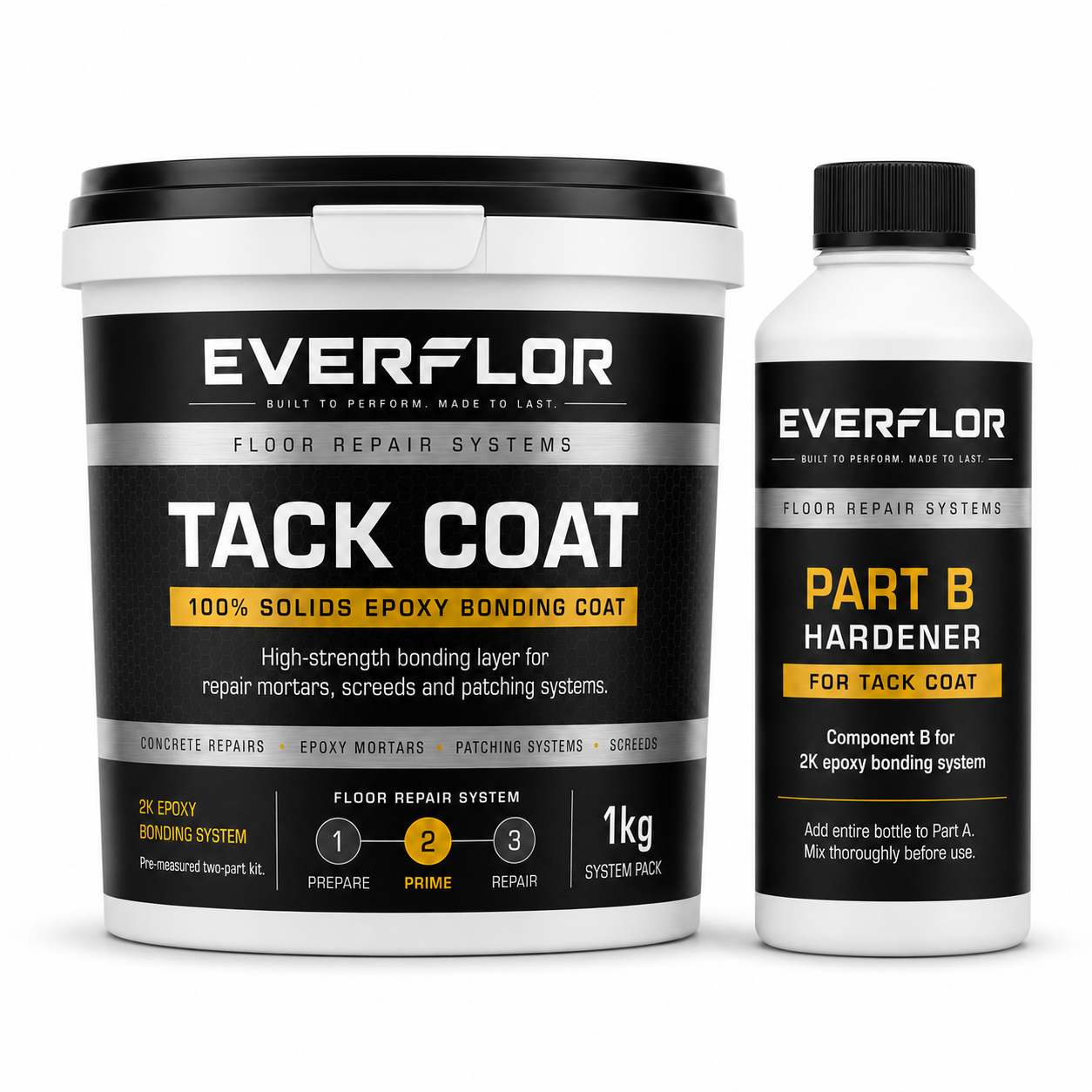
EverFlor Tack Coat is a two-component epoxy resin adhesive primer. It is applied to prepared concrete immediately before screeding or patching with the Cretebond range. The resin and curing agent are supplied in matched quantities and mixed at 1.76:1 by weight before use.

The product is 100% solids, so nothing evaporates out of the film. What you apply to the floor is what stays on the floor: a 220 micron wet coat cures to a 220 micron dry film. On porous and absorbent concrete the resin soaks into the open surface, binds the loose upper layer and leaves a sound, grey, resinous base for the screed to bond to. VOC content is below 30 g/l.

Use it under Cretebond repair and screeding mortars. It earns its place most clearly on shallow or intricate repairs, where there is not enough depth or mechanical key for the mortar to hold on its own. Floors must be prepared correctly first — adhesion of the whole repair depends on it.

Recommended areas of use

  • Internal and external concrete floors
  • Porous concrete floors requiring a bonding coat
  • Absorbent concrete substrates needing stabilisation before coating
  • Prior to screeding or patching with the Cretebond range
  • Shallow or intricate repairs with limited mechanical key
  • Over existing paint, provided poorly bonded paint is removed and sound paint is roughened

Features

  • Two-component epoxy adhesive primer: creates a strong bond for the Cretebond range
  • 100% solids, so the full applied thickness remains as cured film
  • Penetrates and stabilises absorbent concrete before the mortar goes down
  • One coat covers 3-4m² per kg, brush or roller applied
  • Supplied ready to use — no thinner or solvent required
  • Up to 45 minutes pot life at 20°C for mixing and laying off
  • Takes foot traffic 8 hours after application at 20°C
  • Interior and exterior use; 24 month shelf life in unopened containers

Good to know

Prepare the floor properly: it must be clean, sound and free of loose material, laitance and contamination. Apply between 10°C and 25°C. Mix the full unit — part-mixing changes the ratio and the film will not cure correctly. Overlay with Cretebond after 8 hours at 20°C and within the 48 hour maximum overcoat window; beyond that the primer should be reapplied. Cleaning applicators is not practical — discard brushes and rollers after use.

Application

SURFACE PREPARATION

The floor must be clean, sound and free of all loose material, dust and contamination. Remove laitance and anything that will not hold the weight of a repair. You can apply over existing paint, but strip out all poorly bonded paint first and roughen well bonded paint to give a key. Correct preparation is the single biggest factor in adhesion.

MIXING

Mix the resin and curing agent at 1.76:1 by weight. Mix the full unit and stir thoroughly until the colour is uniform. Do not mix part packs — a wrong ratio will not cure properly. Pot life is up to 45 minutes at 20°C, so mix only what you can lay in that time.

APPLICATION

Apply one coat by brush, working the primer into the surface. On large flat areas use a roller. The product is supplied ready to use; do not thin it. Target a 220 micron wet film and expect 3-4m² per kg. Apply between 10°C and 25°C; do not work below 10°C.

OVERCOATING AND CLEAN-UP

Touch dry is 6 hours at 20°C and the floor takes foot traffic after 8 hours. Overlay with the Cretebond range from 8 hours at 20°C and within the 48 hour maximum overcoat window. If the window is exceeded, prepare and prime again. Discard brushes and rollers after use — they cannot practically be cleaned. Store unopened containers for up to 24 months.

Technical Data
Finish Grey
Coverage 3-4m² per kg
Recommended coats 1
Touch dry 6 Hours at 20°C
Recoat after 8 Hours at 20°C
Application Brush, a roller can be used for large flat areas.
Cleaner / Thinner Not required — apply as supplied
Suitable substrates Porous concrete floors, Absorbent concrete substrates requiring stabilisation before coating.
Shelf life 24 months
VOC content < 30 g/l
Mixing ratio 1.76 : 1 by weight (A/B)
Solids content 100%
Cleaning tools It is not practical to clean applicators and they should be discarded after use
Wet film thickness 220 microns
Dry film thickness 220 microns
Number of components 2
Minimum application temperature 10°C
Maximum overcoat 48 hours at 20°C
Principal limitations Floors must be prepared correctly to ensure good adhesion.
Foot traffic 8 Hours at 20°C

The Knowledge Hub

Everything You Need to Know

Browse our collection of in-depth articles and how-to guides designed to help you get the most out of this product. whether you need help with surface preparation or application advice, we have you covered.
View Technical Hub

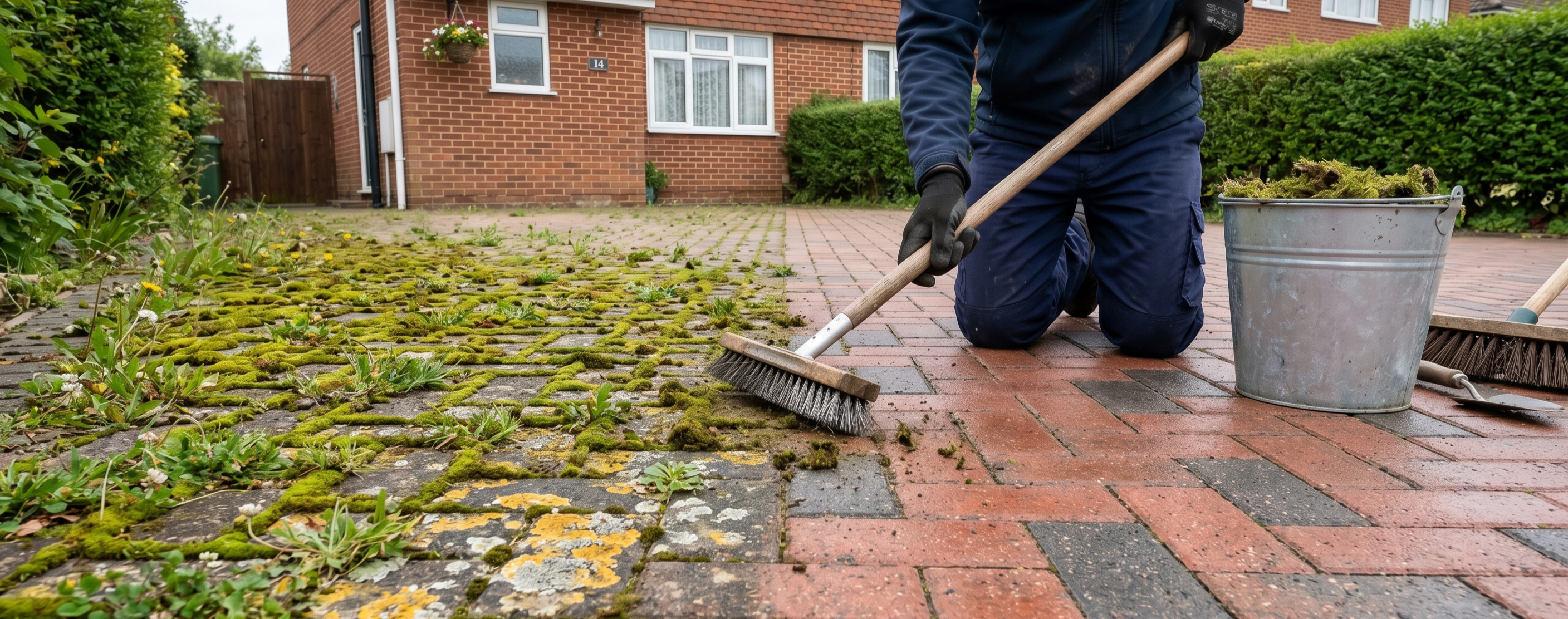
A visual comparison of a mossy, weed-infested block paving driveway next to a freshly cleaned section in the UK.
  • scritto da Sam Marriott

Restoring Block Paving: Removing Moss, Weeds, and Lichen

Block paving is the most popular driveway choice in the UK, but it has a major design flaw: Joints. Those thousands of gaps between the bricks are the perfect nursery for weeds, moss, and the dreaded "black spot" lichen. Every...

Continua a leggere

An unbranded industrial floor scrubber being used to maintain the high-gloss shine on a polished concrete warehouse floor.
  • scritto da Sam Marriott

Deep Cleaning Polished Concrete Without Damaging the Shine
Polished concrete is often sold as the "maintenance-free" flooring option. That is a lie. Yes, it is incredibly durable. It won't peel or flake like paint. But if you ignore it, or worse - if you clean it with the...

Continua a leggere

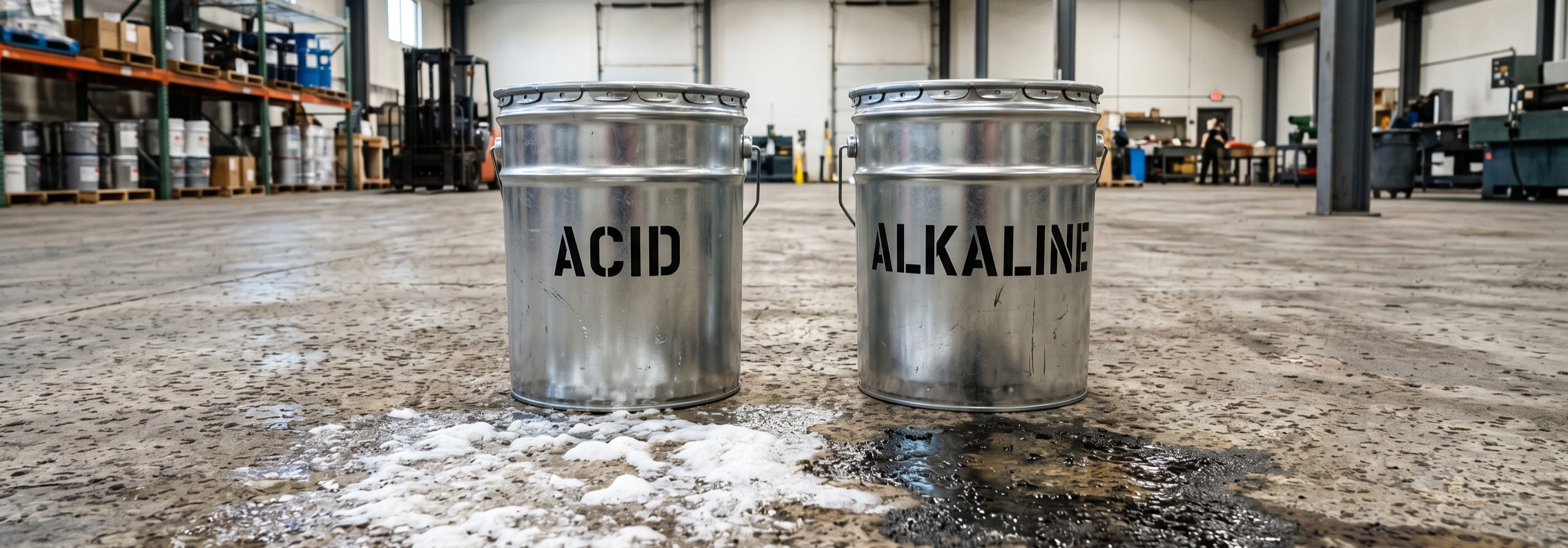
Two unbranded silver tins labeled Acid and Alkaline on an industrial concrete warehouse floor.
  • scritto da Sam Marriott

Acid vs. Alkaline Concrete Cleaners: Which is Best for Your Floor?

If you walk into a hardware store and ask for "concrete cleaner," you'll probably end up with a few different options in-front of you. Most people grab the bottle with the most aggressive warning label, thinking "stronger is better." But...

Continua a leggere

How to Sand a Painted Concrete Floor for Recoating
  • scritto da Sam Marriott

How to Sand a Painted Concrete Floor for Recoating

In our Sanding vs. Grinding: Preparing Previously Painted Concrete guide, we established that if your floor passes the Cross-Hatch Adhesion Test, then the next step for recoating will be sanding. Choosing to sand rather than grind saves you hundreds of pounds in equipment rental and diamond consumables....

Continua a leggere

FAQs

Please read our FAQs page to find out more.

What is Tack Coat used for?
It is an epoxy adhesive primer applied to prepared concrete immediately before screeding or patching with the Cretebond range. It bonds the repair mortar to the slab, which matters most on shallow or intricate repairs where there is little depth or mechanical key for the mortar to hold on its own.
How much do I need?
One coat covers 3-4m² per kg, depending on how open and absorbent the concrete is. Porous surfaces take more. Pack sizes are 1KG, 2.5KG and 5KG, so a 5KG unit will prime roughly 15-20m².
Can I apply it over an existing painted floor?
Yes, provided the paint is sound. Remove all poorly bonded paint back to a firm edge, then roughen the well bonded paint to provide a key. Any coating left in place must be able to carry the load of the repair above it.
How long before I can screed over it?
At 20°C the primer is touch dry in 6 hours and ready to overcoat after 8 hours. Complete the Cretebond application within the 48 hour maximum overcoat window at 20°C. If more time passes, prepare the surface and prime again.
Do I need a thinner, and how do I clean up?
No thinner is required — apply the product exactly as supplied. Cleaning applicators is not practical with a 100% solids epoxy, so discard brushes and rollers after use. Mix only what you can apply within the 45 minute pot life at 20°C.

Didn’t find your answer?

Don't hestitate to contact us