System Overview
For natural stone patios, driveways, and decorative stone surfaces, sealing systems provide protective treatment that reduces water penetration, limits staining, and helps preserve the appearance of mineral substrates. Natural stone materials such as sandstone, limestone, granite, and slate are inherently porous and can absorb moisture and contaminants if left unsealed.
Stone sealers are designed to penetrate the surface of the substrate while creating a water-repellent barrier that slows moisture absorption and contamination. This helps maintain the appearance and structural stability of natural stone installations exposed to weathering, surface staining, and environmental debris.
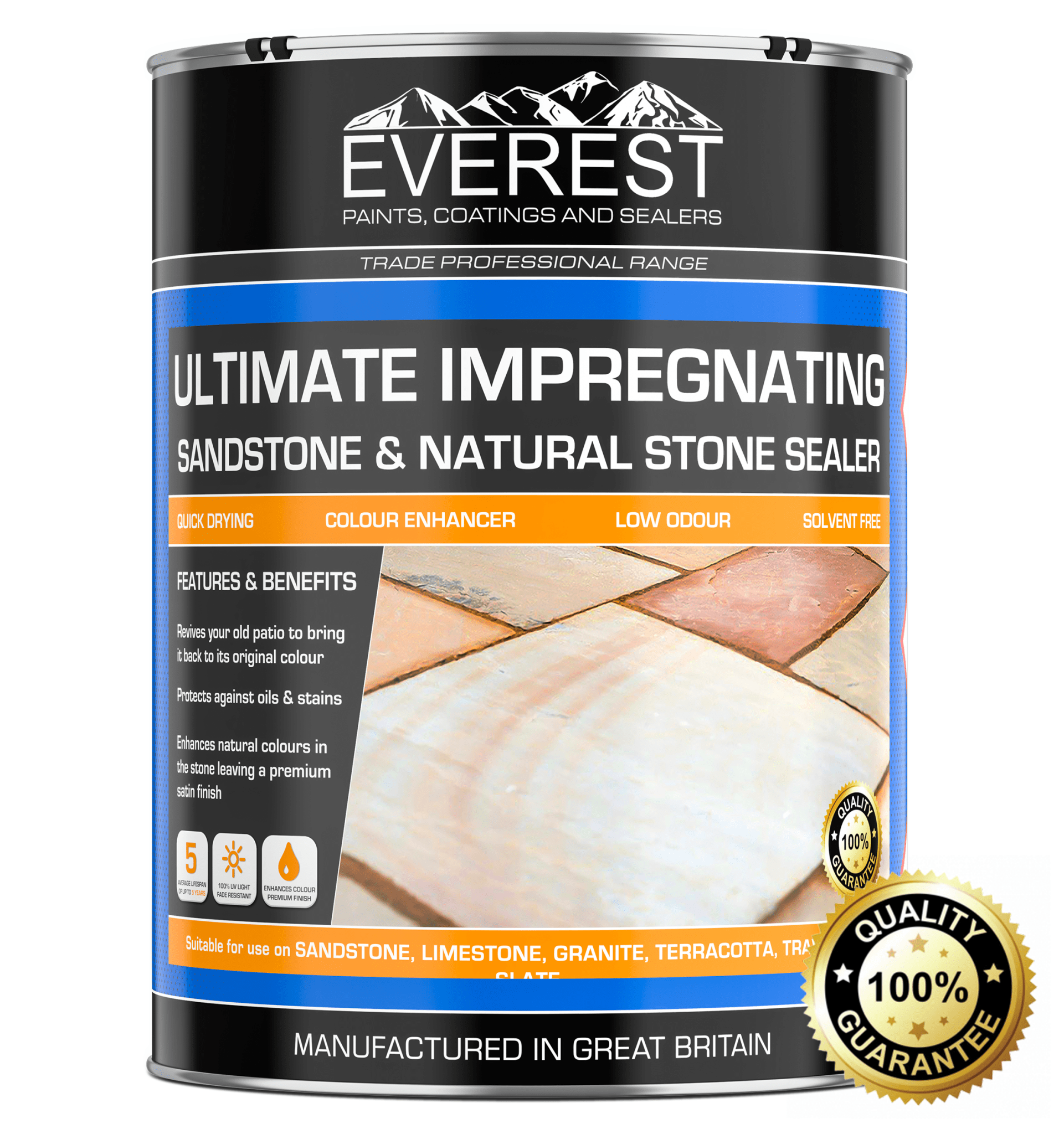
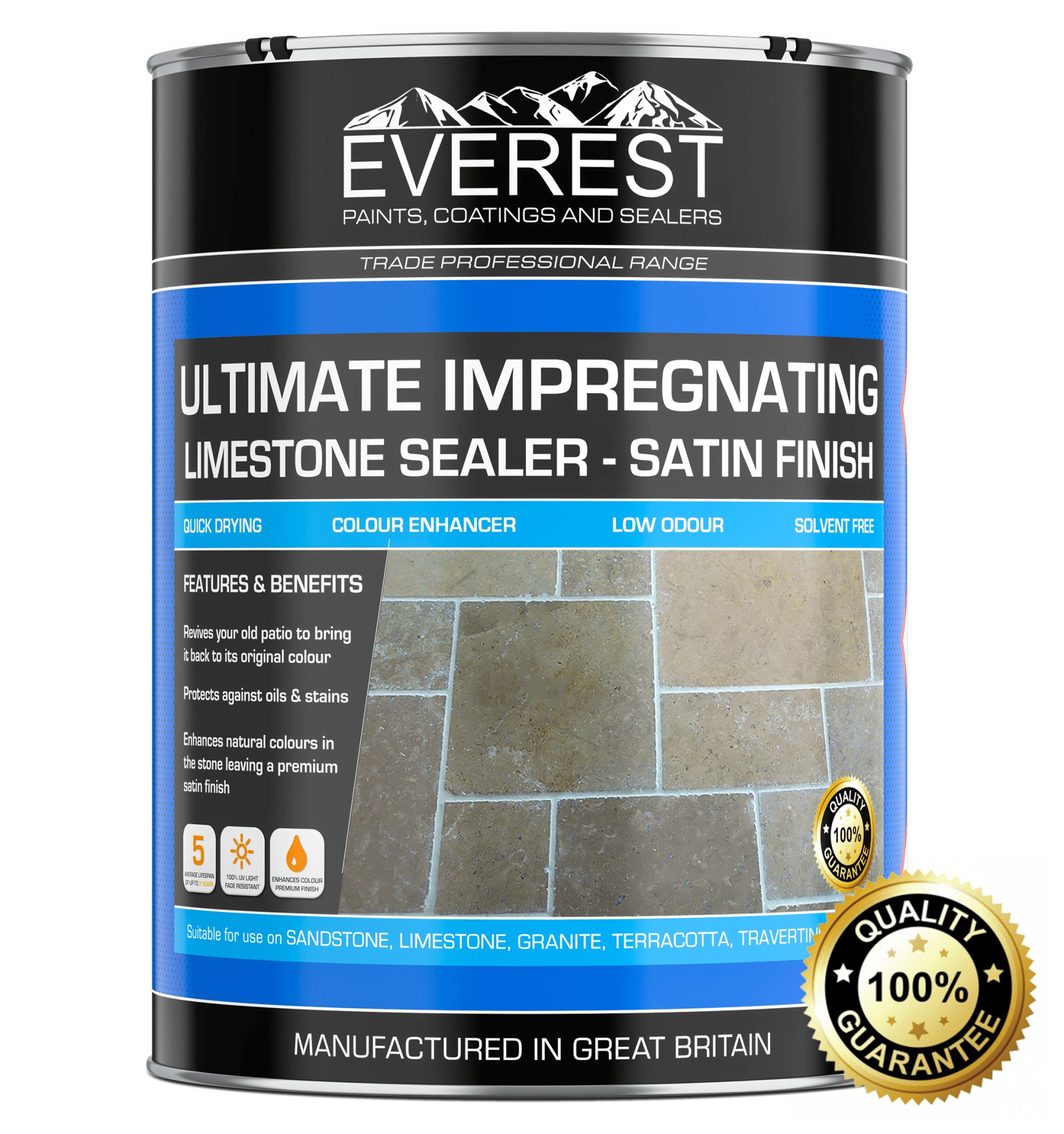
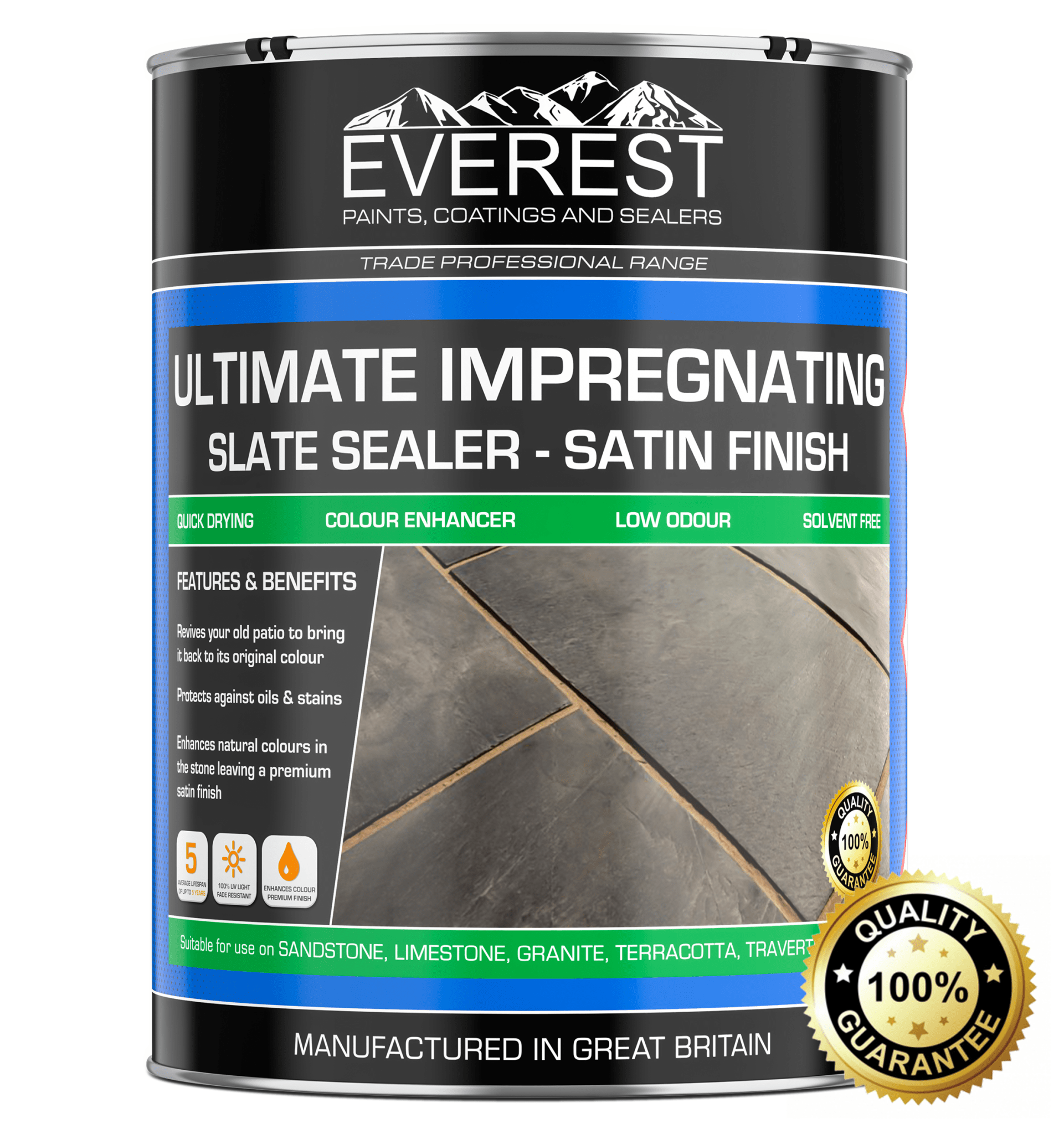
EVEREST SummitSeal natural stone sealers utilise silane-modified acrylic and silane–siloxane technologies designed for mineral substrates. These systems provide penetrating or hybrid surface protection that enhances resistance to water ingress while maintaining the breathable characteristics of natural stone surfaces.
Such sealers are commonly used to protect patios, pathways, terraces, and decorative stone features in both residential and commercial environments.
Suitable Substrates & Surface Preparation
Natural stone substrates vary widely in composition and porosity, including sandstone, limestone, slate, granite, and traditional paving materials such as York stone or terracotta. The effectiveness of a sealer depends heavily on the ability of the product to penetrate the substrate structure.
Before sealing, stone surfaces must be thoroughly cleaned to remove dirt, algae, oils, and other contaminants. Outdoor stone paving frequently accumulates biological growth and environmental debris that must be removed prior to treatment.
Pressure washing or specialist stone cleaning solutions are often used to restore the surface condition before sealing. Any previous coatings or incompatible sealers may need to be removed to allow the new treatment to penetrate correctly.
The stone must also be completely dry before sealing. Residual moisture within the substrate can prevent adequate penetration and reduce the effectiveness of the sealing treatment.
Porous stones such as sandstone or limestone may absorb sealers more readily than dense materials such as granite or porcelain, which may require specialised formulations for effective treatment.
Performance Characteristics & Limitations
Natural stone sealers are formulated to provide water repellency and improved resistance to staining while maintaining the natural appearance of mineral surfaces. Penetrating sealers reduce the ability of water and contaminants to enter the stone, helping limit surface staining and biological growth.
Silane–siloxane sealers provide hydrophobic protection by lining the pore structure of mineral substrates while maintaining vapour permeability. This allows trapped moisture within the stone to escape while still reducing water absorption from the surface.
Silane-modified acrylic sealers may also provide surface film protection alongside penetrating action. Depending on the system selected, sealers may produce different visual finishes across the stone surface. Dry finish sealers preserve the natural appearance of the stone with minimal visible change, while colour-enhancing sealers deepen the natural tones and contrast of the material. Wet look sealers produce a darker, gloss-like finish that emphasises texture and colour variation within the stone.
Despite these protective properties, sealers do not significantly strengthen the structural integrity of the stone itself. Areas exposed to heavy mechanical wear, such as vehicle turning zones, may still experience surface abrasion over time.
The effectiveness and lifespan of stone sealers can vary depending on substrate porosity, traffic exposure, and environmental conditions.
Internal vs External Considerations
Natural stone sealers can be used on both internal and external stone surfaces depending on the formulation. Exterior installations such as patios, pathways, and driveways must withstand rainfall, UV exposure, and seasonal environmental changes.
Penetrating sealers are commonly used outdoors because they allow stone to remain breathable while reducing water ingress that can contribute to staining or surface degradation.
Interior stone floors, decorative features, and stone installations may also benefit from sealing to improve stain resistance and ease of cleaning. In these environments, sealers help protect stone surfaces from spills, dirt, and routine wear.
Environmental exposure and traffic levels should always be considered when selecting a suitable stone sealing system.
Selection Guidance & When to Specify Alternatives
Natural stone sealers are typically specified to protect decorative stone surfaces used in patios, driveways, pathways, and architectural installations. These treatments help maintain the visual appearance of natural stone while improving resistance to moisture and surface contamination.
Sealer selection often depends on the desired visual finish as well as the required level of protection. Dry finish sealers are generally used where the natural appearance of the stone should remain unchanged, while colour-enhancing sealers deepen the natural tones of materials such as sandstone and limestone. Wet look sealers are commonly specified where a more pronounced decorative finish is required for patios or feature areas.
They are particularly beneficial for porous paving materials such as sandstone, limestone, and terracotta that are prone to absorbing water and staining substances.
However, in areas where stone surfaces are exposed to very high traffic levels or persistent contamination risks, more specialised sealing systems may be required. High-performance penetrating sealers can provide enhanced stain resistance and longer maintenance intervals.
Selecting the appropriate sealer should consider the type of stone, the porosity of the substrate, the desired visual finish, and the environmental exposure of the installation to ensure reliable protection and long-term performance.