
Selecting the correct protection for a commercial facility is not as simple as picking a colour. For Facility Managers and Contractors, the difference between a successful project and a costly failure often lies in understanding the technical differences between industrial floor coating systems.
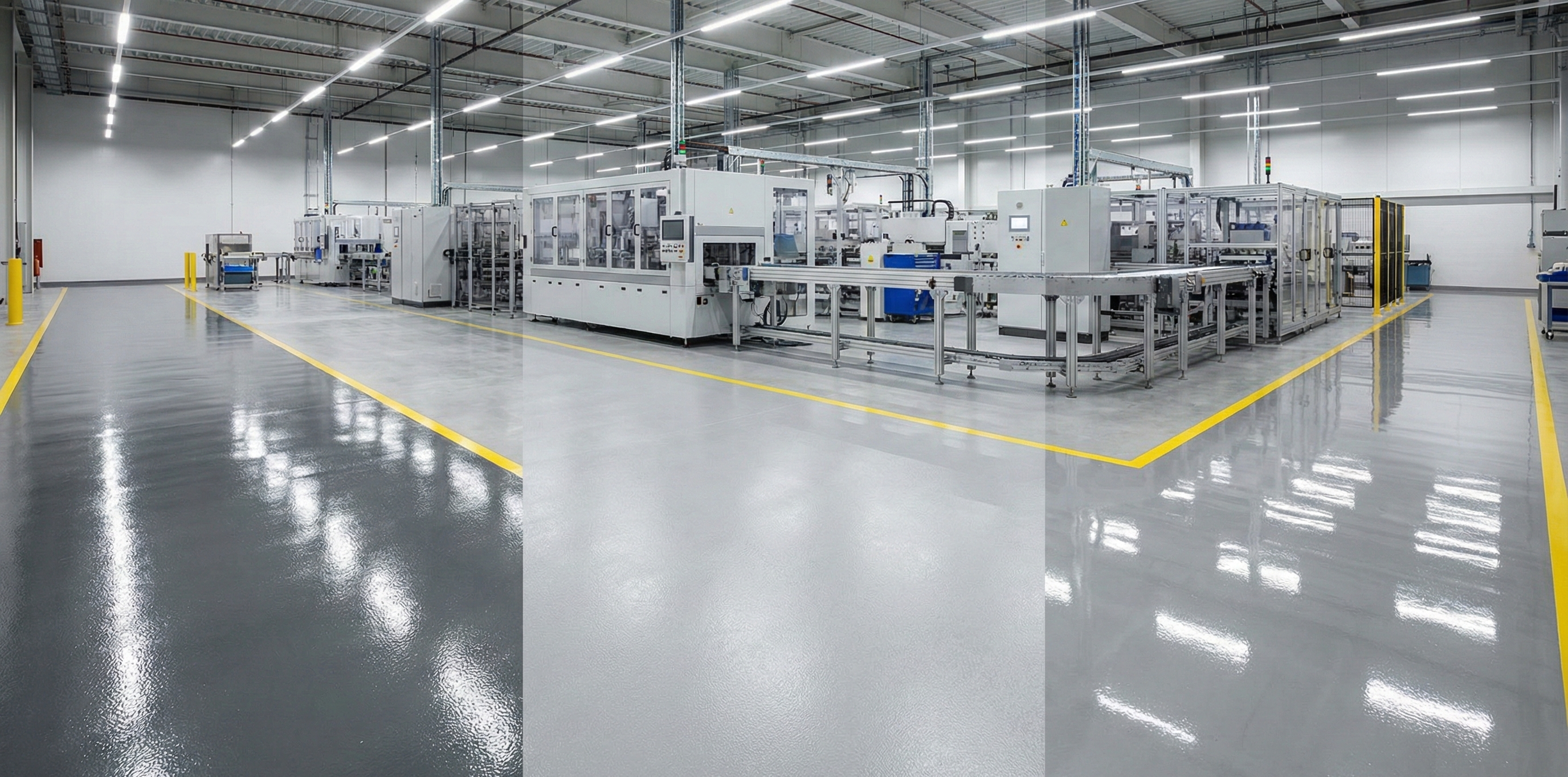
While generic industrial concrete floor paint might suffice for light foot traffic, every warehouse, factory or industrial space will require a specific system designed to withstand the stresses that particular warehouse may face. Whether that is consistent impact, chemicals, heavy machinery, forklifts, or all of the above.
This guide outlines the critical factors in specifying resin flooring, comparing the two industry titans - Epoxy and Polyurethane - to help you select the right system for your substrate.
Key Factors in Resin Flooring Specifications
Before selecting a product, you must define the mechanical and chemical stresses the floor will endure. A proper specification considers:
- Traffic Load: Is it foot traffic only, or will there be forklifts and pallet trucks?
- Chemical Exposure: Will the floor be exposed to hydraulic fluids, battery acids, or harsh cleaning solvents?
- Application Window: How much downtime can the business afford?
Epoxy vs. Polyurethane Flooring: Which System is Right for You?
The most common question we receive at the technical desk is regarding the difference between Epoxy and Polyurethane (PU). While both are resin-based, they have distinct behaviours.
1. High-Build Epoxy (The "Heavyweight")
Epoxy is the industry standard for heavy duty warehouse flooring. It cures to an extremely hard, rigid finish that offers maximum protection against abrasion and heavy point-loading. It also offers the highest level of chemical resistance, making it suitable for repeated bleach cleans, etc.
- Best For: Factories, heavy engineering workshops, and areas with frequent forklift traffic.
- Performance: Unmatched in terms of strength, durability, and resistance to chemicals. It withstands prolonged vehicle traffic far better than softer resins.
- Application Note: Epoxy is a professional-grade product. It is a two-pack system that hardens rapidly (often within 30 minutes of mixing), requiring a skilled hand for application.
- Recommended Product: Everest Trade - HB Epoxy Factory Floor Paint.
2. Polyurethane (The "Versatile All-Rounder")
Polyurethane (PU) systems are often more flexible than Epoxy. They are generally easier to apply and offer excellent value for large surface areas. If you need something reasonably resilient, good looking and easy to apply - this is generally the best “bang for your buck” product.
- Best For: General warehousing, light industrial units, and garages.
- Performance: This is the best value option that works best for most general applications. It provides a durable, easy-to-clean finish.
- Application Note: Typically easier to work with than fast-curing Epoxies, making it ideal for in-house maintenance teams or DIY applications.
- Recommended Product: Everest Trade - Industrial Concrete Floor Paint.
The "System" Approach: Why Paint Alone Fails
One of the biggest misconceptions in industrial floor coating systems is that a single coat of paint is sufficient. To achieve the abrasion resistant coatings required for industrial use, you must build a "system."
We strongly recommend a three-layer specification for both Epoxy and Polyurethane finishes:
The Primer: A dedicated primer is essential. It penetrates the concrete substrate, binding dust and creating a chemical bridge for the topcoat.
- For PU Systems: Use Everest Trade Polyurethane Primer & Sealer.
- For Epoxy Systems: Use Everest Trade Deep Penetrating Epoxy Primer
The Topcoats: We recommend laying two coats of resin paint over the primer to ensure full opacity and proper film thickness.
Note: If you are overcoating an existing compatible paint that is in good condition, you may not need a primer. However, if the old paint is flaking or worn, it must be removed entirely, or the new coating will fail. Covering up faulty paint will just cause the new coat to inherit all the same issues.
Specifying for Specialised Environments
Machine Shops and Metal Containers
For environments involving metal skips, containers, or heavy machinery, standard resins may not offer the anti-corrosive properties required. In these scenarios, a Machine Enamel or Oxide Gloss is preferred.
-
Specification: Everest Trade Ultimate Skip & Container Paint combined with an Anti-Corrosive Metal Oxide Primer.
Kennels and Catteries
Animal care facilities require floors that are impervious to liquids and withstand aggressive cleaning. Hygiene is the priority here.
- Specification: A Two-Pack Epoxy system specialised for use around animals is recommended here for its chemical resistance, ensuring fluids do not penetrate the concrete.
Commercial Kitchens
In kitchens and other “food safe” zones, we highly recommend high build paints with anti-bacterial properties, this will fill any small cracks in the floor and stop the spread of bacteria.
- Specification: An Anti-Bacterial Two-Pack Epoxy system is recommended here for its anti-bacterial properties as well as the chemical resistance it offers against heavy duty cleaning agents.
Conclusion
Choosing the right specification is about balancing durability with application practicality. For extreme durability and chemical resistance, industrial floor coating systems based on Epoxy are the superior choice. However, for general industrial use where ease of application and value are key, High-Build Polyurethane remains the industry workhorse.
Unsure which system fits your facility?
Contact our technical team today for a specification tailored to your environment.
Share:
Diamond Grinding vs. Shot Blasting: Achieving the Correct Surface Profile (CSP)