
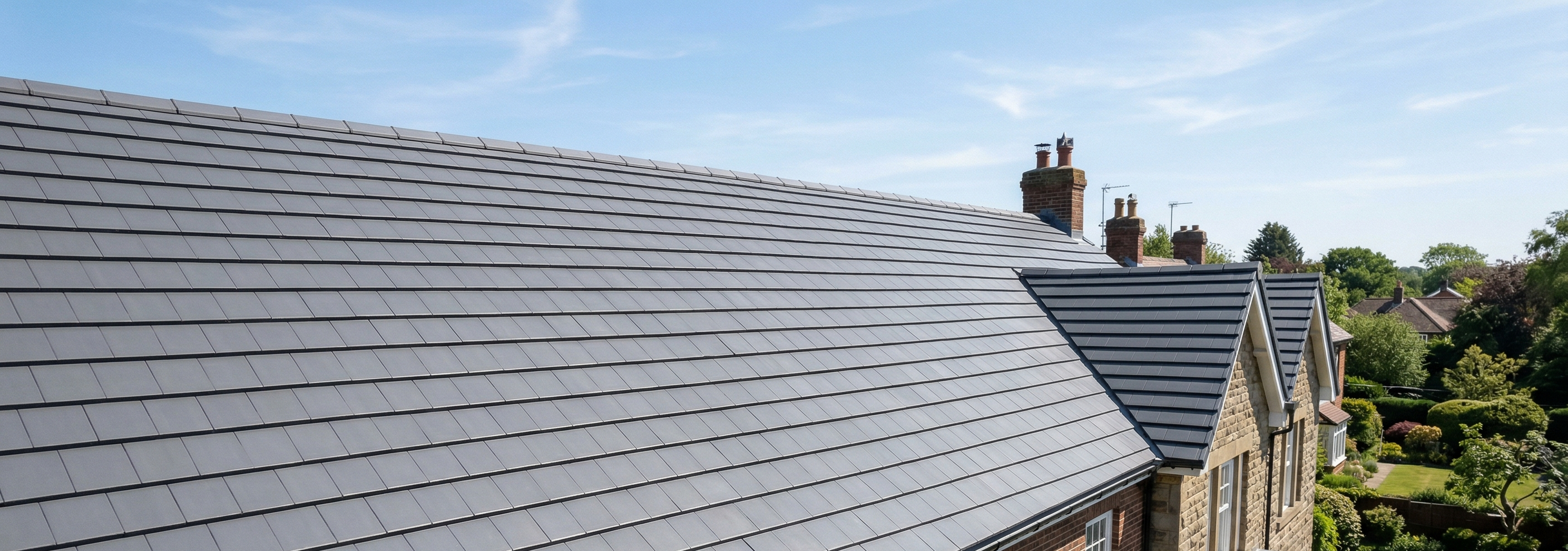
You look up at your roof. The tiles are 30 years old. They used to be a sharp terracotta red or a slate grey, but now they are a dull, mossy concrete colour. You decide to restore them. You pressure wash the moss off, and you buy a high-quality Roof Coating to bring the colour back.
Stop. If you apply a thick, rubberised roof coating directly onto a 30-year-old tile, you are making a costly mistake. Old concrete tiles suffer from a condition we call the "Sponge Effect." If you don't stop this effect first, your expensive paint will disappear into the tile, dry patchily, and eventually peel off.
Here is why you must prime your roof before you paint it.
Why Tiles Get Thirsty
When concrete tiles are manufactured, they are given a "slurry coat" - a smooth, protective skin. Over decades of British weather, rain, frost, and moss attack this surface. The smooth skin erodes, leaving the raw, aggregate-filled concrete exposed.
-
The Result: The tile becomes highly porous. It acts exactly like a dry sponge.
-
The Test: If you power wash an old roof, notice how quickly it dries compared to a new one. It’s not drying; it’s drinking.
What Happens If You Don't Prime
If you paint directly onto this thirsty surface, three bad things happen:
-
Flash Drying: The tile sucks the water or solvent carrier out of the paint the second it touches the surface. The paint dries too fast. It can't "flow" or level out. You get brush marks, roller lines, and a patchy finish.
-
Adhesion Failure: Because the liquid carrier is sucked away so fast, the resin doesn't have time to bond chemically to the surface. It just sits on top as a dry powder. The first frost will pop it off.
-
The "Money Pit": This is the one that hurts your wallet. A porous roof will drink your paint. You might calculate you need 20 litres, but the sponge effect means you use 40 litres just to get a solid colour. You end up applying four coats instead of two.
The Solution
You need to satisfy the thirst of the tile before you apply the colour. You need a Roof Primer / Sealer. This is usually a thinner, lower-viscosity resin designed to penetrate, not coat.
-
Penetration: Because it is thin, it dives deep into the capillaries of the concrete.
-
The Seal: It dries to fill the voids. It turns the "sponge" into a solid, non-porous surface.
-
The Anchor: It leaves a sticky (tacky) surface that grabs onto your topcoat, ensuring a bond that lasts 10+ years.
The Process
Step 1: The Bio-Clean Never prime a dirty roof. Even if you pressure wash it, invisible moss spores remain in the pores.
-
Apply a Biocidal Roof Wash. Let it kill the roots.
-
Warning: Ensure the roof is Bone Dry before priming. If the pores are full of water, they can't accept the primer.
Step 2: The Flood Coat Apply the primer generously.
-
Use a sprayer or a thick brush.
-
You want to "flood" the tile. Keep applying until the tile stops absorbing it.
-
You know it's working when the tile stays wet on the surface rather than drying instantly.
Step 3: The Topcoat Once the primer has cured (usually 2–4 hours), the surface is sealed. Now, when you apply your coloured Roof Coating, it will sit on top, flow out smoothly, and cover in just one or two coats.
Conclusion
Painting a roof is a dangerous and difficult job. You don't want to do it twice. The secret to a roof renovation that lasts 15 years isn't just the paint; it's the preparation. Don't feed the sponge expensive paint. Feed it a primer first.
-
Stop the suction
-
Save money on topcoats
-
Lock the colour in
Ready to restore your roof?
→ Shop our High-Penetration Roof Primers
Share:
Removing Moss and Lichen: Why You Should Never Pressure Wash Old Tiles