System Overview
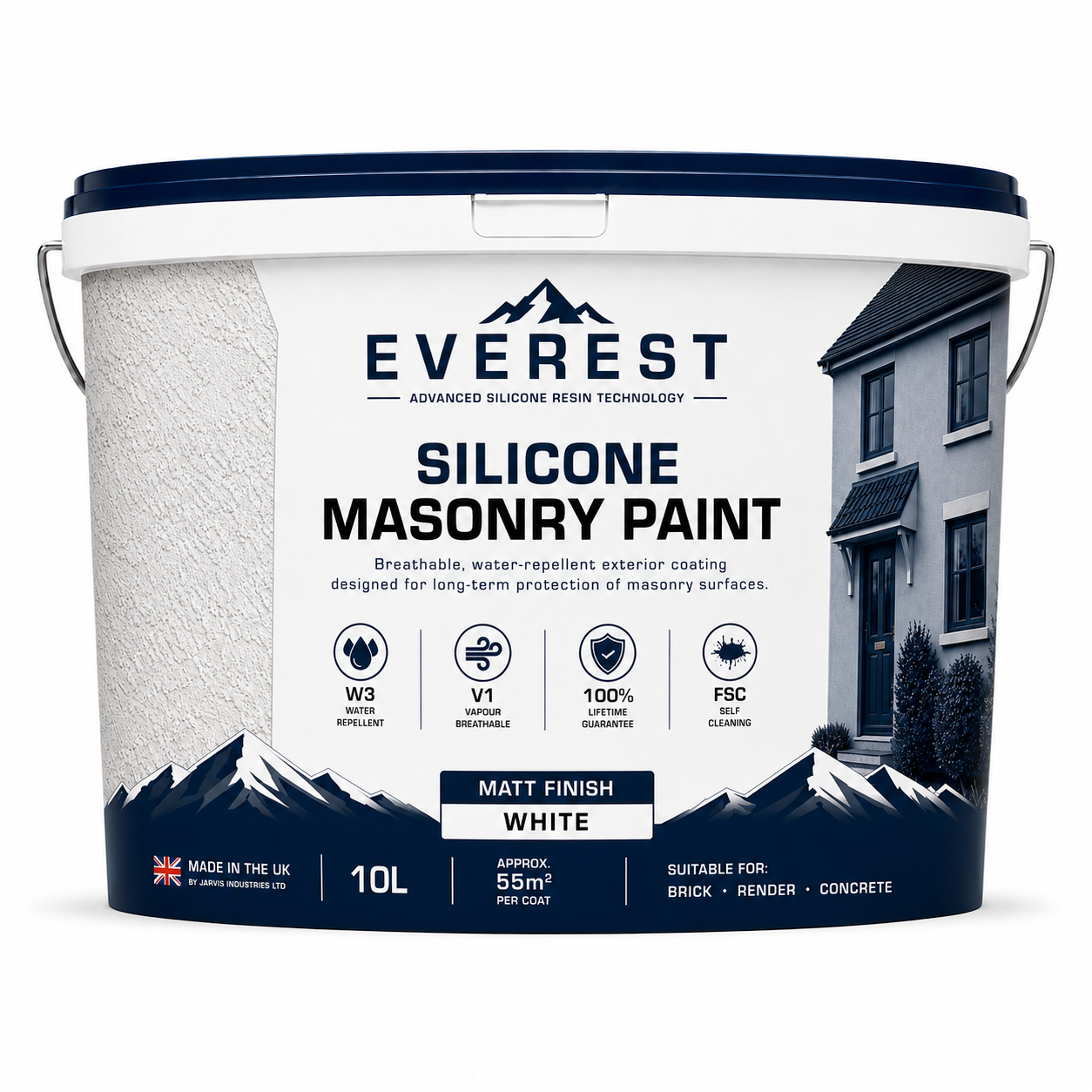
For masonry and brick exterior walls, breathable coating systems provide protective finishing layers that shield mineral substrates from weather exposure while allowing moisture vapour to escape. Exterior masonry paints create a uniform decorative surface that improves the durability and appearance of brickwork, render, and previously painted façades.
External masonry surfaces are continuously exposed to rainfall, temperature variation, and environmental pollutants. Without appropriate coatings, mineral substrates can absorb moisture, leading to gradual deterioration, staining, and inconsistent surface appearance. A suitable masonry coating system helps regulate moisture exposure while providing long-term decorative protection.
EVEREST masonry coatings utilise water-based acrylic technology formulated for exterior mineral substrates. Acrylic masonry paints form a breathable film that allows moisture vapour movement through the coating while maintaining resistance to rainfall and surface weathering. This balance helps protect exterior walls without trapping moisture within the substrate.
These systems are widely used for maintenance and refurbishment of residential properties, garages, garden walls, and light commercial buildings where dependable weather protection and decorative finishing are required.
Suitable Substrates & Surface Preparation
Exterior masonry paints are designed for application to mineral building materials such as brickwork, render, and concrete block surfaces. These substrates are typically porous and may absorb paint unevenly if not correctly prepared.
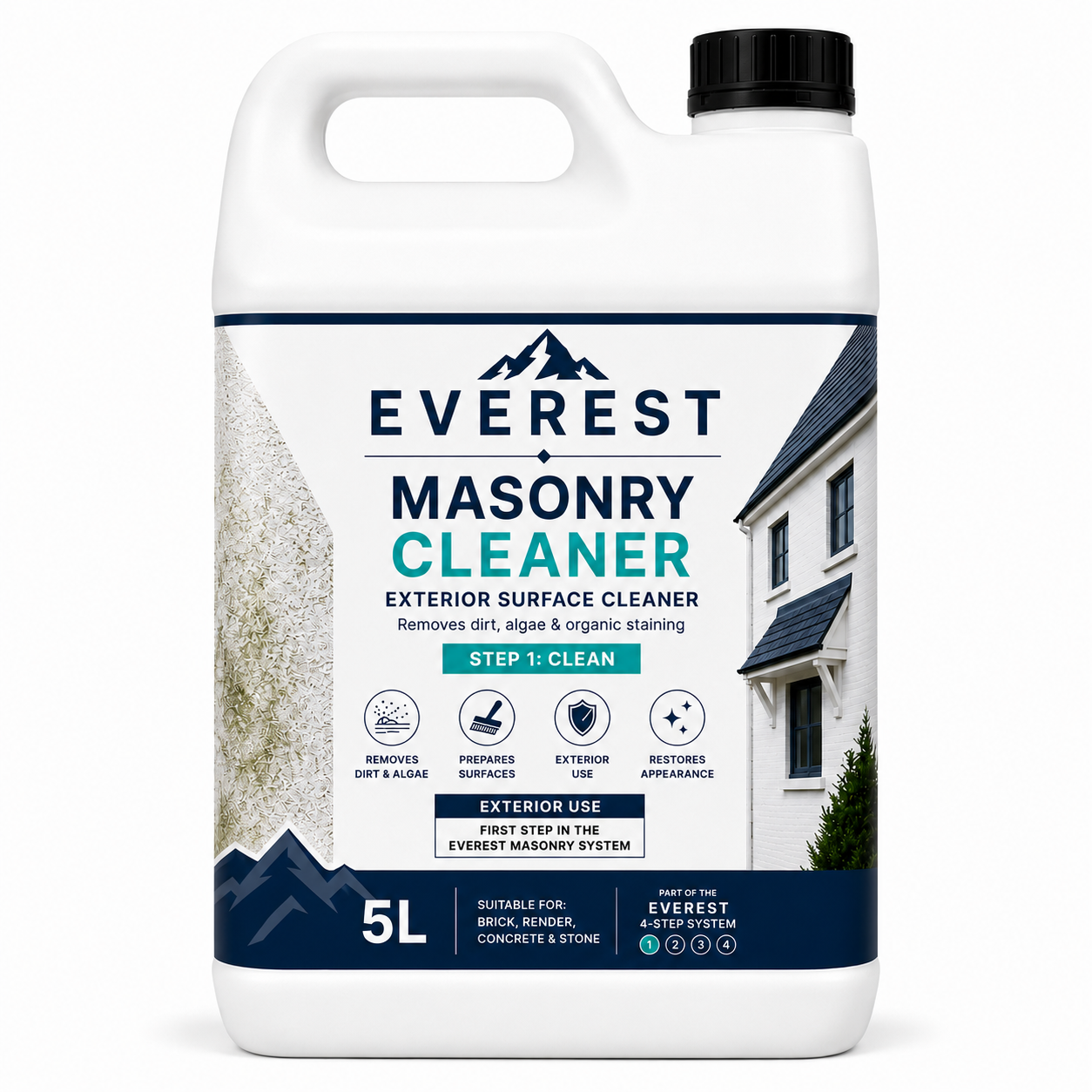
Surfaces should be clean and free from dirt, algae, dust, and loose material before coating. Exterior walls exposed to weather often accumulate environmental contamination that must be removed prior to painting.
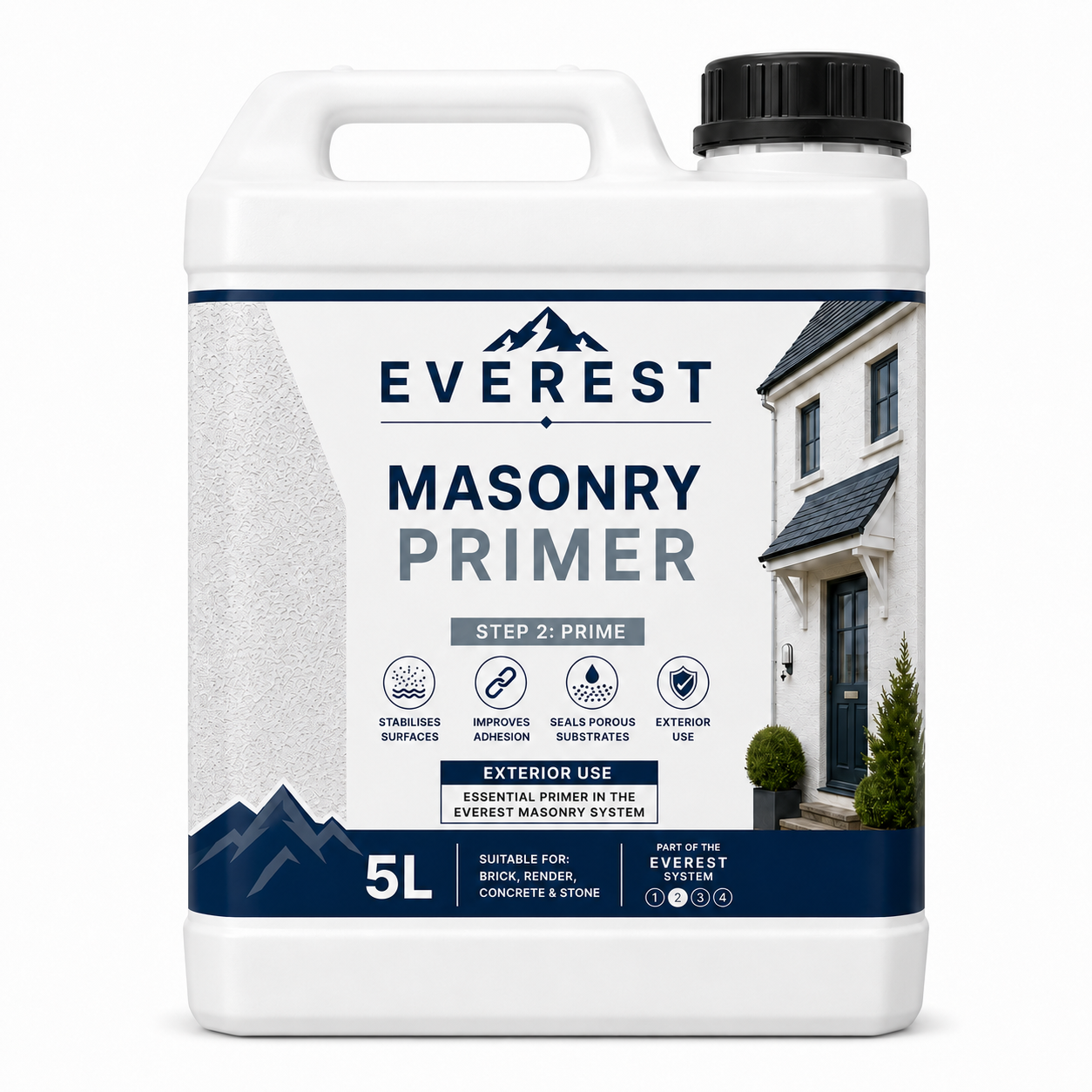
Weathered masonry may also develop chalking or friable surface layers. In these cases, stabilising primers can be used to consolidate the substrate and regulate absorption before applying the masonry coating.
Previously painted masonry can generally be recoated provided the existing coating remains sound and well adhered. Loose or flaking coatings should be removed and the surface cleaned before applying new paint layers.
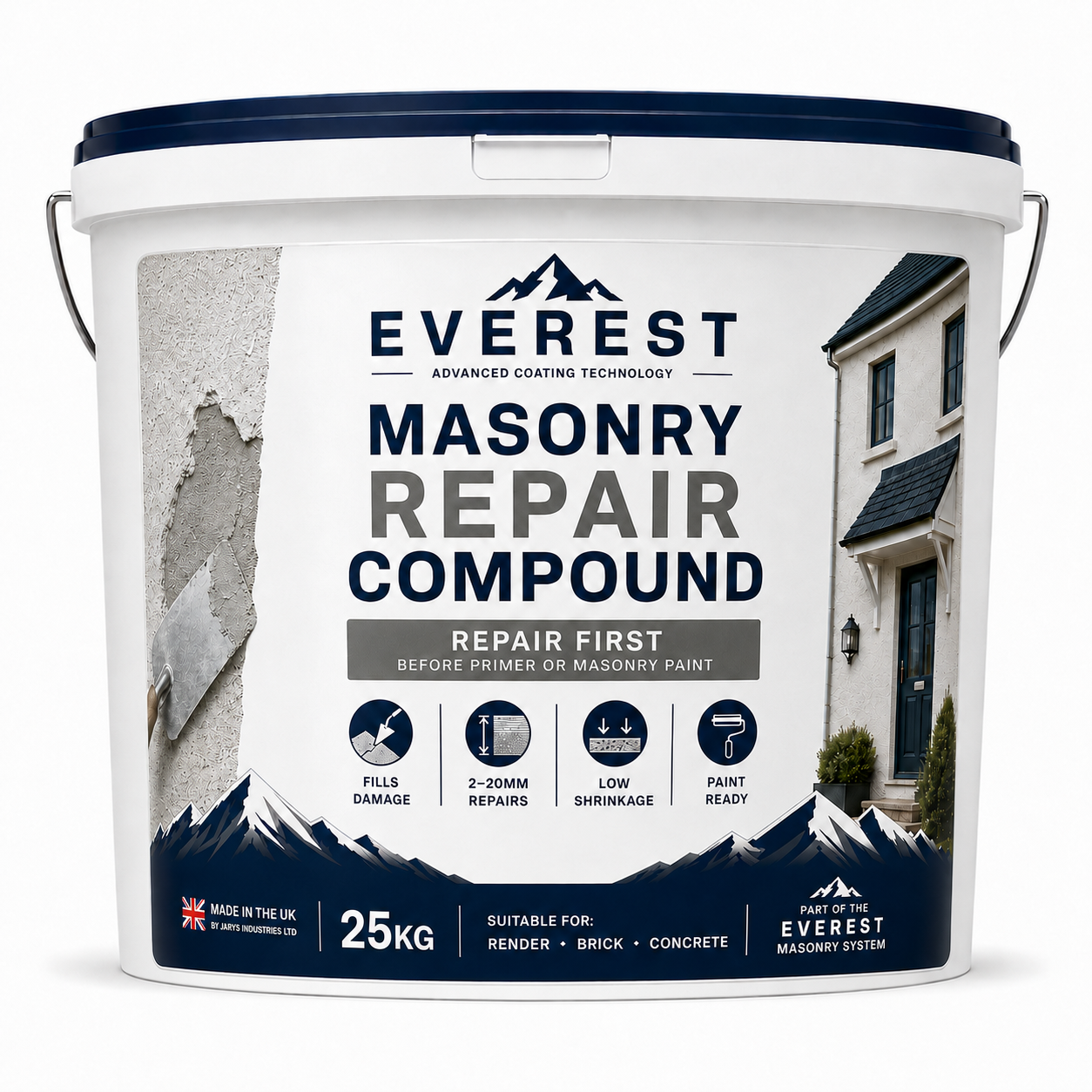
Where cracks or surface defects are present within the masonry, suitable repair materials should be applied prior to painting to ensure a uniform and stable coating surface.
Performance Characteristics & Limitations
Masonry paints provide a breathable protective coating designed specifically for mineral building substrates. The coating film protects exterior walls from rain and environmental exposure while allowing internal moisture vapour to escape through the surface.
Water-based acrylic masonry coatings offer good adhesion to prepared brick and render surfaces while maintaining flexibility across minor substrate movement. This flexibility can help reduce the risk of premature cracking or peeling under normal environmental conditions.
The decorative film also improves the visual consistency of ageing masonry surfaces, helping restore uniform colour and appearance during refurbishment projects.
Despite their durability, standard masonry paints are generally intended for light to medium duty environments. They are not designed for structural waterproofing, heavy industrial exposure, or surfaces requiring significant crack bridging capability.
Their performance is also dependent on correct surface preparation and appropriate environmental conditions during application.
Internal vs External Considerations
Masonry paints in this category are designed primarily for exterior wall applications. Exterior walls must withstand weather exposure including rainfall, UV radiation, temperature variation, and airborne contaminants.
Breathable acrylic coatings help protect the substrate while preventing trapped moisture from causing blistering or coating failure. This is particularly important for older buildings where moisture movement through masonry walls may occur naturally.
Interior masonry surfaces are less commonly coated using exterior masonry paints. Internal wall environments typically require coatings formulated specifically for interior conditions.
Ensuring that coatings are matched to the environmental exposure of the wall surface helps maintain long-term durability and appearance.
Selection Guidance & When to Specify Alternatives
Masonry paints are typically specified for exterior brick and render surfaces where decorative refurbishment and moderate weather protection are required. These coatings provide a practical maintenance solution for residential properties, boundary walls, garages, and small commercial buildings.
They are particularly suitable where existing masonry surfaces require visual improvement and protection against everyday environmental exposure.
However, where buildings experience severe weather conditions, persistent moisture penetration, or façade cracking, more specialised exterior wall coatings may be required. Systems designed for enhanced weather resistance or crack bridging can provide improved long-term protection in more demanding environments.
Selecting the appropriate masonry coating system should therefore consider the condition of the wall substrate, the level of environmental exposure, and the expected maintenance cycle of the building façade.