System Overview
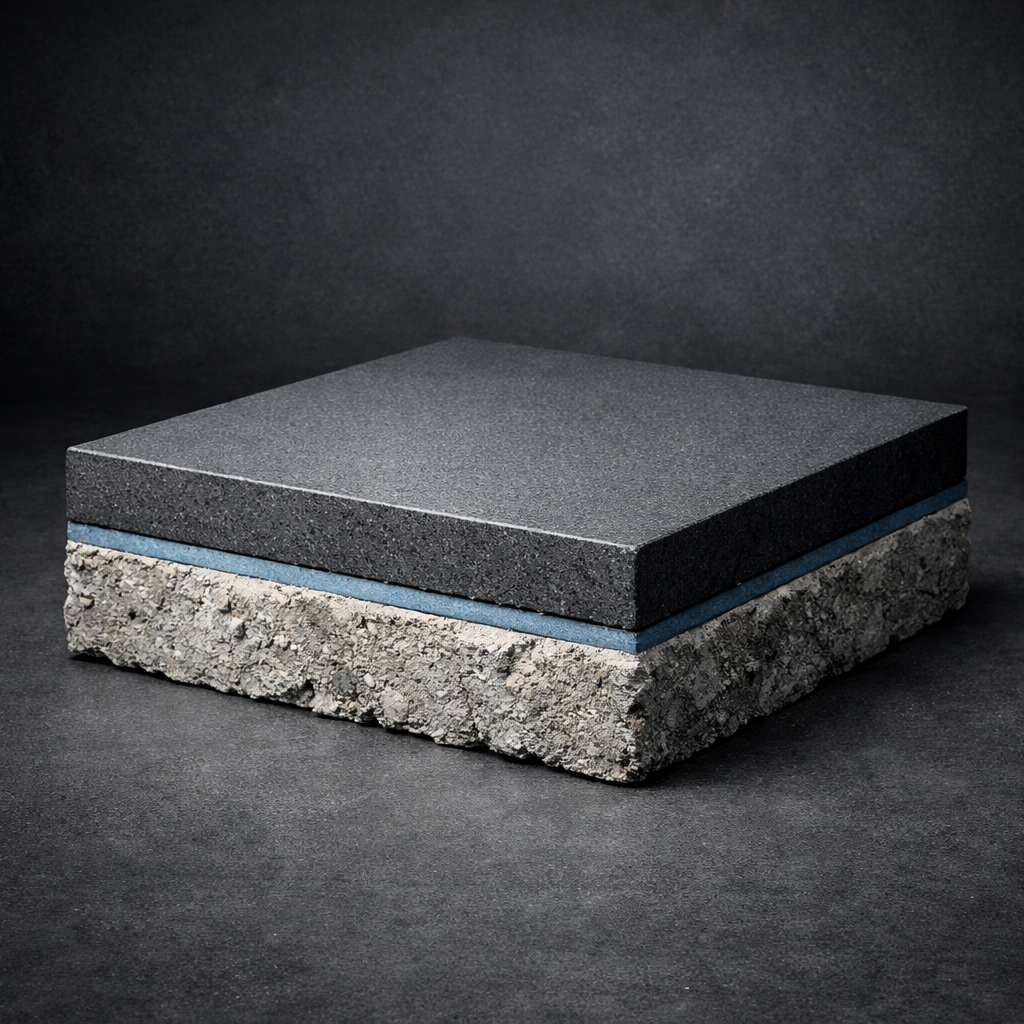
For concrete, wood, and previously painted interior floors, polyurethane coatings provide a durable protective finish designed for environments where moderate abrasion resistance and flexible film performance are required. Polyurethane floor coatings form a smooth resin-based layer across prepared substrates, improving floor durability while maintaining a decorative and maintainable surface.
Interior floors in workshops, garages, storage rooms, and plant areas are often exposed to routine mechanical wear from foot traffic, wheeled equipment, and general operational activity. Untreated concrete or timber floors can gradually deteriorate under these conditions, producing dust, staining, and surface damage. Polyurethane floor coatings help stabilise these surfaces while providing a protective layer that improves cleanability and surface resilience.
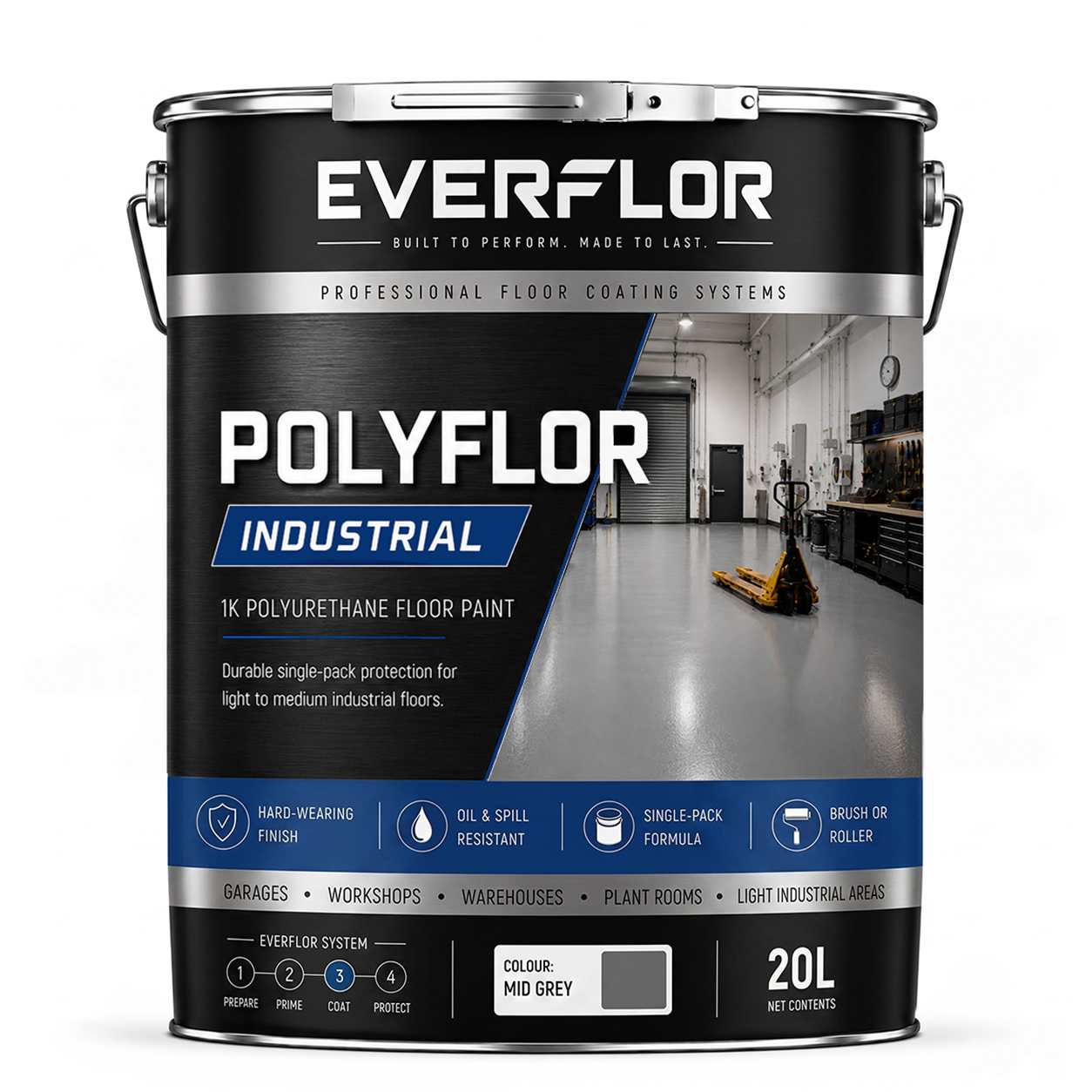
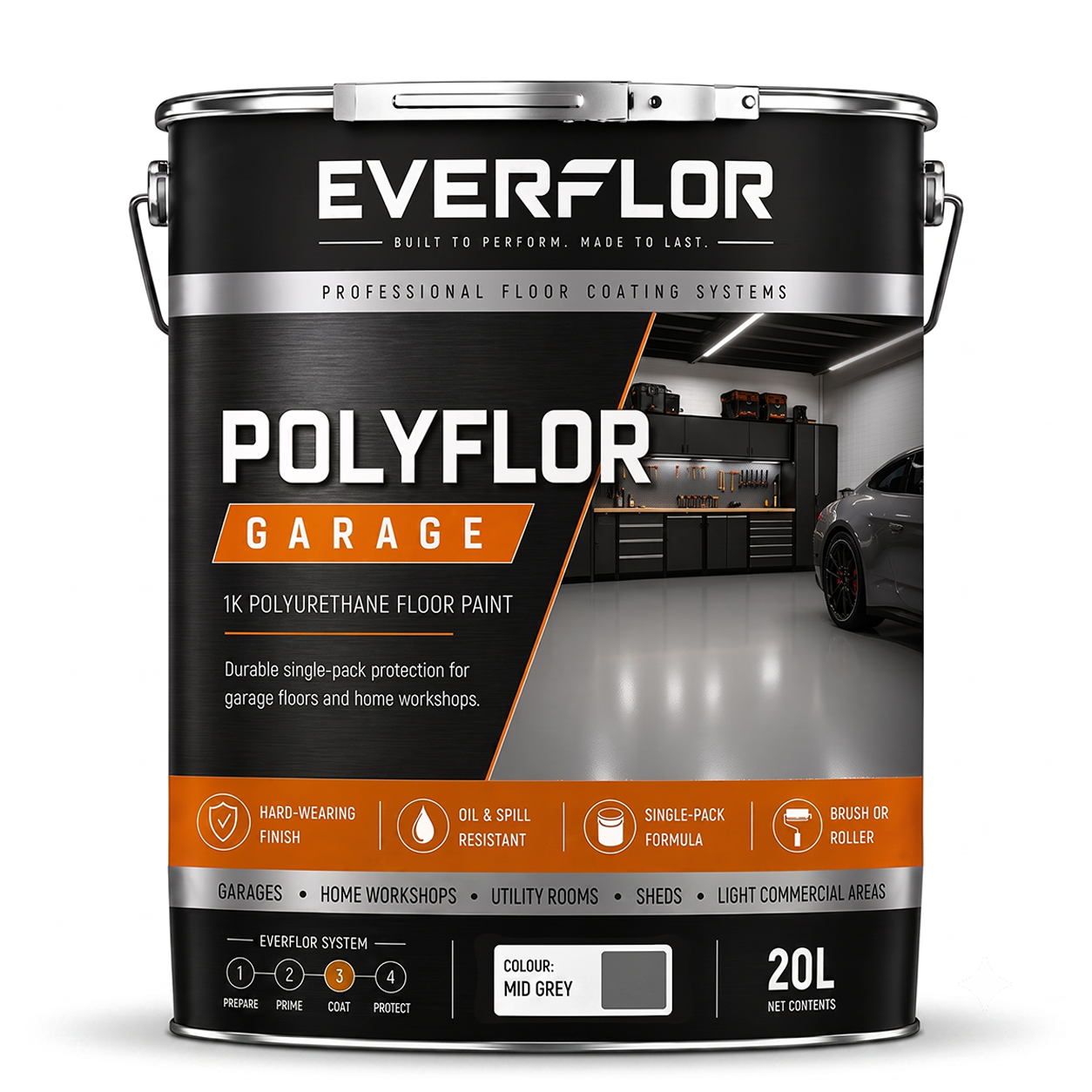
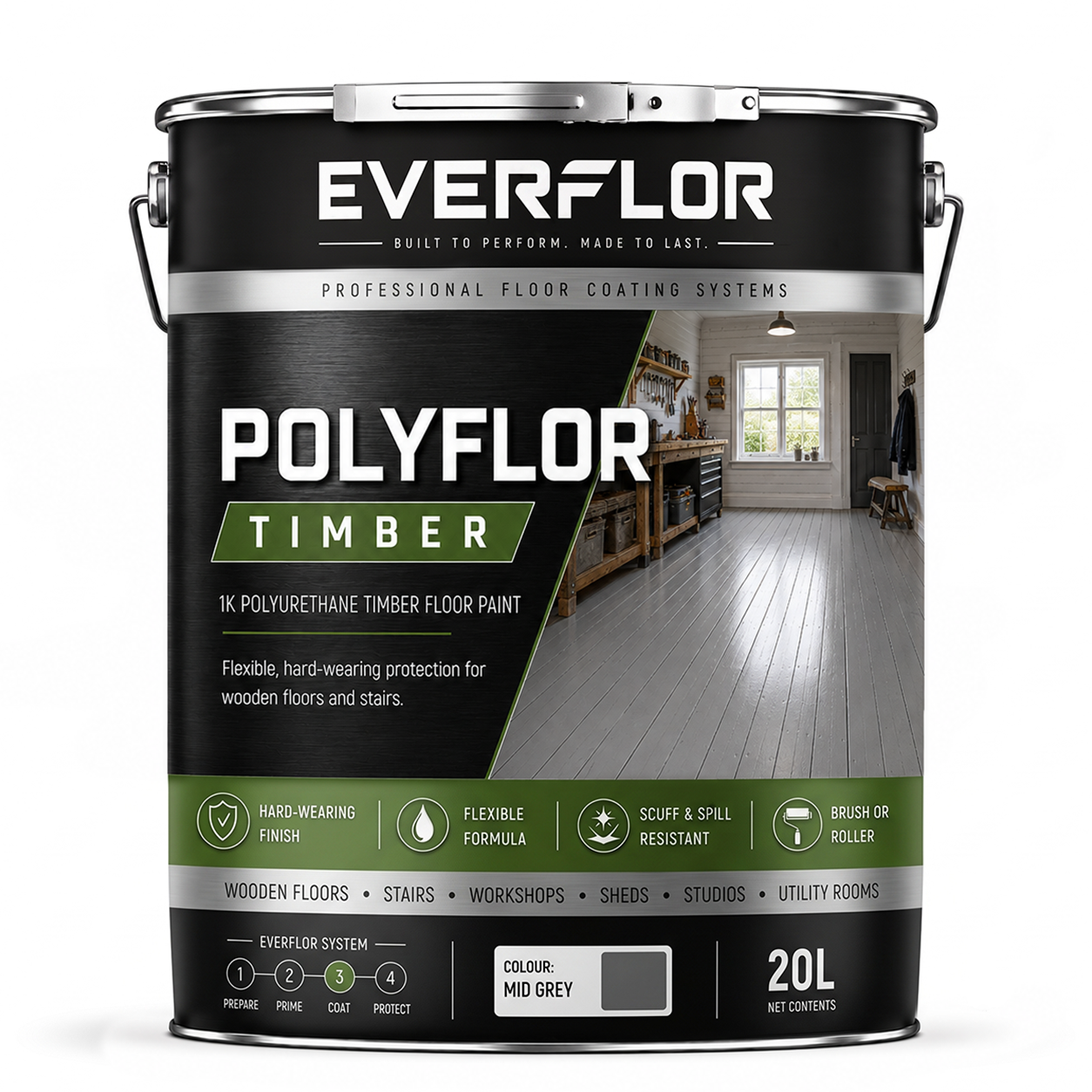
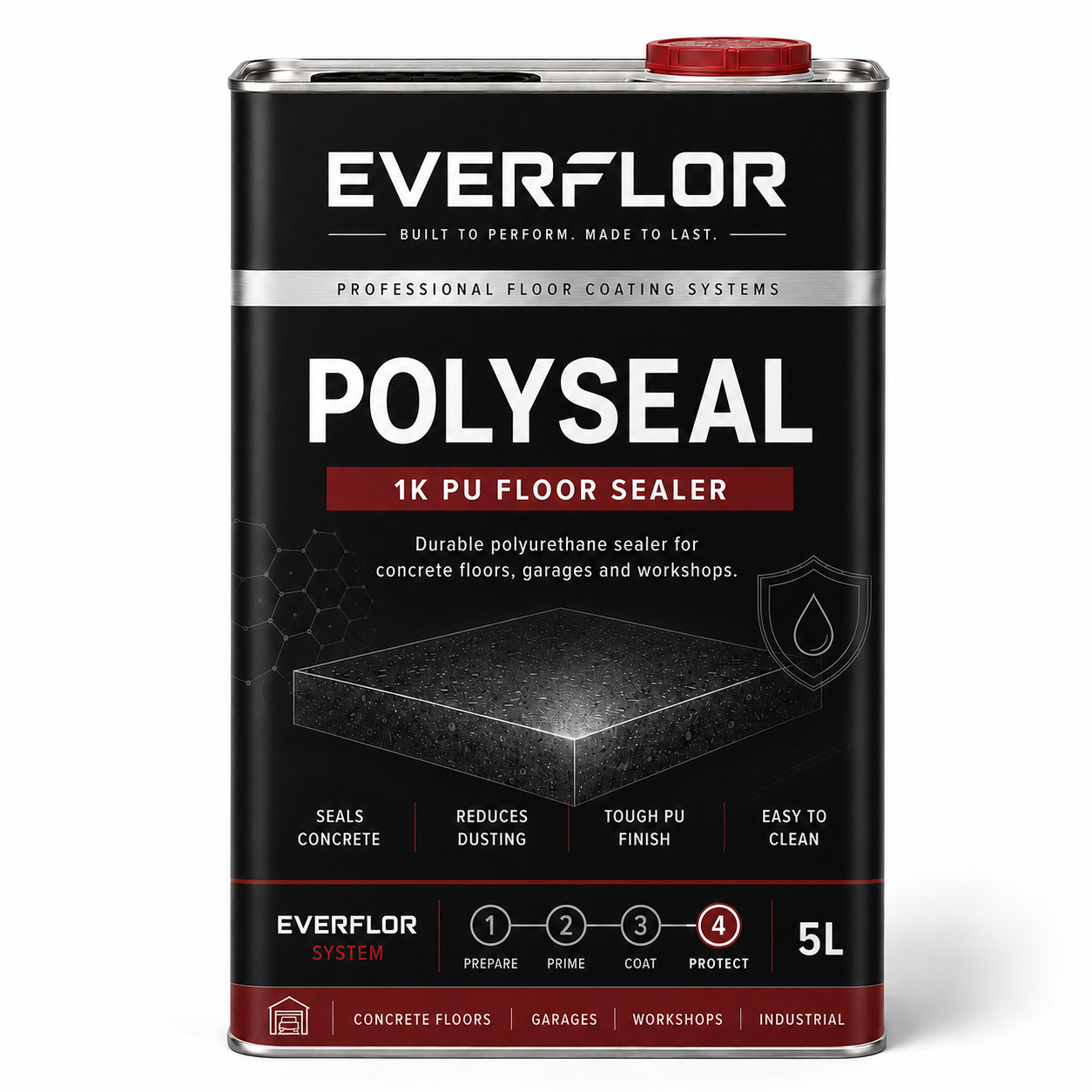
EVEREST Everflor polyurethane floor coatings are designed for interior flooring environments where moderate durability and flexibility are beneficial. Polyurethane technology forms a tough yet slightly flexible film, allowing it to perform effectively on both rigid mineral substrates and timber floors where minor substrate movement may occur.
These systems provide a practical solution for refurbishment and protection of interior floors across commercial, residential, and light industrial environments.
Suitable Substrates & Surface Preparation
Concrete floors are one of the primary substrates for polyurethane floor coatings. Before coating, the concrete surface must be clean, dry, and free from contaminants such as grease, oils, dust, and curing compounds that may interfere with adhesion.
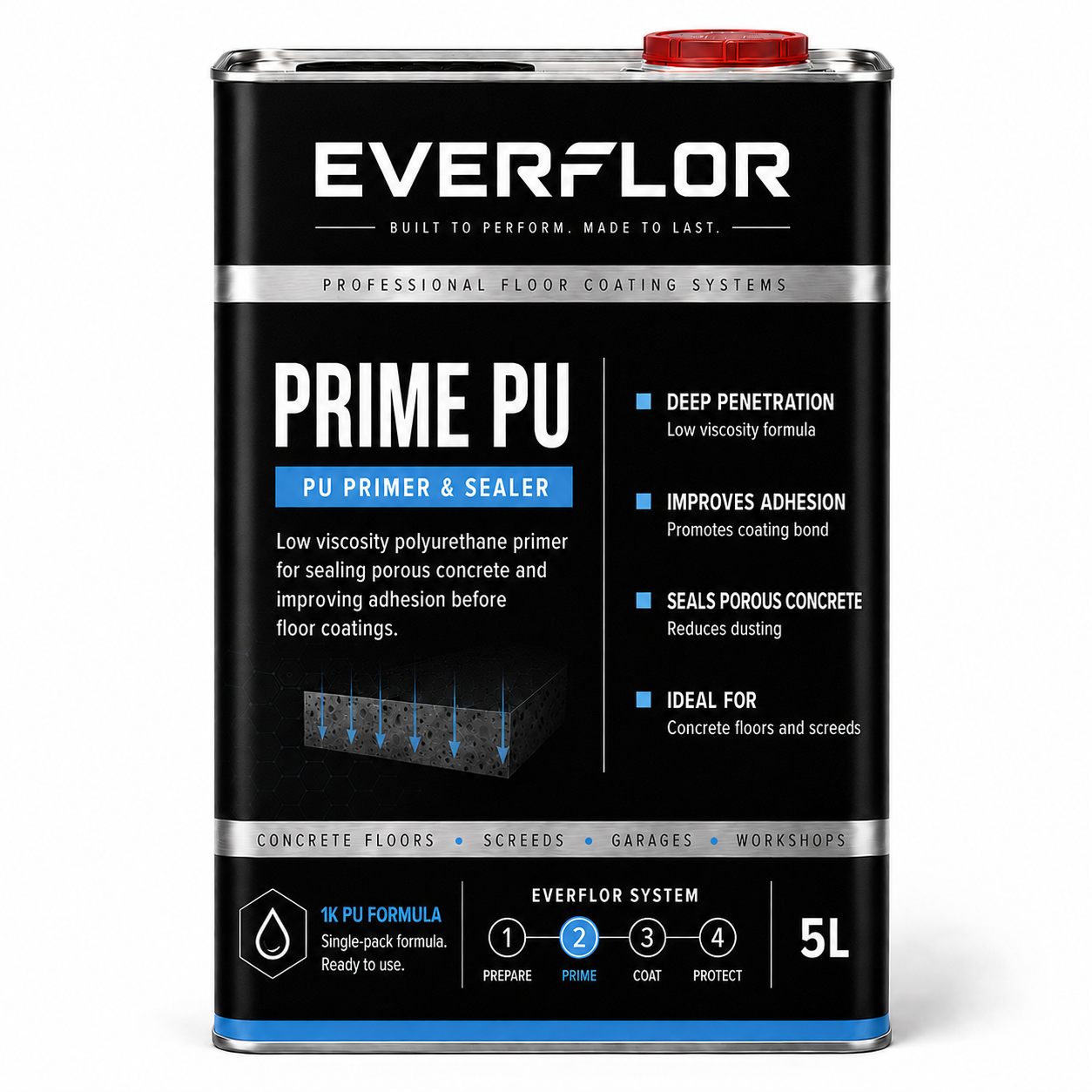
Mechanical preparation methods such as grinding or abrasion are commonly used to remove weak surface layers and create a suitable profile for coating adhesion. Where the substrate is porous or prone to dusting, a compatible primer may be used to regulate absorption before applying the polyurethane coating.
Timber floors can also be coated using polyurethane systems due to their flexible film formation. Wood substrates should be dry, structurally sound, and free from loose coatings prior to application. Sanding is often required to remove degraded fibres and produce a uniform surface profile.
Previously painted floors may be recoated provided the existing coating remains well adhered to the substrate. Loose or deteriorated coatings should be removed and the surface lightly abraded to improve intercoat bonding.
Correct surface preparation is essential to ensure the polyurethane coating forms a durable bond with the underlying substrate.
Performance Characteristics & Limitations
Polyurethane floor coatings provide a durable protective film capable of resisting moderate mechanical wear and routine cleaning processes. The cured coating forms a smooth surface that reduces dust generation from mineral substrates and improves floor maintainability.
One of the key advantages of polyurethane technology is its ability to maintain flexibility compared with more rigid resin systems. This characteristic allows the coating to accommodate minor substrate movement, which can be beneficial on timber floors or substrates subject to small structural movement.
Polyurethane coatings also provide good abrasion resistance for environments exposed to regular pedestrian traffic and light equipment movement. The finished surface typically produces a smooth decorative appearance suitable for commercial and utility flooring.
However, polyurethane floor coatings in this category are designed primarily for medium duty environments. They may not provide sufficient durability for continuous heavy industrial traffic, aggressive chemical exposure, or environments involving constant forklift movement.
In such conditions, higher-build epoxy or specialist resin flooring systems may provide improved long-term protection.
Internal vs External Considerations
Polyurethane floor coatings in this category are intended primarily for interior flooring applications. Interior environments such as workshops, garages, storage rooms, and plant areas benefit from coatings that provide abrasion resistance while maintaining a cleanable surface.
Because polyurethane coatings can provide flexible film performance, they are particularly suitable where substrates may experience minor movement or variation in environmental conditions within buildings.
Exterior environments introduce additional factors such as UV exposure, moisture, and temperature fluctuation. Standard interior polyurethane floor coatings may not provide adequate long-term durability under outdoor weathering conditions.
Where floors extend to exterior areas or exposed loading zones, alternative coating systems designed specifically for exterior service may be required.
Selection Guidance & When to Specify Alternatives
Polyurethane floor coatings are typically specified for interior floors requiring moderate durability combined with flexible film performance. They are commonly used in garages, workshops, storage areas, utility rooms, and light industrial units where floors experience regular use but not extreme mechanical stress.
These coatings are also well suited to timber floors where the ability to accommodate slight substrate movement can help maintain coating integrity over time.
However, where floors are exposed to heavier mechanical loads, continuous vehicle traffic, or chemical contamination, alternative resin systems may provide greater durability. Epoxy floor coatings are often specified for environments requiring stronger adhesion and improved resistance to chemical exposure.
For installations requiring extremely rapid curing or minimal downtime, polyaspartic floor systems may also provide a suitable alternative.