
Made In Great Britain

Direct from our factory

Free Next Day Delivery

On orders over £750

Product Test Results

All product test results published

Expert Technical Advice

Call or chat with our team

Uitverkocht
EverFlor - UniSeal - Concrete Sealer - Wetlook - Everest Paints
Leverancier:EverFlor
Uitverkocht
EverFlor - UniSeal - Concrete Sealer - Wetlook - Everest Paints
Uitverkocht
EverFlor - UniSeal - Concrete Sealer - Wetlook - Everest Paints
Uitverkocht
EverFlor - UniSeal - Concrete Sealer - Wetlook - Everest Paints
Leverancier:EverFlor
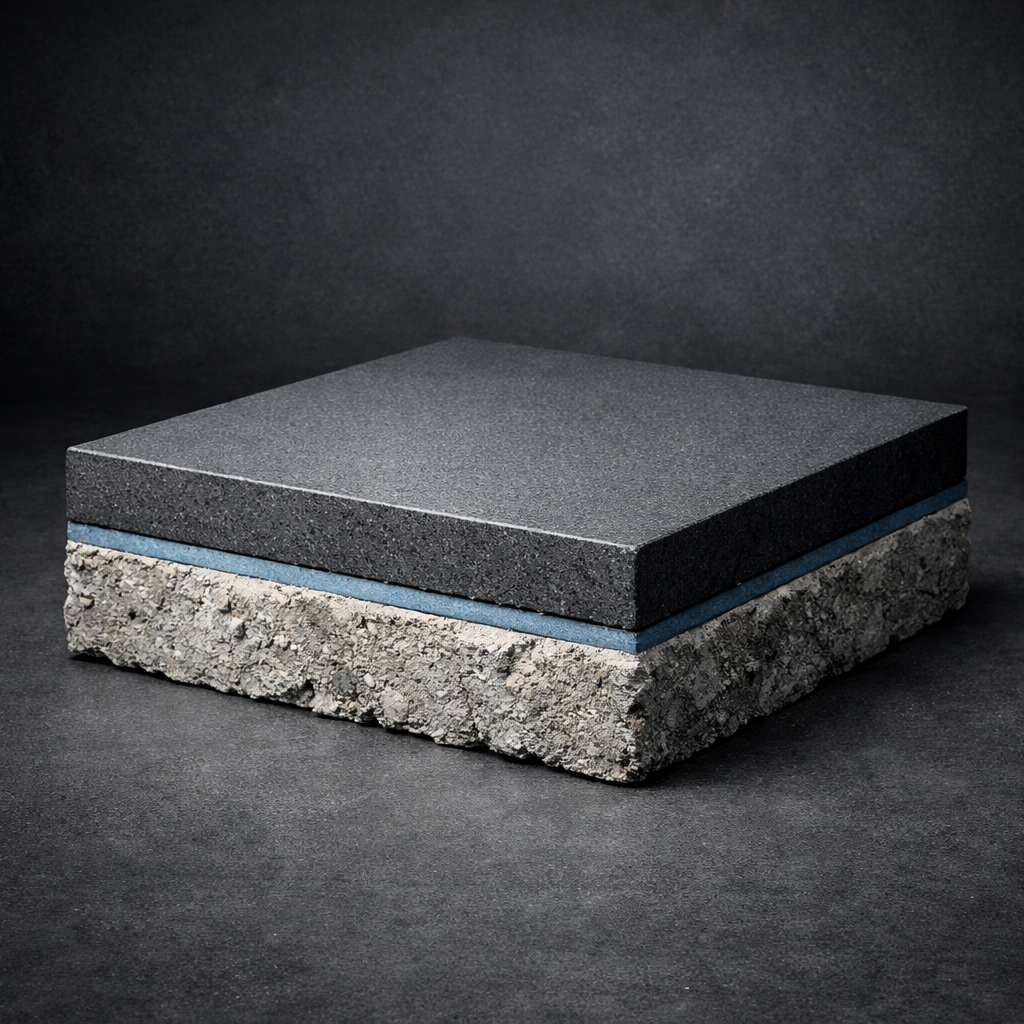
Square concrete block with layered structure on a dark background

Forklift or Heavy Traffic?

Step Up to a 2K Resin Floor System
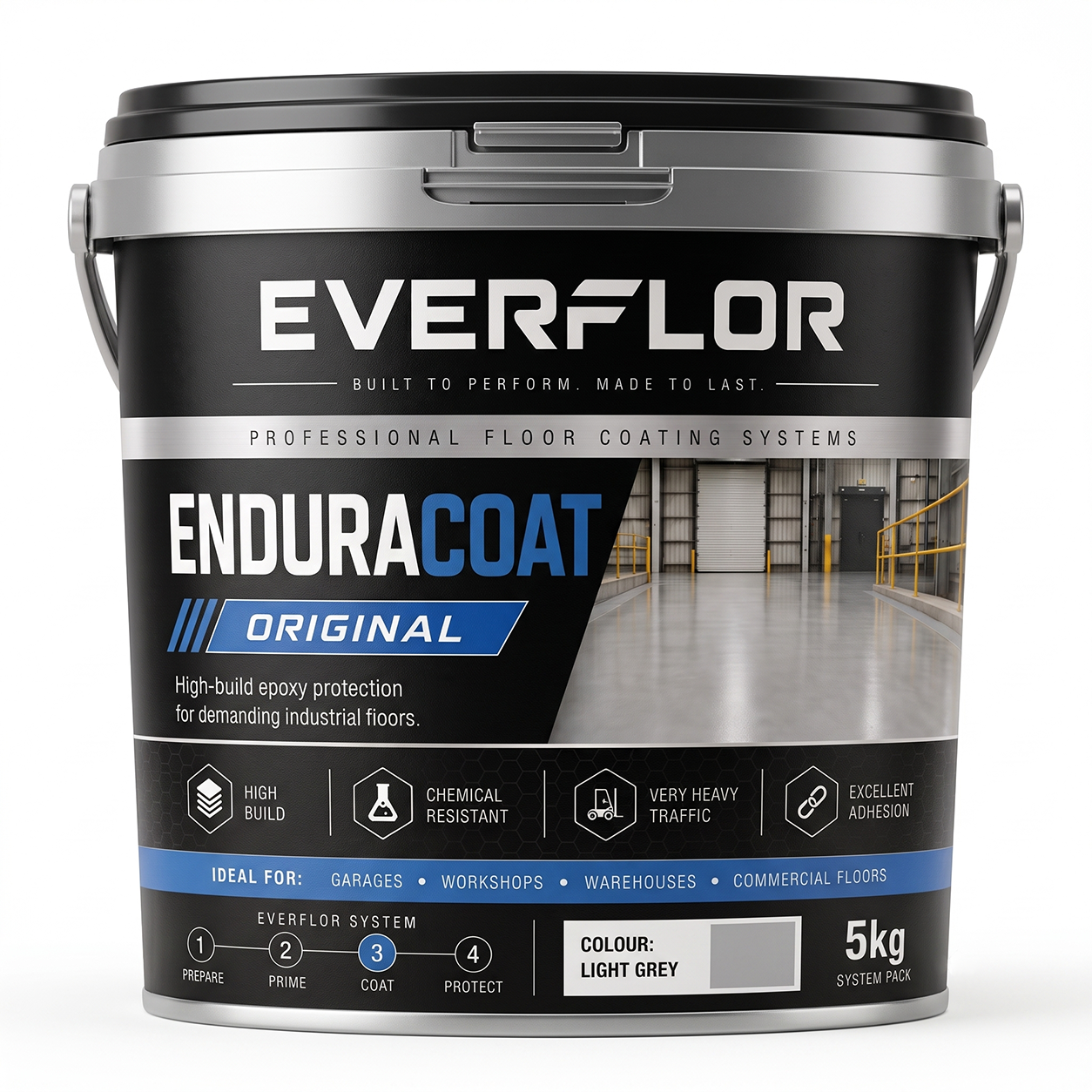
Medium duty acrylic systems are not designed for sustained forklift traffic or chemical exposure. Upgrade to EnduraCoat, a heavy duty epoxy coating with greater abrasion and chemical resistance.

View EnduraCoat
EverFlor - UniSeal - Concrete Sealer - Wetlook - Everest Paints
Leverancier:EverFlor
  • Zwart
  • Donkergrijs (RAL 7012)
  • Grijs (RAL 7004)
  • Lichtgrijs (RAL 7047)
  • Wit
Two-Pack Epoxy

Industrial grade coating

100% Solids

Solvent free, no shrinkage

High Build Formula

Up to 5x thicker

Extreme Durability

Withstands heavy forklift traffic

Chemical Resistant

Resists oil, acids, alkalis

Gloss Finish

Easy-clean surface

Uitverkocht
EverFlor - UniSeal - Concrete Sealer - Wetlook - Everest Paints
Leverancier:EverFlor
  • Zwart
  • Donkergrijs (RAL 7012)
  • Grijs (RAL 7004)
  • Lichtgrijs (RAL 7047)
  • Wit
Two-Pack Epoxy

Industrial grade coating

100% Solids

Solvent free, no shrinkage

High Build Formula

Up to 5x thicker

Extreme Durability

Withstands heavy forklift traffic

Chemical Resistant

Resists oil, acids, alkalis

Gloss Finish

Easy-clean surface

Uitverkocht
EverFlor - UniSeal - Concrete Sealer - Wetlook - Everest Paints
Leverancier:EverFlor
  • Zwart
  • Donkergrijs (RAL 7012)
  • Grijs (RAL 7004)
  • Lichtgrijs (RAL 7047)
  • Wit
Two-Pack Epoxy

Industrial grade coating

100% Solids

Solvent free, no shrinkage

High Build Formula

Up to 5x thicker

Extreme Durability

Withstands heavy forklift traffic

Chemical Resistant

Resists oil, acids, alkalis

Gloss Finish

Easy-clean surface

4.9
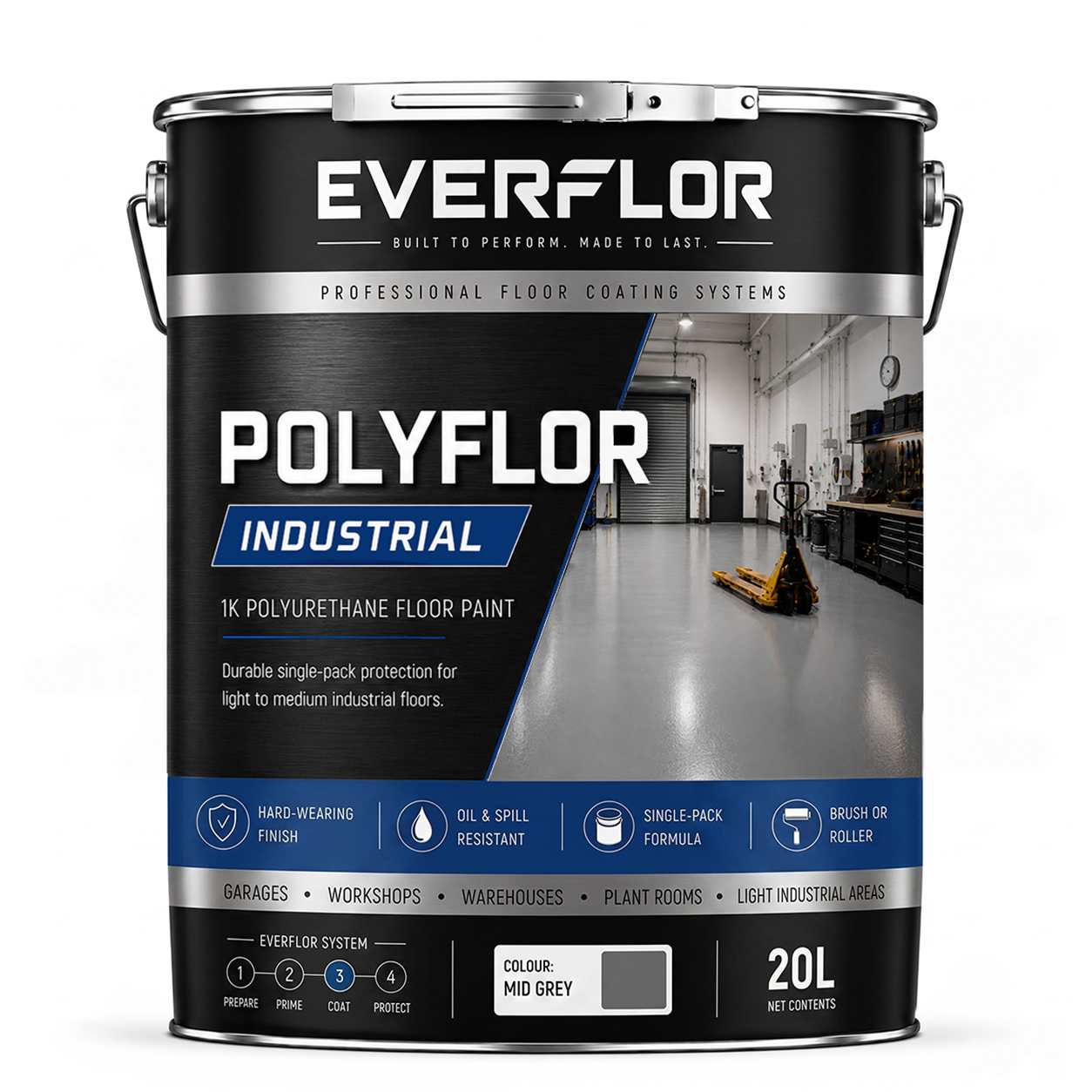
EverFlor - PolyFlor Industrial Floor Paint - Anti - Slip - Everest Paints
Leverancier:EverFlor
  • Zwart
  • Donker grijs
  • Grijs
  • Lichtgrijs
  • Wit
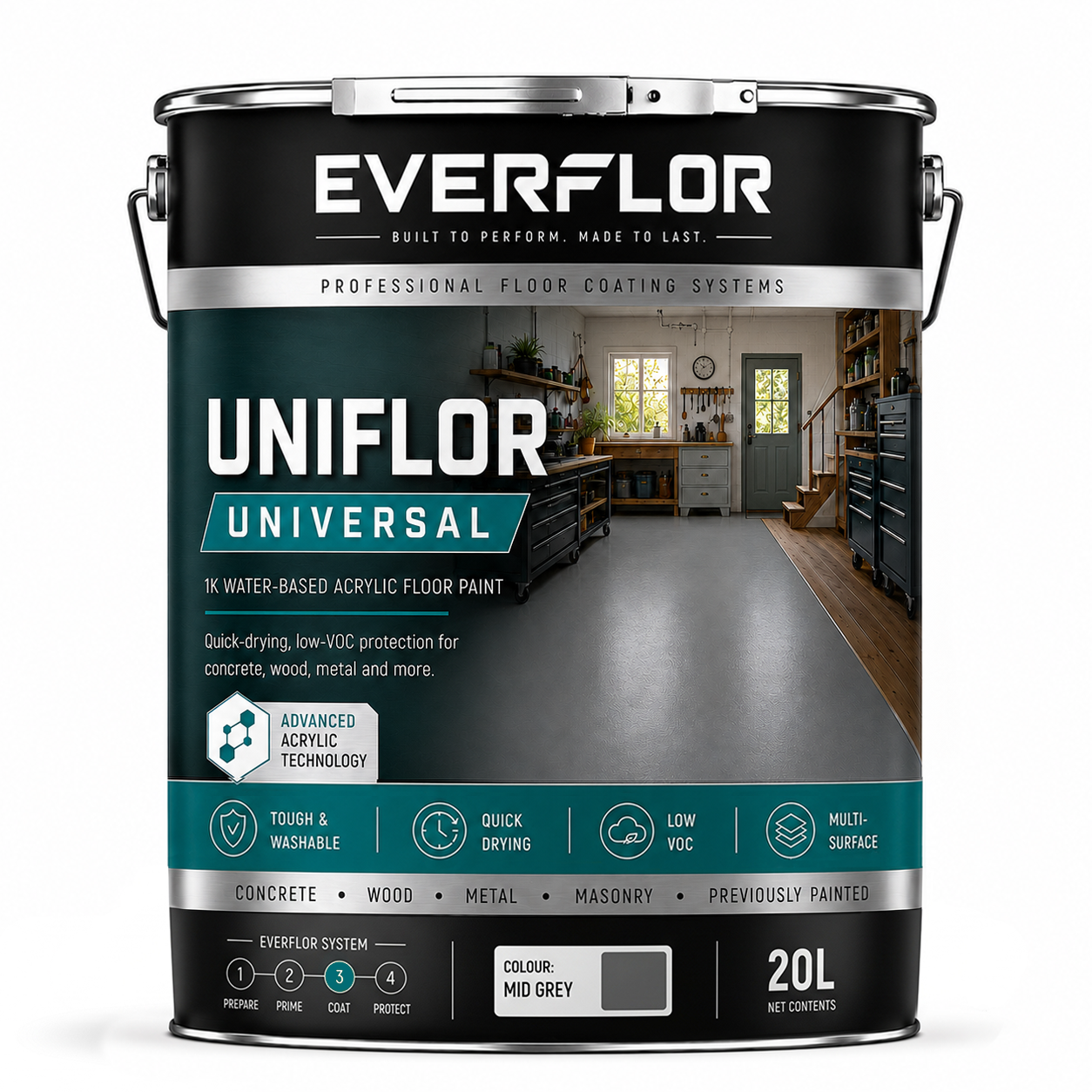
EverFlor - UniSeal - Concrete Sealer - Wetlook - Everest Paints
Leverancier:EverFlor
  • Zwart
  • Donker grijs
  • Grijs
  • Lichtgrijs
  • Geel
HANDELSGECLASSIFICEERD
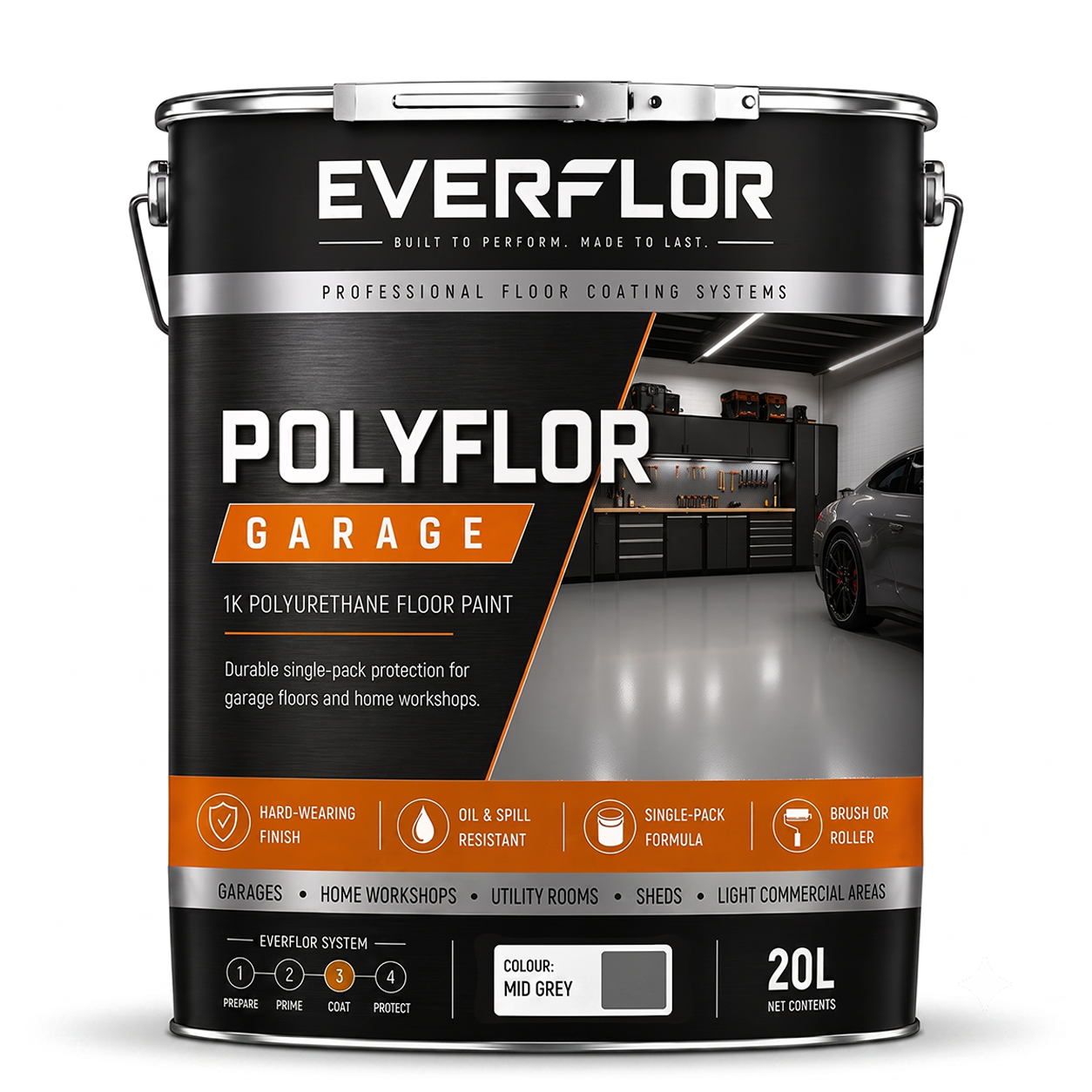
EverFlor - PolyFlor Garage Floor Paint - Anti - Slip - Everest Paints
Leverancier:EverFlor
  • Zwart
  • Donker grijs
  • Grijs
  • Lichtgrijs
  • Wit
Uitverkocht
EverFlor - UniSeal - Concrete Sealer - Wetlook - Everest Paints
Leverancier:EverFlor
Uitverkocht
EverFlor - UniSeal - Concrete Sealer - Wetlook - Everest Paints
Leverancier:EverFlor
Everest - Ultimate QD Concrete Floor Paint and Sealer - Anti - Slip - Everest Paints
Leverancier:Everest Paints
  • Zwart
  • Donker grijs
  • Grijs
  • Lichtgrijs
  • Geel
Quick Drying

Touch Dry in 2-4 Hours

Internal & External

Indoor & Outdoor Use

UV Stable

Fade Resistant Coating

Flexible Coating

Resists Cracking & Peeling

Algae Resistant

Prevents Moss & Lichen

Made in England

British manufacturing

Uitverkocht
EverFlor - UniSeal - Concrete Sealer - Wetlook - Everest Paints
Uitgelicht
Everest - DEKCOAT - Ultimate Decking Paint - Anti - Slip - Everest Paints
4.8
Everest - CourtCoat Tennis Court Paint - Anti - Slip - Everest Paints
Leverancier:Everest Paints
  • Donkergroen
  • Middengroen
  • Licht groen
  • Koningsblauw
  • Olympisch blauw
5.0
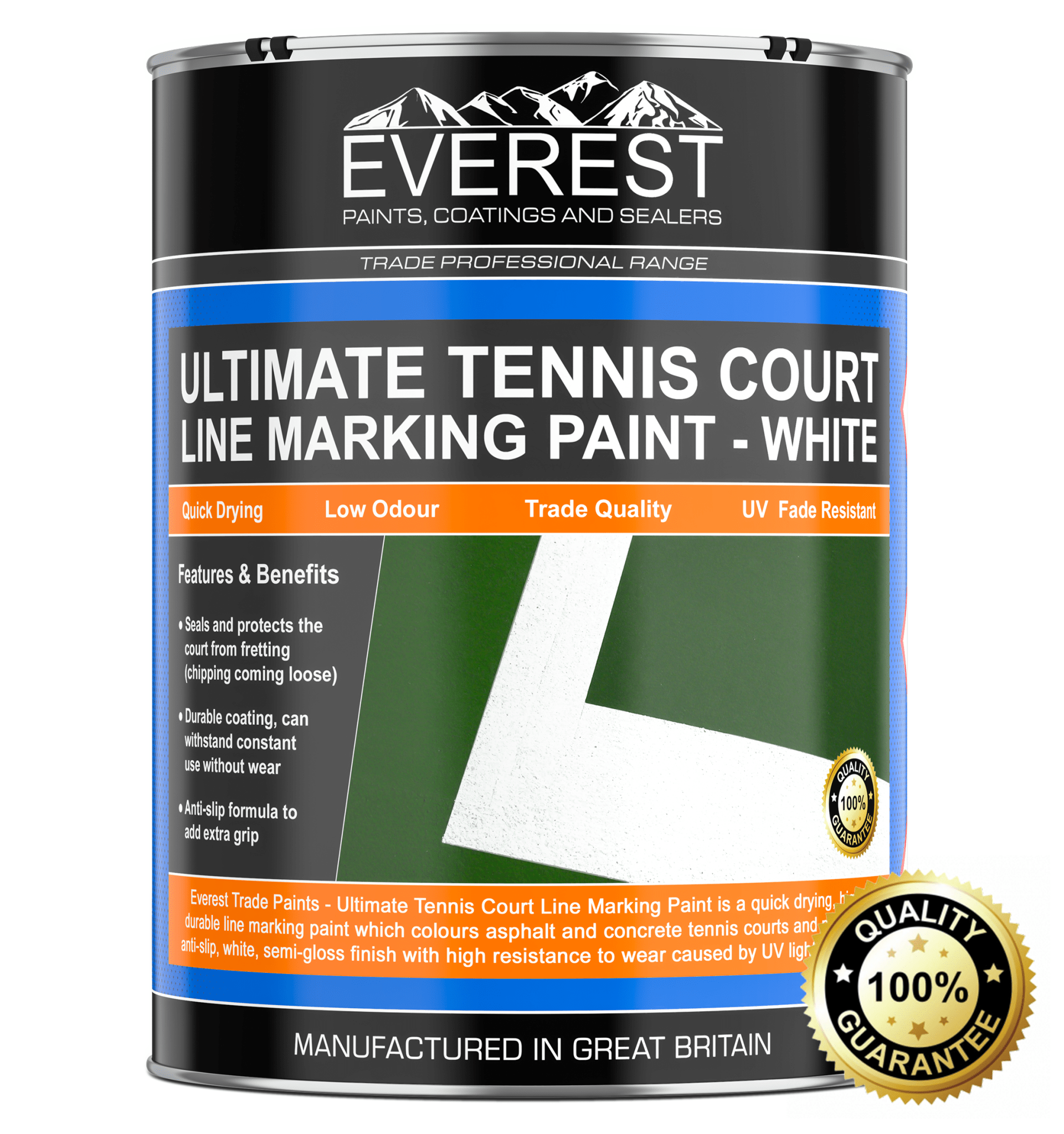
Everest - CourtCoat LM - Tennis Court Line Marking Paint - Everest Paints
Leverancier:Everest Paints
  • Wit
Uitverkocht
EverFlor - UniSeal - Concrete Sealer - Wetlook - Everest Paints
Uitverkocht
EverFlor - UniSeal - Concrete Sealer - Wetlook - Everest Paints
Uitverkocht
EverFlor - UniSeal - Concrete Sealer - Wetlook - Everest Paints

Anti-Slip Floor Paints for Concrete and Steel Decks

Duty classification:
Light to Heavy Duty
Suitable substrates:
Concrete floors Cementitious screeds Steel decks

System Overview

For concrete floors, cementitious screeds and steel decks requiring enhanced underfoot grip, anti-slip floor paints provide integrated textured coating systems designed to reduce slip risk in commercial and industrial environments. These systems combine resin binders with graded aggregates to create a controlled surface profile within the cured film.

EVEREST Everflor anti-slip floor paints are available in multiple resin technologies, including 1K polyurethane, water-based epoxy, 100% solids epoxy, water-based acrylic and chlorinated rubber systems. This allows specifiers to align slip resistance performance with environmental exposure, traffic levels and chemical demand.

Slip-resistant coatings are typically used where safety compliance, ramp access and pedestrian movement require a more secure footing than smooth floor finishes can provide. The final performance is dependent on both resin choice and aggregate loading.

Suitable Substrates & Surface Preparation

Concrete floors and cementitious screeds must be fully cured, structurally sound and free from laitance, grease, oil and previous poorly bonded coatings. Mechanical preparation such as grinding or shot blasting is recommended for epoxy-based systems to ensure adequate surface profile and adhesion.

Moisture condition is critical when specifying water-based or 100% solids epoxy systems. Substrates subject to rising damp or without an effective damp proof membrane must be assessed before application. Primers may be required to regulate porosity and improve bond strength.

Steel decks require removal of corrosion and suitable priming with a compatible anti-corrosion system prior to application of the anti-slip build coats. Surface cleanliness and edge detailing are particularly important on fabricated steel sections.

In refurbishment scenarios, existing coatings must be checked for compatibility and adhesion. Failing material should be removed to avoid intercoat delamination.

Performance Characteristics & Limitations

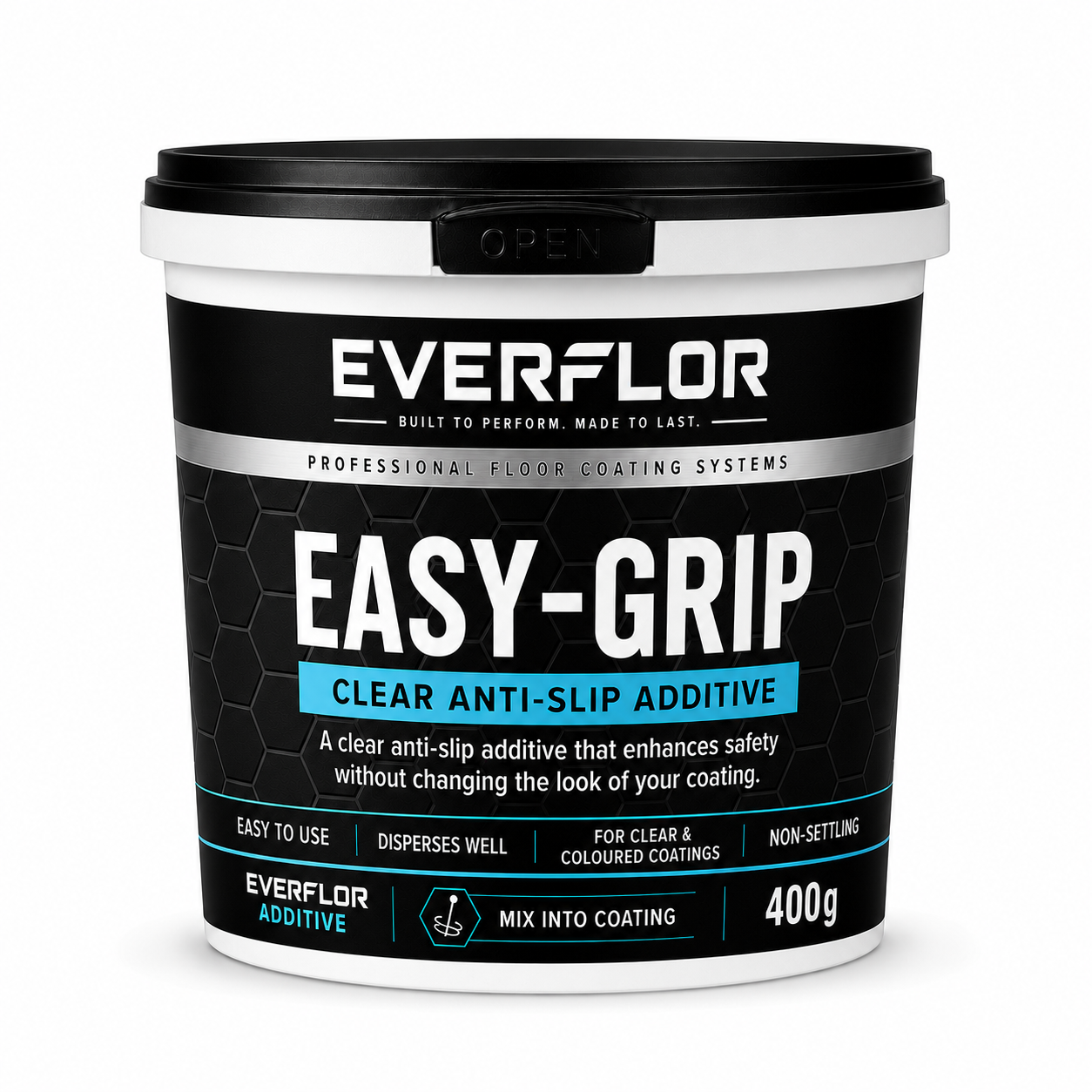
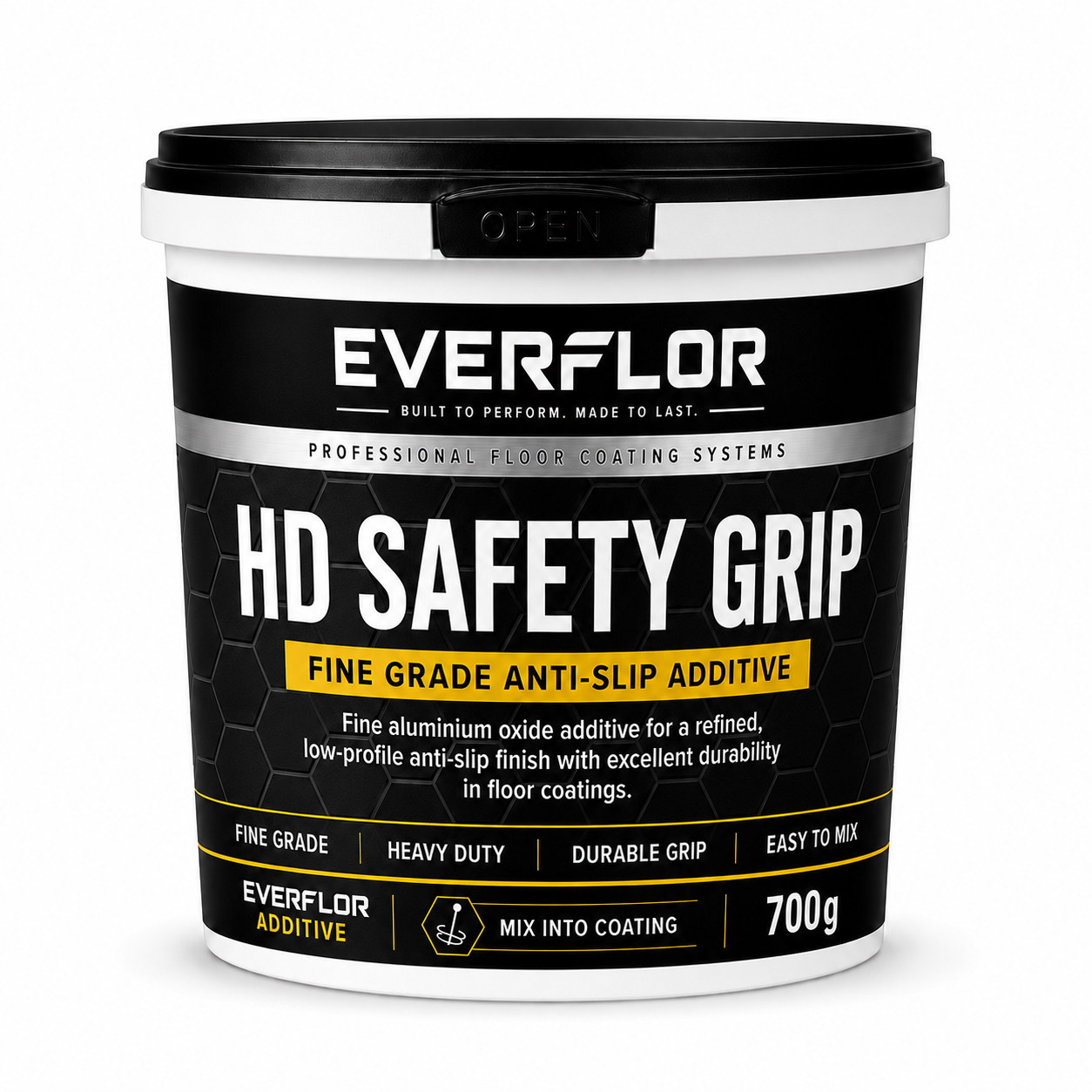
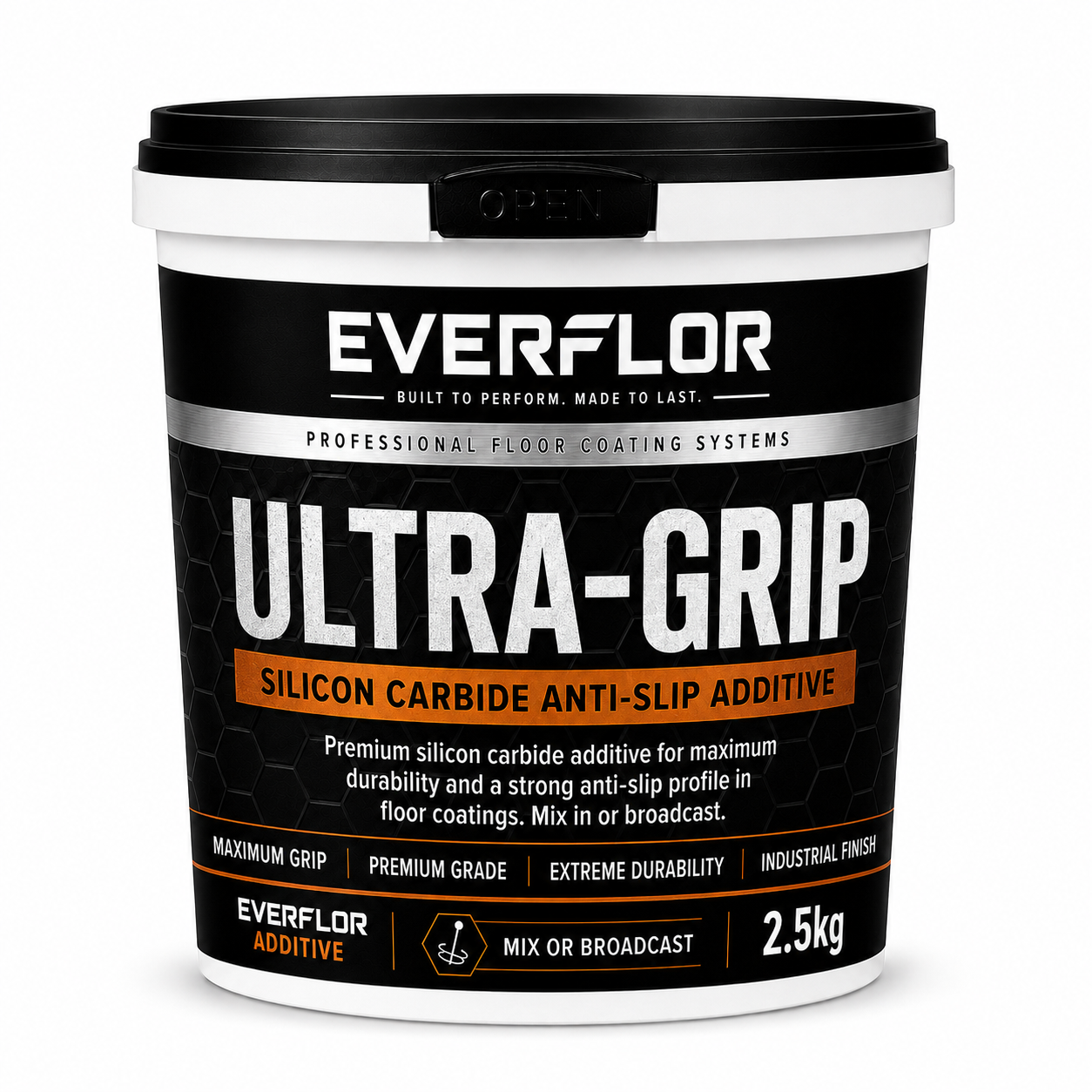
Anti-slip floor paints for concrete floors function by incorporating or broadcasting graded aggregate into the coating film to create surface texture. The level of slip resistance is influenced by particle size, distribution and encapsulation within subsequent coats.

1K polyurethane and acrylic systems offer ease of use and are suited to light and medium duty areas, including workshops and service corridors. Water-based epoxy systems provide improved abrasion resistance and are suitable for internal commercial settings. 100% solids epoxy systems deliver higher build and enhanced mechanical and chemical resistance, making them appropriate for heavy-duty loading bays and industrial ramps.

Chlorinated rubber options can be used in specific environments where rapid drying and external exposure are considerations, although overall mechanical resistance is lower than high-build epoxy systems.

Textured finishes will generally be less smooth underfoot and may reduce ease of cleaning compared to flat coatings. Excessive aggregate loading can lead to premature wear if not fully sealed. Slip resistance is not solely product-dependent; it relies on correct system build, curing conditions and application technique.

Internal vs External Considerations

Internally, anti-slip coatings are commonly applied in warehouses, plant rooms and fire escape routes where contamination from water or light oils may occur. Resin selection should reflect expected chemical exposure and cleaning regime.

Externally, UV stability and weather resistance become critical. 1K polyurethane and certain acrylic systems provide improved colour stability in sunlight compared to some epoxy formulations. Thermal movement of concrete slabs and steel decks must be considered, particularly on exposed ramps and walkways.

Environmental conditions during application, including temperature and humidity, will affect curing and final texture profile. Consistency in aggregate broadcast is essential to achieve uniform slip resistance across large floor areas.

Selection Guidance & When to Specify Alternatives

Anti-slip floor paints are specified where slip risk mitigation is required alongside general floor protection. They are appropriate for refurbishment of existing concrete and steel substrates as well as new floor construction, provided preparation standards are met.

For high-traffic industrial environments or areas subjected to sustained mechanical stress, upgrading to a heavy-duty 100% solids epoxy system with higher aggregate loading should be considered. These systems provide increased film thickness and improved long-term durability under forklift or pallet truck traffic.

Specification should be substrate-led and exposure-driven. Consider traffic type, contamination risk, cleaning frequency and moisture condition before selecting resin technology and aggregate grade. A correctly designed anti-slip floor coating system balances safety, durability and maintainability without over-specifying beyond operational requirements.

Compare Epoxy Floor Systems

Anti-Slip Floor Paints FAQs

View All FAQ's

Technical Guidance & Application Advice

Slip-resistant floor coatings rely on correct surface preparation, appropriate resin selection and controlled application to achieve consistent texture and durability. Substrate condition, moisture content and existing coatings must be assessed before specification. Different resin technologies offer varying chemical resistance, abrasion tolerance and weather stability, and system choice should reflect duty level, traffic type and environmental exposure.

How do I assess whether an existing concrete floor is suitable for anti-slip floor paints for concrete floors?

Concrete must be structurally sound, dry and free from laitance, curing agents, oil or previous contamination. Moisture content should be tested, particularly for epoxy systems, as residual moisture can lead to osmotic blistering or adhesion failure. Mechanical preparation such as diamond grinding or shot blasting is typically required to provide a suitable key. Any previous coatings must be firmly bonded; loosely adhered material should be removed. Slip-resistant systems rely on mechanical adhesion and surface profile, so smooth or sealed concrete will require adequate abrasion before application.

Can anti-slip coatings be applied over previously painted floors in workshops or warehouses?

Yes, provided the existing coating is sound, well adhered and compatible with the selected resin system. Solvent rub tests and adhesion checks are recommended to confirm integrity. Gloss or smooth finishes should be abraded to promote intercoat adhesion. In heavy-duty areas, it may be more appropriate to remove weak or unknown coatings entirely and apply a full epoxy system build-up. Acrylic or chlorinated rubber systems are generally more suited to light-duty refurbishment rather than high-traffic industrial environments.

Which resin type should be specified for heavy traffic areas such as loading bays or forklift routes?

For heavy traffic and point loading, solvent-free or high-build epoxy systems are typically the most appropriate due to their abrasion resistance and chemical tolerance. Water-based epoxies can be suitable for medium duty internal environments with lower mechanical stress. Single pack polyurethane, acrylic and chlorinated rubber systems are better suited to light-duty or maintenance applications. Substrate preparation and correct film thickness are critical, as insufficient build will reduce long-term durability regardless of resin type.

How does the addition of anti-slip aggregate affect performance and maintenance?

Incorporating aggregate increases surface texture and improves slip resistance, particularly in wet or contaminated conditions. However, higher texture profiles can increase dirt retention and make routine cleaning more demanding. Aggregate size and broadcast method must be matched to the environment; excessive profile in food or hygiene-sensitive areas may be unsuitable. The final seal coat should fully encapsulate the aggregate where required to reduce premature wear. The balance between slip resistance and cleanability should be considered at specification stage.

Are water-based epoxy anti-slip systems suitable for damp or newly laid concrete?

Water-based epoxies can tolerate slightly higher residual moisture than solvent-free systems, but they are not a substitute for correct moisture testing. Newly laid concrete should generally cure for a minimum of 28 days, subject to thickness and site conditions. Where elevated moisture is present, a compatible damp proof membrane primer may be required. Applying any epoxy system to concrete with excessive moisture vapour transmission can lead to debonding or blistering, particularly in enclosed internal environments.

Can these coatings be used externally on ramps and service yards?

Yes, provided the selected resin is suitable for external exposure. Epoxy systems offer strong abrasion and chemical resistance but may exhibit surface chalking under prolonged UV exposure. Water-based acrylic and certain polyurethane systems provide improved UV stability but are typically lighter duty. External concrete must be free draining and mechanically prepared to remove weak surface material. Movement joints should be respected, as rigid coatings are not suitable for flexible or moving substrates.

Didn’t find your answer?

Don't hestitate to contact us

Expert Advice & Guides

A few of our most recent guides applicable to this product range.

View Technical Hub

Deze sectie bevat momenteel geen content. Voeg content toe aan deze sectie met behulp van de zijbalk.