Made In Great Britain

Direct from our factory

Free Next Day Delivery

On orders over £750

Product Test Results

All product test results published

Expert Technical Advice

Call or chat with our team

5.0
Everest - Skip & Container Paint - Everest Paints
Leverancier:Everest Paints
  • Antraciet Grijs
  • Slagschip grijs
  • Lichtgrijs
  • Ford Trekker Blauw
  • Oxfordblauw
5.0
Everest - Anti - Corrosive Oxide Primer - Everest Paints
Leverancier:Everest Paints
  • Grijs
  • Rood
Uitgelicht
Everest - Oil Based Gloss Paint - Everest Paints
Metal structural beam with bolts in an industrial setting

Severe Industrial Exposure?

Upgrade to a High Build Epoxy System

Alkyd and acrylic anti-corrosion systems suit general industrial environments. For aggressive atmospheres or higher film demands, specify {product name here} to increase build, chemical resistance and long-term barrier protection.

View Epoxy Systems
5.0
Everest - Agricultural & Industrial Barn Paint - Everest Paints
Leverancier:Everest Paints
  • Lichtgrijs
  • Slagschip Grijs
  • Antracietgrijs
  • Zwart
  • Jeneverbesgroen
Uitgelicht
Everest - Gate & Railing Paint - Everest Paints
Uitgelicht
Everest - Direct to Metal Paint - Oil Based Gloss - Everest Paints
5.0
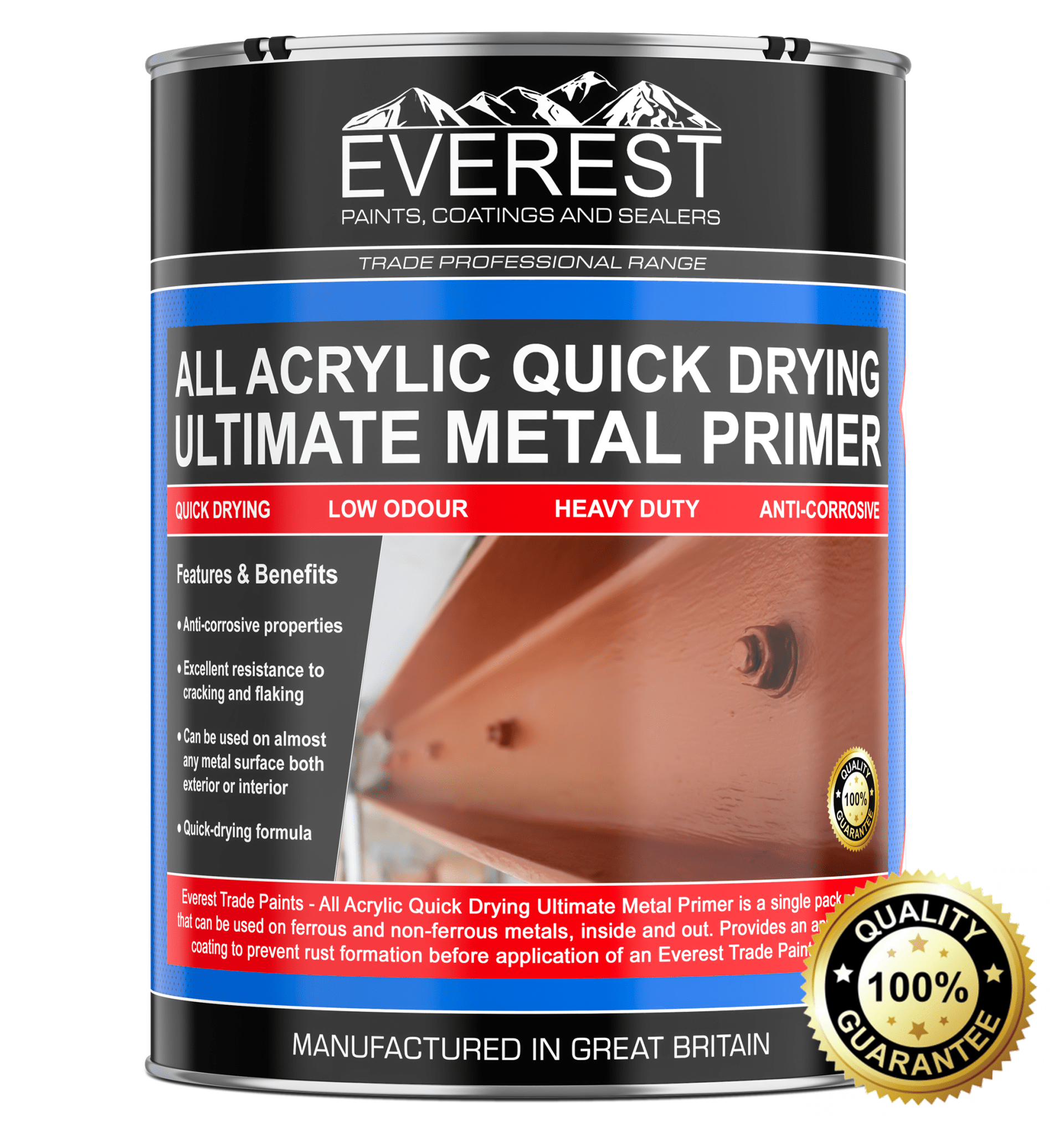
Everest - Advanced Acrylic Metal Primer - Everest Paints
Leverancier:Everest Paints
  • Middengrijs
  • Rode Oxide

Anti-Corrosion Coatings for Structural and Galvanised Steel

Duty classification:
Industrial Duty
Suitable substrates:
Structural steel Galvanised steel Plant equipment Tanks and cladding

System Overview

For structural steel, galvanised steel, plant equipment, tanks and cladding exposed to industrial or external environments, anti-corrosion coatings provide primer and topcoat systems designed to inhibit rust formation and extend maintenance cycles. These systems are specified to protect ferrous metals from atmospheric moisture, oxygen and contaminant ingress.

EVEREST anti-corrosion coatings include oxide primers, zinc phosphate primers, long oil alkyd systems and water-based acrylic anti-corrosion coatings. Each technology serves a defined role within a protective scheme, whether as an active corrosion-inhibiting primer or as a durable barrier finish for internal and external steelwork.

Pigmented primers using zinc phosphate or oxide technology contribute to corrosion resistance by limiting underfilm rust propagation, while alkyd and acrylic finishes provide surface sealing and environmental protection. System selection should be based on exposure conditions, required service life and compatibility with existing coatings.

Suitable Substrates & Surface Preparation

Structural steel must be clean, dry and free from mill scale, rust, grease and fabrication residues prior to coating. Mechanical preparation methods such as abrasion or power tool cleaning are typically required to achieve a sound, keyed surface. The achieved preparation standard directly influences long-term corrosion performance.

Galvanised steel requires degreasing and appropriate surface conditioning to promote adhesion. Where surfaces are new or lightly weathered, a compatible primer designed for non-ferrous substrates should be applied before build coats. Direct application of alkyd systems to inadequately prepared galvanising may result in adhesion loss.

Plant equipment, tanks and cladding should be assessed for existing coatings. Sound, well-adhered finishes may be overcoated following cleaning and abrasion, while failing systems must be removed. Compatibility testing is recommended where coating history is uncertain.

Edges, welds and fixings represent high-risk corrosion points and should receive particular attention during preparation and priming.

Performance Characteristics & Limitations

Anti-corrosion coatings for structural steel function by combining active inhibition and barrier protection. Zinc phosphate and oxide primers reduce the rate of rust creep beneath the coating film, while long oil alkyd systems provide a flexible, weather-resistant finish suitable for external exposure.

Water-based acrylic anti-corrosion coatings offer lower odour application and simplified clean-up, making them suitable for enclosed workshops or maintenance environments where solvent control is important. They provide effective atmospheric corrosion resistance when applied over correctly prepared and primed substrates.

These systems are designed for atmospheric exposure in industrial, agricultural and commercial settings. They are not suitable for continuous immersion, severe chemical containment or highly aggressive process environments unless incorporated into a fully specified multi-coat system designed for that purpose.

Film thickness and system build are typically lower than heavy-duty epoxy systems, which limits resistance in severe marine or chemical atmospheres. Ongoing inspection and maintenance remain part of long-term corrosion management.

Internal vs External Considerations

Internally, anti-corrosion coatings are used on steel frameworks, plant, fabrication assemblies and storage tanks where condensation or intermittent moisture may occur. Water-based acrylic options can reduce odour and disruption during maintenance works.

Externally, coatings must withstand UV exposure, rainfall, temperature variation and airborne contaminants. Long oil alkyd systems provide durable gloss or semi-gloss finishes with good weathering performance. However, exposure severity should be assessed; highly exposed coastal or industrial sites may require higher-build or chemically resistant alternatives.

Application conditions, including surface temperature, humidity and dew point, must be controlled to prevent condensation during coating, as this can compromise adhesion and corrosion resistance.

Selection Guidance & When to Specify Alternatives

Anti-corrosion coatings are appropriate for new steelwork and maintenance over sound existing systems where industrial medium to heavy duty atmospheric protection is required. They support structured maintenance programmes across fabrication workshops, agricultural facilities and commercial plant.

Where extended service intervals, higher film build or resistance to aggressive industrial atmospheres is required, upgrading to a two pack epoxy system should be considered. Epoxy coatings offer improved barrier performance and chemical resistance, particularly when combined with compatible primers and polyurethane topcoats.

Specification should be substrate-led and exposure-driven. Correct preparation, primer selection and system compatibility are fundamental to achieving reliable corrosion control in structural steel and associated metal assets.

Anti-Corrosion Coatings FAQs

View All FAQ's

Technical Guidance & Application Advice

Anti-corrosion coatings for structural steel rely on correct surface preparation, appropriate primer selection and controlled application conditions to achieve effective long-term protection. Oxide and zinc phosphate primers provide active corrosion inhibition, while alkyd and acrylic systems contribute barrier protection. Performance is directly linked to preparation standard, film thickness and environmental exposure, particularly in industrial and external settings.

What level of surface preparation is required before applying anti-corrosion coatings to structural steel?

Surface preparation standard directly determines coating performance. For new steelwork, oil, grease and fabrication residues must be removed, followed by mechanical preparation such as abrasive blasting or thorough mechanical abrasion to remove mill scale and rust. For maintenance work, all loose corrosion and failing coatings must be eliminated to a sound, feathered edge. Primers should only be applied to clean, dry substrates. Inadequate preparation will significantly reduce adhesion and corrosion resistance.

Are zinc phosphate primers suitable for external structural steel frameworks?

Zinc phosphate primers are widely used for external structural steel as they provide active corrosion inhibition combined with good overcoating compatibility. They are suitable for atmospheric exposure when applied at the correct film thickness and over properly prepared steel. However, in highly aggressive industrial or coastal environments, a higher-build epoxy primer system may be more appropriate. Primer selection should reflect environmental classification and expected maintenance intervals.

Can these coatings be applied over existing painted steel during maintenance projects?

Overcoating is possible where the existing coating remains sound, well adhered and free from widespread corrosion. All loose or flaking material must be removed, and glossy surfaces abraded to provide a mechanical key. Areas of exposed steel should be spot primed with a compatible anti-corrosion primer before full overcoating. Compatibility between existing and new systems must be assessed, particularly when applying water-based acrylic coatings over aged alkyd finishes.

Are long oil alkyd anti-corrosion systems suitable for tanks and plant equipment?

Long oil alkyd systems provide durable barrier protection for atmospheric exposure on tanks and plant equipment. They are appropriate for external steelwork where flexibility and ease of maintenance are required. However, they are not designed for continuous immersion, internal tank lining or severe chemical containment. In such cases, specialist epoxy or chemically resistant systems should be specified. Substrate cleanliness and correct film build remain critical to performance.

When should a water-based acrylic anti-corrosion coating be specified instead of a solvent-based alkyd?

Water-based acrylic anti-corrosion coatings are appropriate where lower odour application is required, such as in occupied industrial facilities or enclosed workshops. They offer good adhesion and corrosion resistance when applied over correctly prepared and primed substrates. Drying characteristics differ from solvent-based alkyds and are influenced by temperature and humidity. For heavy-duty external exposure or where extended maintenance cycles are required, higher-build solvent-based or two-pack systems may offer greater durability.

Are these coatings suitable for galvanised steel or non-ferrous substrates?

Galvanised steel and other non-ferrous substrates require appropriate preparation and, in most cases, a compatible primer before application of anti-corrosion topcoats. New galvanising should be weathered or mechanically abraded to remove surface passivation. Direct application without preparation can lead to adhesion failure. Substrate condition must be assessed carefully, particularly on aged or previously coated galvanised cladding, to ensure long-term bond strength.

Didn’t find your answer?

Don't hestitate to contact us

Expert Advice & Guides

A few of our most recent guides applicable to this product range.

View Technical Hub

Deze sectie bevat momenteel geen content. Voeg content toe aan deze sectie met behulp van de zijbalk.