System Overview
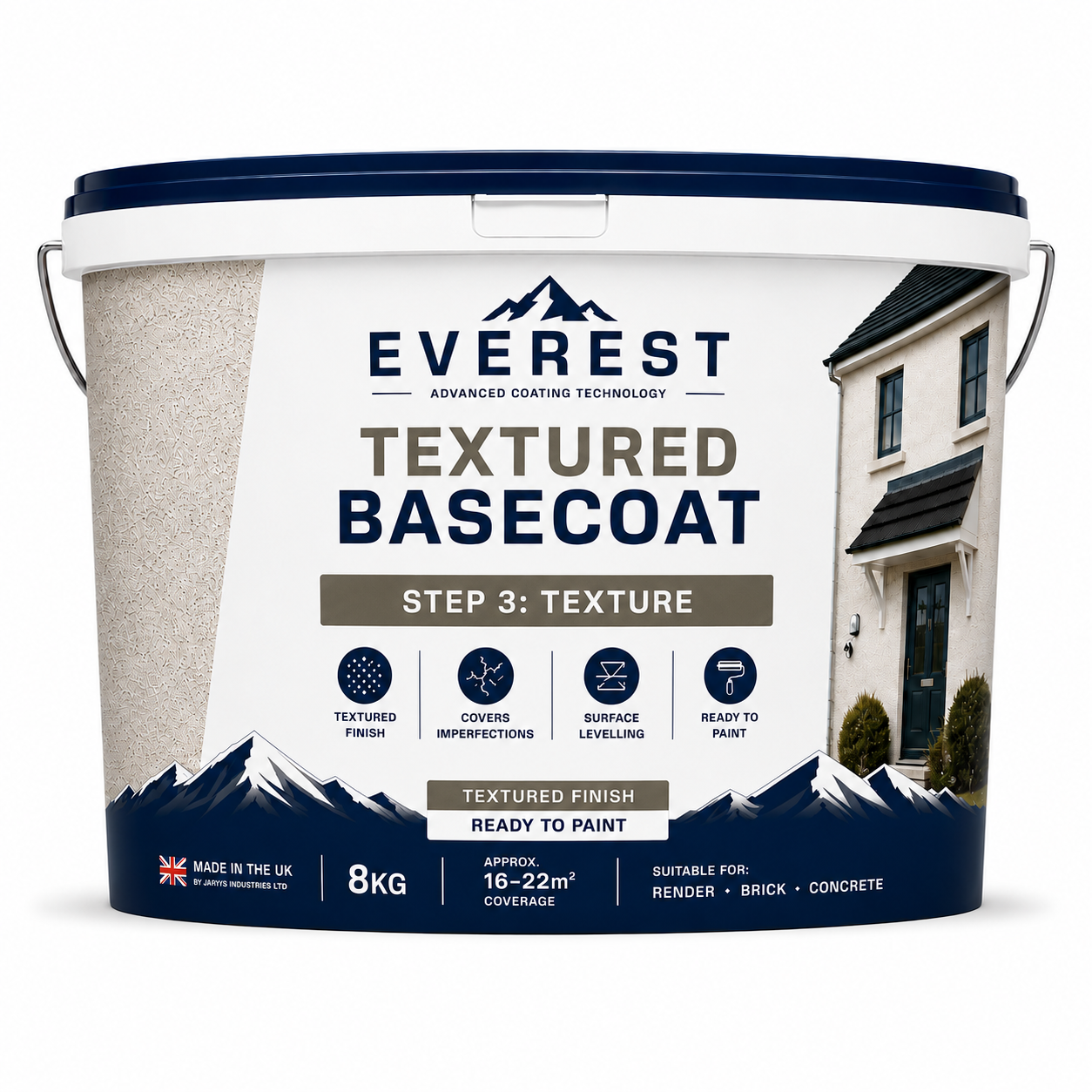
For masonry and brick exterior walls, textured coatings provide a protective decorative finish designed to improve surface coverage on uneven mineral substrates. These coatings create a slightly textured film that helps conceal minor surface imperfections while protecting exterior walls from weather exposure.
Exterior masonry surfaces such as brickwork, render, and blockwork can develop surface irregularities through weathering, ageing, and previous repairs. A textured coating system helps provide a more uniform visual appearance while maintaining protective performance against environmental conditions.
EVEREST textured masonry coatings are formulated using acrylic technology designed for exterior mineral substrates. Acrylic systems offer good weather resistance and flexibility, allowing the coating film to accommodate minor substrate movement while maintaining adhesion across masonry surfaces.
These coatings are typically specified for residential houses, garages, garden walls, and small commercial buildings where exterior masonry requires refurbishment and visual improvement.
Suitable Substrates & Surface Preparation
Textured masonry coatings are designed primarily for mineral wall substrates including brick, render, and other masonry materials.
Before application, the surface should be clean and free from dust, loose material, algae, or other contaminants that may interfere with coating adhesion. Exterior walls often require pressure washing or mechanical cleaning to remove environmental deposits and biological growth.
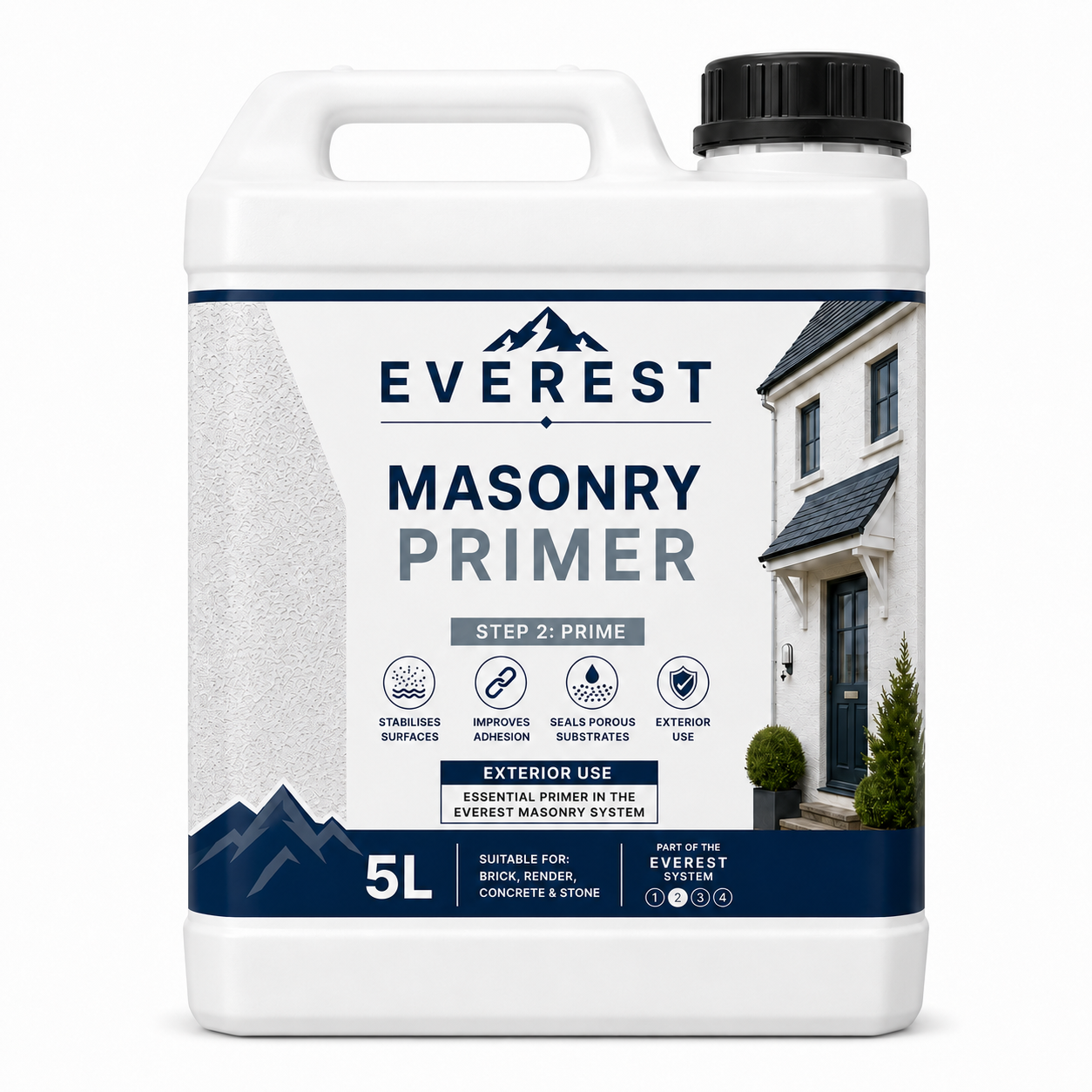
Where masonry surfaces are weathered or powdery, stabilising primers may be required prior to coating. These products penetrate friable surfaces and help consolidate loose particles, creating a more stable base for the textured coating.
Previously painted masonry surfaces may be recoated where the existing coating remains sound and well adhered. Loose or deteriorated paint should be removed before applying the new coating.
Surface defects such as cracks or damaged areas should be repaired before coating to ensure consistent performance and appearance.
Performance Characteristics & Limitations
Textured masonry coatings produce a decorative film with a subtle surface texture that helps disguise minor irregularities in the underlying substrate. This can improve the visual uniformity of walls that may otherwise show patch repairs or uneven surfaces.
Acrylic textured coatings also provide practical protection against weather exposure. The coating film helps reduce direct moisture contact with the masonry surface while maintaining sufficient breathability for mineral substrates.
These coatings can provide durable colour and surface protection for exterior walls exposed to rainfall and sunlight. The textured finish can also help maintain a consistent visual appearance across large wall areas.
However, coatings in this category are generally designed for light to medium duty façade protection. They are not intended to provide structural crack bridging, waterproofing for severe moisture ingress, or heavy impact resistance.
Where walls exhibit significant structural movement or severe weather exposure, more specialised façade coating systems may be required.
Internal vs External Considerations
Textured masonry coatings are designed primarily for exterior wall surfaces. Exterior masonry structures experience constant exposure to weather conditions including rain, UV radiation, and seasonal temperature changes.
Acrylic textured coatings are commonly used in these environments due to their weather resistance and ability to maintain adhesion on mineral substrates.
Because the texture of these coatings is intended to improve the appearance of exterior masonry surfaces, they are generally not used for interior wall finishes where smoother decorative coatings are typically preferred.
Application conditions should allow adequate drying and curing time, particularly on exterior walls exposed to changing weather conditions.
Selection Guidance & When to Specify Alternatives
Textured masonry coatings are typically specified where exterior walls require refurbishment while masking minor surface imperfections. They are particularly useful on older masonry surfaces where small irregularities may be visible through standard smooth coatings.
These coatings are commonly used on residential properties, garages, garden walls, and boundary structures where a durable and visually consistent finish is required.
However, where walls require higher levels of protection against weather exposure or structural movement, more specialised façade coating systems may be appropriate. High-build exterior wall coatings or elastomeric systems may provide improved durability and crack-bridging performance in demanding environments.
Selecting the appropriate coating should consider the condition of the masonry substrate, the level of environmental exposure, and the visual finish required for the building façade.